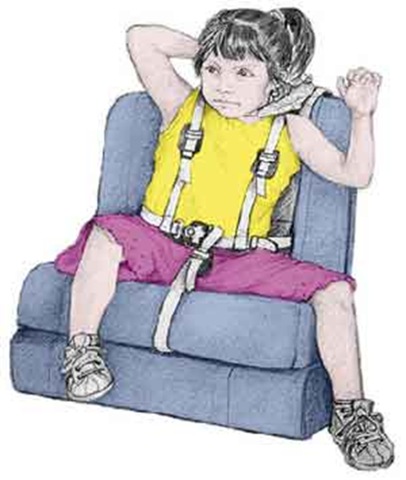
FOR Mrs Verma (not her real name) this was very strange, her elder daughter had shown no signs of it while she was growing up. Her son Ravi, who had just turned three, was developing an altered behaviour pattern. He was like a tornado moving around the house, running around frantically, climbing, breaking things, not listening, restless and inattentive. Putting him in bed for sleep was a major task and also the night wouldn’t be quiet either. He would constantly squirm and move around in bed.

Archives for December 2008
ACUTE ANXIETY ATTACKS & HOMEOPATHY
Neurosis is a broad category of pyschological disturbance, encompassing various mild forms of mental disorder – anxieties, phobias, obsessions and symptoms relating to post traumatic stress disorder. People with acute anxiety attacks (panic disorder) have a feeling of terror that strikes suddenly and repeatedly with no warning. Many persons experiences a sense of impending death or doom and violent palpitations have a feeling of losing control in an extreme way.
One may genuinely believe at one is having a heart attack or a stroke, going insane, or being on the verge of death. Panic disorder is well treated with homoeopathic medicine Aconitum Napelus and Arsenic Album. Aconite cures more panic disorder cases than any other homoeopathic medicine. The main features that indicate the use of Aconite are fear, restlessness, suddenness and violence. The action of the heart is so overpowering that the fear of death is marked. Such severe is the fear that at times the patient may even ”predict the time of death”.
Arsenic Album is recommended for those persons who are deeply anxious about their health and extremely concerned with order and security. Attacks often occur around midnight or in the very early hours of the morning. The victims feel exhausted. They can be restless – fidgeting, pacing and anxiously moving from place to place. If indicated, 30c potency of the above-mentioned medicine can be taken four times a day for a period of 15 days. One dose can be used to control the situation as soon as one notices the first symptom of the panic attack.
ACUTE ANXIETY ATTACKS & HOMEOPATHY
Neurosis is a broad category of pyschological disturbance, encompassing various mild forms of mental disorder – anxieties, phobias, obsessions and symptoms relating to post traumatic stress disorder. People with acute anxiety attacks (panic disorder) have a feeling of terror that strikes suddenly and repeatedly with no warning. Many persons experiences a sense of impending death or doom and violent palpitations have a feeling of losing control in an extreme way.
One may genuinely believe at one is having a heart attack or a stroke, going insane, or being on the verge of death. Panic disorder is well treated with homoeopathic medicine Aconitum Napelus and Arsenic Album. Aconite cures more panic disorder cases than any other homoeopathic medicine. The main features that indicate the use of Aconite are fear, restlessness, suddenness and violence. The action of the heart is so overpowering that the fear of death is marked. Such severe is the fear that at times the patient may even ”predict the time of death”.
Arsenic Album is recommended for those persons who are deeply anxious about their health and extremely concerned with order and security. Attacks often occur around midnight or in the very early hours of the morning. The victims feel exhausted. They can be restless – fidgeting, pacing and anxiously moving from place to place. If indicated, 30c potency of the above-mentioned medicine can be taken four times a day for a period of 15 days. One dose can be used to control the situation as soon as one notices the first symptom of the panic attack.
Homeopathic Treatment for Disc Prolapse
What is disc bulge?
Disc or more appropriately intervertebral disc refers to the pad of fibro cartilage lying between vertebras. Vertebras are bone in the back stacked one above the other, 33 of them in all. Each intervertebral disc lies between two vertebrae or in other words, separates two vertebrae. There are 23 intervertebral discs in total. These cartilaginous pads act as shock absorbers whenever excessive stress or strain is put on the spine. An intervertebral disc has two parts – thick outer fibrous ring called annulus fibrosus and inner gel-like material called nucleous pulposus. Disc bulge refers to bulging out of the intact disc from its normal space. Although disc bulge can arise in any part of the spine, it is most common in the lumbar and cervical spine. A person may have single or multiple disc bulges at varying levels in the spine.
Can Homeopathy treat disc bulge?
Disc bulge can be treated with excellence under the Homeopathic mode of treatment. Mild to moderate cases of disc bulge have a good chance of complete recovery with Homeopathic medicines. In severe cases of disc bulge, symptomatic relief can be expected with Homeopathic medicines. In such cases, symptoms of back pain, tingling, numbness and weakness in limbs can all be managed successfully. Among the most well indicated Homeopathic medicines for disc bulge, the major ones are – Rhus Tox, Hypericum Perforatum, Colocynthis, Magnesium Phos and Paris Quadrifolia.
What causes disc bulge?
Various factors can cause a disc bulge. The first among them is age. With advancing age, the discs start to lose their elasticity and lubricating fluid and become brittle, making them bulge out. Injury to the spine can also cause a disc to bulge as also repetitive bending of the back. Lifting heavy weights is another major risk factor. Being overweight also puts a person at a higher risk of disc bulge.
How do I know I have cervical disc bulge?
The first visible symptom of a cervical disc bulge is pain in the neck. The pain may travel to the shoulders, arms and down to the hands and fingers. When a disc bulge pinches upon a nerve, it leads to numbness, tingling, formication in the upper limbs. Weakness of upper limbs may also be present.
What are the symptoms of lumbar disc bulge?
A person having lumbar disc bulge may not experience any symptom at all. Where symptoms do show up in lumbar disc bulge, the first among them would be pain in the lower back. The next symptom that is likely to arise from a lumbar disc bulge from nerve pinching is pain in the lower back that radiates down the lower limbs. The pain radiating from lower back to the lower limbs is termed as sciatica. Sciatica can be right or left sided. Numbness, tingling, weakness of the lower limbs are yet other accompanying symptoms.
What does disc bulge diagnosis involve?
Investigation to confirm disc bulge includes MRI of the back. It will reveal the exact location of the disc bulge and the nerves that are affected.
Does a disc bulge always cause pain?
No, it is not mandatory for all disc bulge cases to feel pain. Many persons have disc bulge without even knowing that they do as they never experience any symptoms.
Is disc bulge the same as disc herniation?
No, disc bulge and disc herniation are not the same. Disc bulge simply refers to bulging out of the intact disc from its normal space. In disc herniation, there is a crack in the outer fibrous layer of disc that makes the gel-like material inside the inter vertebral disc ooze out.
Which part of the spine is most likely to suffer a disc bulge?
Although disc bulge can arise in any part of spine, it is most common in the lumbar and cervical spine.
I have numbness, tingling in hands. Could it be due to cervical disc bulge?
Yes, cervical disc bulge can cause numbness and tingling in hands. These symptoms arise due to pinching of the nerve from disc bulge in the cervical region. However, similar symptoms may arise due to other medical conditions such as carpal tunnel syndrome and peripheral neuropathy as well. Further investigation would be required to confirm disc bulge.
I have had lower back pain for a few months. Should it be investigated for disc bulge?
Disc bulge is one of the major causes leading to lower back pain. However, it is not the only cause of lower back pain. It can arise due to several other reasons including degeneration of the disc, muscle sprain, muscle spasm in the back, osteoarthritis, spondylolisthesis and osteoporosis.
I have been advised surgery for lumbar disc bulge. Can it be avoided with Homeopathic medicines?
Yes, Homeopathic medicines offer great alternative to surgery in treating lumbar disc bulge. Mild, moderate disc bulge cases show complete recovery with Homeopathic medicines. Severe disc bulge cases, too, can be symptomatically managed with Homeopathic mode of treatment.
Can Homeopathic medicines completely cure disc bulge?
Yes, disc bulge can be cured with Homeopathic medicines. However, the results vary as per the severity and intensity of the case. Depending upon the severity of the case, either complete cure is possible or Homeopathic medicines can provide symptomatic relief from disc bulge.
FAQs – Homeopathic medicines for disc bulge
Which Homeopathic medicines are most effective in treating disc bulge?
Homeopathic medicines Rhus Tox, Paris Quadrifolia, Colocynthis and Magnesium Phos rate among the most effective for treating disc bulge.
Which Homeopathic medicine can I take for my neck pain from cervical disc bulge?
Neck pain from cervical disc bulge can be treated very efficiently with Homeopathic medicine Rhus Tox.
My MRI shows disc bulge at C5-6 and C6-7 level, with pain in neck and numbness in the hands. Which Homeopathic medicine would you advise?
Paris Quadrifolia is the best choice of Homeopathic medicine for treating pain in the neck and numbness in hands from cervical disc bulge.
Which Homeopathic medicine is indicated for treating tingling in upper limbs in a cervical disc bulge case?
Kalmia Latifolia is the prominently indicated Homeopathic medicine for tingling in the upper limbs from cervical disc bulge.
I have had lower back pain for a few months and my MRI shows disc bulge at L4-L5 level. Can Homeopathic medicines help me?
Yes, Homeopathic medicines can treat your lower back pain from disc bulge at L4-L5 level. Rhus Tox and Aesculus Hippocastanum remain the most effective and reliable Homeopathic medicines for treating lower back pain from disc bulge.
Which Homeopathic medicine would you suggest for pain in lower back radiating down the right leg (sciatica) in a lumbar disc bulge case?
Among the wide range of Homeopathic medicines for treating right-sided sciatica from disc bulge, the most beneficial is Magnesium Phos.
Is there a Homeopathic medicine for treating lower back pain radiating down the left lower limb (left sided sciatica) from disc bulge?
Yes, Homeopathy offers a wide range of medicines to treat left-sided sciatica arising from disc bulge. The most significant among these is Homeopathic medicine Colocynthis.
In case of sciatica attended with numbness from disc bulge, which Homeopathic medicine will work?
The most appropriate Homeopathic medicine for treating sciatica attended with numbness from disc bulge is Gnaphalium Polycephalum.
Can Homeopathic medicines treat disc bulge resulting from injury?
Yes, Homeopathic medicines can significantly treat disc bulge arising from injury. In my clinical practice, Homeopathic medicines Hypericum Perforatum and Rhus Tox have shown great results in such cases.
I have developed disc bulge in the lumbar region from lifting heavy weight. Which Homeopathic medicine will help?
For your lumbar disc bulge arising from lifting heavy weight, Rhus Tox is the most suitable Homeopathic medicine.
Homeopathic Medicines for Disc Bulge
Rhus Tox – Top Homeopathic medicine for disc bulge in cervical or lumbar spine
Rhus Tox is one of the top grade Homeopathic medicines for disc bulge cases. Rhus Tox offers great help in disc bulge in the cervical and lumbar region. The key symptom signalling use of Rhus Tox is severe pain in the neck or lower back as per the region of disc bulge. The person who needs Rhus Tox may feel relief in pain with pressure or from massage. Others may feel better with movement or while walking. Another indicative feature for using Rhus Tox is worsening of lower back pain while sitting and while at rest. Rhus Tox is also very useful for disc bulge arising from lifting heavy weights or from injury.
Paris Quadrifolia – Excellent Homeopathic medicine for cervical disc bulge with pain in neck and numbness in upper limbs
Paris Quadrifolia is an excellent Homeopathic medicine for treating cervical disc bulge. The chief guiding feature for selecting Paris Quadrifolia is pain in the neck and numbness in upper limbs. Numbness may be felt in the arms, hands or fingers. Pain in the neck may travel down the arms. Feeling of weight in the neck and across the shoulders is another attending feature.
Kalmia Latifolia – Wonderful Homeopathic medicine for cervical disc bulge with tingling sensation in upper limbs
For cervical disc bulge with tingling, pricking sensation in the arms or hands, Kalmia Latifolia is a most reliable and effective Homeopathic medicine. Weakness in the hands may also arise. Pain from neck travelling down the arms is a key symptom where Homeopathic medicine Kalmia Latifolia will show best results.
Aesculus Hippocastanum – Significant Homeopathic medicine for treating lower back pain from lumbar disc bulge
Aesculus Hippocastanum is a very significant Homeopathic medicine for treating lower back pain from disc bulge. The pain in lower back may radiate to hips. The person needing Aesculus Hippocastanum may feel the pain worsen from walking or stooping. Rising from a sitting position is also very difficult for persons requiring Aesculus Hippocastanum. There is the sensation as if the back might break.
Magnesium Phos – Well indicated Homeopathic medicine for lumbo sacral disc bulge with right-sided sciatica
Magnesium Phos is a prominently indicated Homeopathic medicine for lumbar sacral disc bulge, especially where accompanied by right-sided sciatica. The person needing Magnesium Phos feels pain in the lower back radiate down the hip, leg and down to the foot on the right side. The nature of this pain may be shooting, sharp, stitching or cutting type. The person needing Magnesium Phos may feel relief from applying pressure on the painful area.
Colocynthis – Excellent Homeopathic medicine for lumbar disc bulge with left-sided sciatica
Colocynthis is an excellent Homeopathic medicine for treating lumbar disc bulge where the main compliant is left-sided sciatica. The major symptom is pain in the lower back extending down the hip, leg and foot on the left side. The character of the pain may be cramping, shooting, lightening and shock-like or tearing in nature. Pressure and warm applications may relieve the pain. Lying on the left side may also provide relief.
Gnaphalium Polycephalum – Best Homeopathic medicine for treating lumbar disc bulge with sciatica and numbness in lower limbs
Gnaphalium Polycephalum is a very suitable Homeopathic medicine for disc bulge where sciatica, attended with numbness in lower limbs, is the chief symptom. Pain in the lower back radiates down the lower limbs along the course of the sciatic nerve. The person may feel better by flexing the thigh on abdomen.
Hypericum Perforatum and Rhus Tox – Homeopathic medicines for treating disc bulge from injury
For disc bulge resulting from injury, Homeopathic medicines Hypericum Perforatum and Rhus Tox come highly recommended. Hypericum Perforatum is given in case of violent, sharp pain in the lower back following injury. Walking and stooping is impossible and cause violent pain. It is also indicated for pain shooting up the spine and down the limbs. The person who needs Hypericum Perforatum may also have neck pain. The neck may be extremely sensitive to the touch from cervical disc bulge following injury. Movement of arms worsening neck pain is also a sign that Hypericum Perforatum is the choice of Homeopathic medicine. Hypericum Perforatum is also the medicine to use for tingling and burning in the limbs from a pinched nerve in the back. Homeopathic medicine Rhus Tox is indicated for disc bulge of both cervical as well as lumbar region. In case of cervical disc bulge, it is useful when neck pain gets better with heat or massage. In case of lumbar disc bulge, Rhus Tox is considered if the lower back pain gets better with movement or hard pressure.
Lifestyle measures can help better manage disc bulge
Some basic lifestyle measures, if adopted, will be of great help in managing the disc bulge complaint:
- Avoiding lifting heavy weight
- Avoid bending the spine; if need be, consider bending on the knees instead of waist
- Exercise to strengthen the back and maintain flexibility
- Avoid sitting for long hours and jumping
- Lose that excess weight
- Take proper sleep
- Meditate, do calming exercise to keep stress away
The Scope of Homeopathy
HAHNEMANN not just discovered a healing principle but also a law governing the relationship between all drugs and all diseases. Unfortunately, his breakthrough was glossed over. Since its inception homeopathy has been a victim of perpetuated prejudice. A bias which has become compulsive or, should we say, pathological, pathobias. Homeopaths have spent a great deal of energy on fighting conventions. One reason for this may reflect genuine incredulity that conventional physicians can apparently claim to help the ailing humanity and yet reject, seemingly out-of-hand, a new system of therapeutics with an excellent clinical track record. To homeopaths this seems, perhaps, illogical.
There is a plethora of biases aimed at eclipsing homeopathy’s great ability to treat chronic disorders. A situation that indirectly adds to the list of biases is a “write-off” by a conventional physician, even when homoeopathy could actually cure. But more often than not, it is a blind belief in the write-off which actually results out of conviction with which the patient is made to believe. Another fallout of this situation is that one realises the value of homeopathic treatment after losing the precious time when the treatment could have been most effective. By all this, I mean to say that homeopathy is far more effective in many cases that are generally termed as “incurables” if used properly and in time. However, one must that there are “incurables” for homeopathy too!
The second most important bias is that of homeopathy is “slow”. Often I have seen that it is this kind of silly syllogism that supports it – if homeopathy is slow in treating asthma, a chronic disease, it is going to be slow in treating every chronic disease! Funny logic! Isn’t it? Another reason is that the time involved is compared with that of conventional system of medicine, little realising that the level at which homeopathy works is way apart as it aims at rooting out the disease and not suppressing it.
Homeopathy is neither slow nor fast. It is a natural system, obeys the laws of nature and takes optimum time to cure. Well, the treatment of chronic diseases depends on innumerable factors patient compliance, extent and intensity of damage, age, nature of previous therapies, the physician’s competence, etc.
MIGRAINE AND HOMEOPATHY
Migraine is not a serious disorder but can seriously cripple one’s ability to live life normally. The unpredictable nature and the severity with which the headache comes on, affects one’s life in many ways. It brings about lower tolerance levels for frustration, noise and fatigue. Fiction writer Carol Lewis is said to have created those strange characters and bizarre sensation in her book, Alice in Wonderland,” during the migraine attacks that she suffered. Just a small comfort for those suffering from migraine. They join the club with many well-known intellectuals like Charles Darwin, Sigmund Freud and Thomas Jefferson.
How does a migraine attack differ from an ordinary headache?
Common headache, often called tension headaches, are usually of mild-to-moderate intensity, and have no such symptoms as nausea and visual disturbances associated with migraine. They generally occur as isolated incidents. Migraine is a headache of a severe type and tends to recur. The pain is usually confined to one side of the head but may eventually spread to the other side. It may be accompanied by nausea and vomiting. Classical migraine is differentiated from common migraine by the presence of a condition called aura.
Aura is an occurrence of neurological symptoms 10-30 minutes before the classical migraine attack. Symptoms such as flashing lights, double vision, zigzag pattern, mental fuzziness and mood changes are a part of it.
What are the causes of migraine?
The pain during the migraine attack is usually caused by the dilation of the arteries (vessels carrying blood) and an increase in the blood supply to the particular area in the head. This is in response to an initial contraction of the arteries caused by the trigger factors.
What are the common trigger factors?
Stress, emotional disturbances, tobacco smoke, fasting-hunger, lack of proper sleep, excessive tea or coffee intake, foods containing monosodium glutamate, hormonal changes, weather changes. Genetic predisposition is supposed to play a major role.
Homeopathy can treat the disease effectively, though it may take some time before the recurrence of headache are completely stopped. It also depends on the factors such as patient compliance, medicine intake regularity, knowledge and avoidance of trigger factors and the chronicity of migraine attacks.
With the correct prescription, one may slowly notice the problem receding, the attacks becoming less frequent and also their decreasing severity. Sanguinaria, Nux Vomica, Iris and Spigelia lead the homeopathic table in treating this disorder.
Another medicine that needs a special mention is Epiphegus, because the symptom it treats are so often found in patients, especially women. Headache comes when one deviate from one’s normal routine. It is made worse by going out in the sun, by any exertion.
Prevention tips
Keep a headache diary: This may help you in identifying the trigger factors such as foods, activities and weather


Exercise regularly: Regular exercise, yoga and relaxation techniques such as meditation can also be of great help.
Keep regular sleep patterns: Sleep adequately. Sleeping too much or too less can trigger migraine.
Watch out what you eat:Foods such as caffeine and Chinese foods that contain monosodium glucamate and chocolates cheese are well-known trigger factors.
Eat regularly: Fasting is a very common trigger in many people. If it is such a factor for you too, make sure that you eat at regular intervals.
This feature ( authored by Dr. Vikas Sharma ) was earlier published in The Tribune(north India’s largest circulated daily newspaper). Dr. Vikas Sharma is regular Homeopathic columnist for The Tribune. mail him : vikas@drhomeo.com
Irritable Bowel Syndrome- treating it with Homeopathy
IBS (Irritable Bowel Syndrome) is one of the “functional intestinal disorders” – a general term for conditions that show no physical evidence of disease in the intestines on examination, and the cause of which does not show up in a blood test or an X-ray. People with IBS have colon that are more sensitive and reactive than usual. So they respond to stimuli that would not bother most people.
Sulphur, Argentum itricum, Colocynth, Pulsatilla, Carbo Veg, Nux Vomica and Lycopodium are a few of the important homeopathic medicines very frequently asked for in treating Irritable Bowel Syndrome. Chronic forms of this disorder are treatable with Sulphur, where sensitivity to milk is a key factor and early morning diarrhoea is often a presenting symptom. Sulphur covers a huge variety of symptoms found under this disorder.
It is best prescribed with a rich experience in homeopathy. Pulsatilla is for sensitive individuals also where fatty food usually triggers off a variety of symptoms. When this disorder is a consequence of what is called modern living (excess intake of alcohol and rich food), Nux works as a panacea. If there is immediate bloating after eating and the abdomen swells up like a drum, Carbo Veg can do wonders.
Colocynth and argentum Nitricum have a different indication – anxiety, stress and emotions. Patients asking for Colocynth have diarrhoea associated with cramping pain in the abdomen before passing stool. For an Argentum Nitricum patient, sweets can trigger off the complaint and loud belching often forms a major presenting symptom. Lycopodium is generally indicated for people with chronic digestive discomforts and bowel problems. Bloating and a feeling of fullness come on early in a meal of shortly after, and a large amount of gas is usually produced. Heartburn and stomach pain are common, and the person may feel better after rubbing the abdomen. Symptoms are typically worse between 4 pm and 8 pm. Despite so many digestive troubles, the person can have a ravenous appetite, and may even get up in the middle of the night to eat.
HOMOEOPATHIC medicines Natrum Carb, Podophyllum, China and Croton Tig are another set of important medicines often asked for treating chronic gastric conditions like IBS. Natrum Carb is indicated for people who have trouble digesting and assimilating many kinds of food and have to stay on a restricted diet. Indigestion, heartburn and even ulcers may occur if offending food is eaten.
The most important indications for its use is that the person often is intolerant of milk, and drinking it or eating dairy products leads to gas formation and spluttery diarrhoea with an empty feeling in the stomach. The patients may have a craving for potatoes and for sweets (and sometimes also milk, but has learnt to avoid it).
Podophyllum is indicated when abdominal pain and craming with a gurgling, sinking, empty feeling are followed by watery, offensive-smelling diarrhoea – alternating with constipation, or pasty yellow bowel movements containing mucous. Symptoms tend to be worse early in the morning and the person may feel weak and faint or have a headache afterwards. Rubbing the abdomen (especially on the right side may help relieve discomfort.
China (Cinchona officinalis) is often asked for treating conditions where weakness has resulted from the excessive loss of fluids. It can be used in both acute and chronic conditions. it is also indicated where distension of the abdomen is associated with colic (pain).
Croton Tig is indicated in chronic diarrhoea as well as acute diarrhoea. There is a constant urge to pass stool followed by sudden evacuations. A swashing sensation in intenstines is common. Pain in the anus, as if a plug is being forced outwards, is experienced. Copious watery stools with much urge, then profuse and sudden gushing of yellow water, have to be encountered. Water has to be drunk judiciously.
This feature ( authored by Dr. Vikas Sharma ) was earlier published in The Tribune(north India’s largest circulated daily newspaper). Dr. Vikas Sharma is regular Homeopathic columnist for The Tribune. mail him : vikas@drhomeo.com