Search Results for: top 4 headache

Call Dr. Sharma's Clinic - From United States and Canada call 703-659-0873. Patients From rest of the world and India call +91-6283487321

Homeopathic Medicines To Get Rid Of Bad Taste In Mouth

A bad taste in the mouth is something that everyone experiences at some time or the other.  It is temporary and tends to go away after brushing the teeth and cleaning the mouth. But in some cases, the bad taste in the mouth persists and doesn’t go away even after usual brushing and cleaning. In such cases, there may be some underlying cause that needs to be diagnosed and treated to get rid of this bad taste.

Every person experiencing it defines the bad taste differently. Some may say it is a metallic taste, while for some, it is a bitter taste, some others may describe it as foul, sour, salty or sweet taste.

Homeopathic Treatment

Homeopathic medicines for treating this complaint are prepared from naturally occurring substances, so are very safe to use without any side effects and aid gradual recovery. The most suitable medicine for every case of bad taste in mouth is selected individually based on the case details. So it is advised to take medicines under the guidance of a homeopathic physician after detailed case evaluation.

Homeopathic Medicines To Get Rid Of Bad Taste In Mouth

1. Merc Sol – Top-Grade Medicine

Merc Sol is a very effective medicine for managing bad taste in mouth. It works well when there is metallic, putrid, bitter, or sweetish taste in the mouth.  Excessive salivation may be present with this. Next, there may be complaint of offensive breath.  It is a well-indicated medicine for managing many conditions like gingivitis, tonsillitis,  sinusitis, thrush, tooth decay, dental cavities, etc. So the cases that require it may also have sore throat, inflamed tonsils, swollen gums, mouth sores/ ulcers.

2. Pulsatilla – For Bad Taste Mainly In Morning

It is a natural medicine prepared from a plant Pulsatilla Nigricans, commonly known as ‘wind flower’. This plant belongs to family ranunculaceae. It is indicated for cases in which there is bad taste in the morning time. With this the tongue may be coated white. Next, there can be loss of appetite and nausea. Mouth dryness may attend it. In some cases, bitter taste, sweetish taste or burnt taste in mouth is present. Other than this, there may sometimes be greasy taste in mouth.

3. Nux Vomica – For Sour Taste In Mouth

It is helpful when there is sour taste in mouth. It can occur after eating or drinking. It may also be present in the morning. There may be mouth dryness with this. In some cases, small ulcers may be present in the mouth and throat with putrid smell. Sour or bitter belchings, regurgitation of food and heartburn are some symptoms that can accompany.

4. Arsenic Album – For Bitter Taste

Use of this medicine is considered for cases of bitter taste in mouth. This is mostly felt after eating and drinking. Other than this, it is also used for unpleasant or woody taste in mouth. Lastly, it is useful for cases having sweetish taste in the throat.

5. Nux Moschata – For Bad Taste And Dry Mouth

This medicine is prepared from powdered seeds of plant nutmeg. It belongs to family myristicaceae. It is beneficial for those who have a bad taste in mouth and a dry mouth. They may have a foul taste, earthy, chalky or slimy taste in mouth. Sometimes bitter or sour taste is present too. The mouth and tongue are very dry. Dryness is so marked that the tongue sticks to the roof of the mouth. Saliva feels like cotton in the mouth. Next, there is white-coated tongue and bad smell from mouth.

6. Natrum Phos – For Acid Taste In Mouth And Acid Reflux

This medicine works well for cases having acid taste in mouth. It is one of the best medicines for managing acid reflux also. Those needing it frequently complain of heartburn, sour belchings, sour vomiting and heaviness in the stomach. Along with the above symptoms, there may be yellow creamy coating at the base of tongue.

7. Borax For Bitter Taste, Mouth Sores And Oral Thrush

This medicine is valuable for managing bitter taste in mouth, mouth sores and oral thrush. The food tastes bitter to the persons who require it. Even the saliva may taste bitter. They can have sores in the mouth especially in the cheeks and on the tongue. These are painful and may bleed easily. The tongue may be cracked. It is a very suitable medicine for managing cases of oral thrush.

8. Natrum Carb For Metallic Taste In Mouth

It is an important medicine to manage metallic taste in mouth.  A constant dryness of mouth and lips can be present where it is required. There is marked burning sensation on the tip of tongue. Next, there can be redness and soreness in mouth with painful blisters.

9Belladonna For Putrid Taste In Mouth, Sore Throat, Tonsillitis

This medicine is prepared from plant commonly known as ‘deadly nightshade’. It belongs to family solanaceae. This medicine is recommended for managing putrid taste in mouth. In cases needing it, there may be sore throat or tonsillitis. The throat and tonsils are inflamed, red, shiny and painful where it is required. There is pain in the throat and tonsils along with this. Throat may feel dry. Sometimes cough can attend it.

10. Calcarea Carb – For Salty, Sour Taste

This medicine is indicated to manage salty and sour taste in mouth. Dryness in the mouth at night can be present. There may be heat in the mouth. Its use is also indicated for a taste like that of ink or iron in mouth. An unpleasant taste in mouth with cough is another indication.

What Are The Causes Behind It?

It can simply be arising from eating food having strong taste (for eg, garlic) or poor oral hygiene, but there are other reasons too including medical conditions.

Sometimes taking vitamins and supplements may bring metallic taste in the mouth. For example, calcium, iron, zinc and copper supplements.

Use of some medicines (like antihistamines, antidepressants, anti inflammatories, antibiotics) may cause metallic or bitter taste in the mouth.

Cancer treatment including chemotherapy and radiotherapy may also leave a bad taste in the mouth, including metallic and sour taste.

It can also occur in cases of dry mouth. Dry mouth is medically known as xerostomia that occurs from lack of saliva in the mouth. Saliva helps to decrease bacterial growth in the mouth and removes food particles from the mouth. In case of reduced saliva in the mouth, the bacteria overgrow and food bits may remain there leading to a bad taste in the mouth. Dry mouth can happen from various reasons like taking certain medications, advancing age and use of tobacco. But in some cases, it can arise from blocked nose leading to mouth breathing and some medical conditions like diabetes, nerve damage, and some auto-immune diseases.

There are other medical conditions that can lead to bad taste in the mouth.

First medical condition is dental problems. These include gingivitis (inflammation of the gums), tooth decay, dental cavities, infection, dental abscess (a pocket of pus that can occur at different regions of the tooth). In cases of dental issues, other symptoms that can occur are swelling/ redness of the gums, bleeding gums, bad breath and sensitive teeth.

Second medical condition is oral thrush (an infection in the mouth with fungus known a candida albicans). It is also known as oral candidiasis. It can cause bad taste in the mouth in addition to its other symptoms. Such symptoms include redness, soreness, pain in the mouth, burning sensation in the mouth, cotton like feeling in the mouth, white sores in the mouth mostly on the tongue and inner cheeks, slight bleeding from these sores, cracks at the corners of the mouth and difficulty in swallowing.

Third cause is acid reflux (a condition in which the stomach acid rises up into the food pipe back from the stomach and flows upwards). It can cause sour taste in mouth along with its other symptoms, like heartburn, nausea, vomiting, pain in upper abdomen, sore throat and cough.

Fourth reason is respiratory infections mainly viral infections. These include colds, tonsillitis (inflammation of tonsils that are the two oval shaped mass of lymphatic tissue present at the back of the throat one on each side), sinusitis (inflamed paranasal sinuses which are air filled spaces in skull). Along with bad taste, the other symptoms of these conditions include sore throat, nasal blockage, PND (post nasal drip), headache, facial pain.

Hepatitis B (a viral infection of liver) can also result in bitter taste in the mouth along with other symptoms, including nausea, vomiting, diarrhea, appetite loss, fever.

Next, it may occur from hormonal changes in women like during pregnancy and menopause.

Lastly, it may occur in some of the neurological conditions. For example,  epilepsy (tendency to have recurrent seizures means fits), dementia (loss of memory and decline in thinking and  other mental abilities), brain tumours.
Call Dr. Sharma's Clinic - From United States and Canada call 703-659-0873. Patients From rest of the world and India call +91-6283487321

FOOD ALLERGIES AND HOMEOPATHY

food_allergy_faq (1)

 Ever heard of someone developing a life-threatening allergic reaction from something as small as a peanut? Someone suffering an asthma attack just after taking a spoonful of cooked mushrooms? Or a severe attack of migraine triggered by black pepper? These may sound strange, but true!

Food allergy is the reaction of the immune system that occurs immediately after eating a certain food. If one has food allergy, the immune system overreacts to a particular protein found in that food. Coming in contact with even a little amount of that particular food can trigger symptoms. Some people may experience severe symptoms from a food allergy, including the potentially fatal anaphylactic reaction (swelling of the throat, airways become narrow blocking breathing). Anaphylaxis is a potentially life-threatening reaction that can impair breathing and send the body into shock; reactions may simultaneously affect different parts of the body (for example, a stomach-ache accompanied by a rash).

 Many people think the terms ‘food allergy’ and ‘food intolerance’ mean the same, but they do not. Food intolerance is an adverse food-induced reaction that does not involve the immune system. Lactose intolerance is one example of food intolerance. A person with lactose intolerance lacks an enzyme that is needed to digest milk sugar. When the person eats milk products, symptoms such as gas, bloating and abdominal pain may occur.

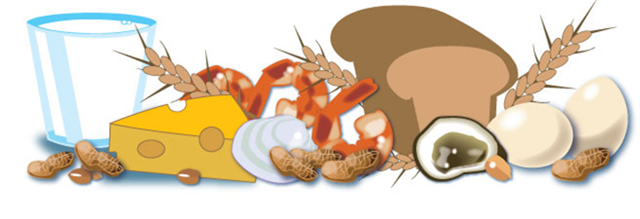
Although an individual may be allergic to any food, such as fruits, vegetables and meats, these are not as common as the following eight foods which account for 90 per cent of all food-allergic reactions: Milk, egg, peanut, tree nuts (walnut, cashew, etc.), fish, shellfish, soya and wheat.

Homeopathic Treatment For Food Allergy

Homeopathic treatment of food allergies can be very beneficial as it treats food allergies by optimising the overcharged immune system. Though the treatment may require a more serious approach, most of the allergies can be treated with homeopathy. Homeopathy views food allergies as an expression of a disturbance in the patient’s healing system. Food allergies are not a disease to be cured in themselves, but a reflection of an underlying imbalance.

Food sensitivity or intolerance can be treated by homeopathic medicines that are specific to that particular problem. For example, homeopathic medicine Silicea for milk intolerance in infants, when even the mother’s milk disagrees; Zingiber for diarrhea that sets in after eating melons; Antim crudum for headache that comes after eating fruits.

Homeopathic Medicines For Food Allergies

1. Calcarea Carb – For Milk Allergy

Calcarea Carb is an important homeopathic medicine for milk allergy when there is vomiting after consuming milk. There is nausea, distension of abdomen, cutting pain and diarrhea. In some cases, there may be a cold sensation in the abdomen.

How And When To Take Calcarea Carb?

If symptoms such as nausea, vomiting, abdominal cramps and loose stools appear after consuming any milk product, calcarea carbonica can be taken. Low potency (30C), can be taken 2-3 times in a day. High potency 200C can be taken once in a day if expected results are not seen after taking low potency. It is advisable to consult an experienced homeopath before administering 1M or higher potency.

2. Colchicum – For Allergy From Egg

Colchicum is a well-known homeopathic medicine used for gastrointestinal ailments arising after eating eggs. It is the best remedy for distension of the abdomen with gas and loud flatus. There are frequent tasteless burps with pressing/ tearing/ cutting or stitching pain and cramps in stomach. The patient cannot bear the smell of food, it causes nausea and vomiting. The stool contains white large particles in large quantities with mucus-like rice water. All the symptoms of Colchicum are relieved by bending forward.

When And How To Use Colchicum?

It is used in case of stomach pain or feeling of pressure on the stomach with heaviness and continuous rumbling of gas. The recommended dosage in most of the cases is 30C which can be used up to 2-3 times in a day.

200C and 1M are considered very high potencies. The suggested dose of 200C is once in a day, not to be repeated frequently. It is best to consult an experienced homeopath as self-medication should not be done in high power dosage.

3. Urtica Urens – Homeopathic Remedy For Shell Fish/Fish Allergy

Urtica Urens is a top-ranked homeopathic medicine for treating shell fish allergy. There is violent itching with burning and stinging pain on skin. Sometimes along with itching, swelling all over rashes are formed known as hives. The skin looks red, raised and requires constant scratching. The eruption and itching disappear as soon as the patient lies down and reappear immediately after rising. The complaints get worse by water, touch, air, rising up and disappear after lying down.

When and How to use Urtica Urens?

This remedy can be used in rashes or hives which arise after consuming fish/shell fish. Symptoms mainly categorise with intense skin itching, followed by burning. It can be taken 2-3 times in a day in 30C potency. Higher potencies such as 200C and 1M can also be used but it is best to seek professional help before using them.

4Lycopodium – For Wheat Allergy

Lycopodium offers a homeopathic cure for wheat allergy when consumption of wheat products triggers a gastric reaction. It comprises of symptoms like bloating, burping (tasting sour) and flatulence. It is well indicated for weak digestion with burning burping and bitter taste in mouth.

When and How to take lycopodium?

It is a remedy that is used in wheat allergy with a much-bloated abdomen, heartburn, waterbrash (acid reflux from stomach upwards to the throat) and noisy flatulence. Both the lower and the highest potencies are credited with excellent results. But as it is a deep-acting remedy hence lower potency, 30C is usually preferred, 2-3 times in a day. Otherwise 200C potency or higher dose, has proved efficacious, but should not be taken too frequently.

5. Apis Mellifica – For Skin Issues In Food Allergy

Apis Mellifica is a wonderful medicine for treating Urticaria (rashes of round, red welts) on the skin where itching is severe. It is a great remedy when hives develop due to milk allergy. The body is covered with large, elevated bumps accompanied by stinging, burning, pricking or itching. The wheals (red, swollen marks) are painful, tender, hot and extremely sensitive to touch with stinging pain. There is also violent itching and burning in the wheals. The person needing Apis Mellifica may experience worsening of symptoms by warmth and relief by cold applications.

When and How to take Apis mellifica?

The symptoms such as hives/wheals/ bumps caused due to specific foods are largely benefitted by Apis. The complaints include rapid swelling of the affected area along with stinging pain, burning, itching and redness. The lower potency 30C works well in these conditions and can be repeated 2-3 times in a day. A careful analysis should be done before using it in 200C and 1M potencies and should not be frequently repeated if the symptoms doesn’t seem to get better.

Common Food Allergens 

In adults, they include:

Peanuts

Tree nuts, such as walnuts

Shellfish, including shrimps, crayfish, lobsters and crabs

For children, the food allergens that most often cause problems are:

Eggs

Milk

Peanuts

Types Of Food Allergies

Pollen Food Allergy Syndrome

Also termed as oral allergy syndrome, pollen food allergy syndrome affects many people having hay fever. In this condition, a protein found in certain nuts, spices, fresh fruits and vegetables can trigger an allergic reaction that can cause itching in the mouth. In serious reactions, it can lead to throat swelling or anaphylaxis.

Proteins in certain fruits, vegetables or nuts cause the reaction as they are similar to allergy-causing proteins found in certain pollens. This is an example of cross reactivity.

Exercise-Induced Food Allergy Syndrome

In this condition after eating certain foods, there is itching, a person may faint and can get ‘hives’ or even anaphylaxis when body temperature goes up after exercising. One can prevent it by avoiding eating anything for a few hours before exercising.

Food Protein-Induced Enterocolitis Syndrome (FPIES)

Also referred to as delayed food allergy, it is a severe condition causing vomiting and diarrhea after consuming food allergen, like milk, soy and grains. FPIES mostly develops in infancy when the baby is introduced to solid food.

Eosinophilic Esophagitis

In this condition, there is inflammation of esophagus (food pipe). It occurs due to allergy or sensitivity to particular proteins found in foods. Many people with this condition have a family history of asthma, rhinitis, dermatitis or food allergy.

Symptoms Of Food Allergy

The symptoms that the allergic individual produces are individual in nature.  They can range from a mild asthmatic attack to a severe life-threatening allergic response anaphylaxis.

–  If people are allergic to a particular food, for example, they may first experience itching in the mouth as they start to eat food.

– After the food is digested in the stomach, abdominal symptoms such as vomiting, diarrhea or pain may start.

– When the food allergens enter and travel through the bloodstream, they can cause a drop in blood pressure.

– As the allergens reach the skin, they can induce hives or eczema, or when they reach the lungs, they may cause asthma.

– All of this takes place within a few minutes to an hour.

 Other symptoms include

– Shortness of breath

– Wheezing,

– Repetitive cough

– Shock or circulatory collapse

– Tight, hoarse throat; trouble swallowing

– Swelling of the tongue, affecting the ability to talk or breathe

– Weak pulse

– Pale or blue colouring of skin

– Dizziness or fainting

Most food-related symptoms occur within two hours of ingestion; often they start within minutes. In some very rare cases, the reaction may be delayed by four to six hours or even longer. Delayed reactions are most typically seen in children who develop eczema as a symptom of food allergy and in people with a rare allergy to red meat caused by the bite of a lone star tick.

Pathophysiology Of Food Allergy

 Our immune system uses two components to deal with food allergies. One of these is immunoglobulin E (IgE), a type of blood-moving protein known as an antibody. The other is mast cells, which are found in all body tissues but are particularly prevalent in the digestive tract, nose, throat, and lungs. When you eat a food to which you are allergic to for the first time, certain cells produce a lot of IgE to counter the allergen in the food. IgE is released and adheres to the surface of the mast cells. Although you won’t have an allergic reaction just yet, your body is prepared to do so.

The allergen reacts with that IgE the time you consume the meal containing the allergen, causing the mast cells to release histamine and other substances. These compounds will produce different symptoms depending on the tissue they are in. Additionally, some food allergens can enter your bloodstream because they aren’t destroyed by the cooking heat, stomach acids, or other food-digesting enzymes. They can then spread throughout your body and trigger allergic reactions. The timing and the place are impacted by the digestive process. Your mouth can start to itch. Then, you can have symptoms like nausea, diarrhea, or stomach pain. Blood-borne food allergies can lower blood pressure. They can cause hives ( reddish bumps on skin) when they reach the skin.

Risk Factors Of Food Allergy

1. Family history: Risk of having food allergy increases if one has a family history of asthma, hives, eczema or allergies, like hay fever.

2. Age: Food allergies are more common in children, especially infants. As a child grow older, the digestive system  matures and the body is less affected by the food that triggers allergy.

3. Asthma: Asthma and food allergy commonly occur simultaneously. When they occur symptoms of both are severe.

4. Other allergies: If one is having a particular type of allergic reaction like hay fever, one is more prone to risk of  developing food allergy.

Dr. Vikas Sharma is a Chandigarh-based homeopathic doctor. He has been practicing homeopathy for the last 13 years.

image


Call Dr. Sharma's Clinic - From United States and Canada call 703-659-0873. Patients From rest of the world and India call +91-6283487321

Is Jaw Cracking, Jaw Pain Troubling You? Try Homeopathic Remedies

Jaw pain is a very common problem experienced by a number of people. It may be accompanied by some other symptoms depending on the case. These include stiffness in the jaw, swelling or tenderness around the jaw, burning sensation around the jaw, clicking sounds on opening or closing the jaw, pain on the face while moving the jaw, headache, the pain in the ear, ringing in the ears and toothache.

Homeopathic medicines are very effective in managing complaints of jaw pain. These medicines help in reducing the intensity and frequency of the pain gradually. They also help relieve the accompanying symptoms like stiffness in the jaw, swelling or tenderness around jaw, pain in the face, headache and pain in the ear. Homeopathic medicines for jaw pain are natural hence are completely safe to use.

Homeopathic medicines offer significant relief in cases of jaw pain by addressing the root cause and it thus offers long-term relief. This not only provides us with immediate relief but also ensures there is no recurrence. It effectively alleviates jaw pain related to various conditions like temporomandibular joint disorder (TMJ disorder, arthritis, dental problems, sinus infection, cluster headache, trigeminal neuralgia.

Homeopathic medicines for jaw pain works wonders when administered as per the characteristic symptoms of each individual. Individualised medicines are administered carefully after detailed case analysis by a homeopath. These promote lasting effects and improve overall health of the patient. It is advised to take any homeopathic medicine for jaw pain only after evaluating the reason behind it after consulting a doctor. These medicines can be taken only when the cause is mild to moderate. However, in case of a serious jaw pain caused by a heart attack, immediate intervention through conventional mode of treatment is non-negotiable.  Some of the symptoms like chest discomfort, difficulty in breathing, nausea, sweating or fainting along with jaw pain signal urgent help for which one should consult an allopathic doctor.

Homeopathic medicines for jaw pain have no side-effects. These medicines are prepared from natural substances and offer relief in a gentle way and can be used among people of all age groups with promised safety.

Top 7 Homeopathic Medicines For Jaw Pain

The top seven medicines for managing jaw pain are Rhus Tox, Silicea, Causticum, Hecla Lava, Spigelia, Alumina and Phosphorus.

1. Rhus Tox – Top-grade Medicine

Rhus Tox is a leading medicine that helps manage jaw pain. A patient may report with stiffness of the jaw along with pain. There is a feeling as if the jaw would break. There is a cracking sound in the jaw joint and its movement is audible. There can be cramping pain in the lower jaw near the ear. It may get better by applying something warm and also by pressing it. Lastly, it is administered for pain in the teeth that extends to the jaw and the side of the head.

When to use Rhus Tox?

Rhus Tox is topmost medicine to manage cases of jaw pain along with stiffness of jaw with sensation as if the jaw would break.

How to use Rhus Tox?

From low to high potency it works well in all potencies. Initially, it is best to use 30C potency two to three times a day.

2. Silicea – For Throbbing Toothache With Pain In Jaw

This medicine is administered when a person has a throbbing toothache with jaw pain. The jaw may have swelling too. It is also administered for rheumatic pain in the jaw that extends to the sides of the head.

When to use Silicea?

Silicea should be given to the patients who have jaw pain  and along with it there is pain in the teeth and swelling in the jaw.

How to use Silicea?

This medicine gives excellent results in 6X potency that can be used two to three times a day.

3. Causticum – For Jaw Pain When One Has difficulty in Opening Mouth

Causticum is a medicine best used for patients who have jaw pain along with difficulty in opening the mouth. For using it, the pain can be tensive or dragging. It is also indicated for arthritic and rheumatic pain in the lower jaw. A sensation of tension and swelling under the jaw is also indicative for its use.

When to use Causticum?

This medicine is of great help to manage pain in the jaw with considerable difficulty in opening the mouth along with tense sensation and swelling under the jaw.

How to use Causticum?

This medicine can be used in both low and high potencies. However, it is better to start with low potency like 30C once a day.

4. Hecla Lava – For Jaw Pain After Tooth Extraction

This medicine is beneficial for those who have pain in the jaw following tooth extraction. The accompanying symptom may be that the jaw becomes sore and swollen. Other than this, it is useful for managing toothache with sensitivity to pressure and swelling around the jaws.

When to use Hecla Lava?

Hecla Lava is an important medicine to help cases of jaw pain that occurs after tooth extraction.

How to use Hecla Lava?

This medicine can be used once or twice a day at 30C potency.

5. Spigelia – For Lower Jaw Pain Radiating To Ears

This medicine is recommended when there is pain in the lower jaw that extends to the ears. It may also extend to the temporal (sides) region of the head. In some cases, the pain may extend from the jaw to the neck. It is one of the best medicines for cases of facial neuralgia with above symptoms. Another indication for using it is pain in the lower jaw while chewing, with a feeling that the lower jaw has split from the joint.

When to use Spigelia?

This medicine works well for cases of pain in the jaw when pain radiates to the ears.

How to use Spigelia?

It can be used in low 30C potency once or twice a day. It can also be used in 200C potency but not more than once a day.

6. Alumina – For Jaw Pain While Chewing or Opening Mouth

It is one of the top medicines to help if jaw pain occurs while chewing or opening the mouth. Pain is tensive (stressful). Swelling of the jaw may be an accompanying factor. Along with this, there may be a sensation as if the lower jaw has shortened. Another indication for its use is, there is intense pain in the jaw and the cheeks.

When to use Alumina?

Alumina is administered to provide relief from the jaw pain that occurs while chewing or opening the mouth.

How to use Alumina?

It is advised to take Alumina 30C once a day.

7. Phosphorus – For Tearing Pain In Jaw Bones

Phosphorus is effective when there is a tearing type of pain in the jaw bones. The pain occurs mainly during the evenings. Those who need it feel enhanced pain while lying down. Jaw movement may offer relief in the pain.

When to use Phosphorus?

This medicine is useful for managing the tearing sort of jaw pain felt mostly during the evenings.

How to use Phosphorus?

Phosphorus can be used once a day at 30C power.

What Are The Causes Behind It?

Jaw pain can result due to various reasons. The most common cause behind the jaw pain is temporomandibular joint disorder (TMJ disorder).  TMJ is a hinge joint, one on each side of the jaw that connects the jawbone to the temporal bones of the skull. This joint helps in jaw movement while talking, chewing or yawning. Any problem with this joint or in the muscles around this joint is referred to as TMJ disorder. This disorder can lead to jaw pain. TMJ disorder has many causes and some of them include an injury to the jaw, teeth grinding, arthritis, and muscle inflammation around the jaw. Apart from jaw pain, other symptoms of this disorder include pain in the face or around the ears, clicking/popping sound while opening the mouth, ringing in the ears, headache and dizziness.

The second cause for jaw pain is trauma to the jaw. It can occur from a blow on the face or if one falls directly on the face. Trauma may result in dislocated or a broken jaw.

Thirdly, jaw pain may follow a dental surgery during recovery period.

The next cause can be the dental problems. These include tooth damage, cavities, crowded teeth, misaligned teeth, dental abscess (a pocket of pus that can occur in any part of a tooth), gum disease, teeth grinding and jaw clenching.

Another cause is sinusitis or sinus infection which is the inflammation of any of the para-nasal sinus, the air-filled spaces in the skull. In case of infection or inflammation of these sinuses, there is excessive production of mucus that puts pressure on the jaw joint and can result in pain in the upper jaw. Its main signs and symptoms are thick nasal discharge, nasal congestion, dripping of mucus from the back of nose at the back of the throat (also called PND, means post nasal drip), pain, tenderness and swelling around the forehead, eyes, cheeks, nose and decreased sense of smell and taste.

Arthritis may also cause jaw pain. In case arthritis affects TMJ, it can result in the jaw pain. It includes osteoarthritis (wear and tear of the protective cartilage at the ends of bones), rheumatoid arthritis (an autoimmune disease in which the immune cells mistakenly attack the lining of the membranes that surround joints and causes its inflammation and damage.)

Another reason is cluster headache. This type of headache mainly causes pain behind or around one eye and lasts for weeks or months, followed by a long period of no pain. In some cases, the pain can spread to the jaw.

Trigeminal neuralgia is also one of the causes for the jaw pain. It is a chronic painful condition affecting the trigeminal nerve and mainly arises when a blood vessel puts pressure on this nerve. Pain occurs on one side of the face, mainly on the jaw, cheeks, teeth, gums and lips.

Lastly, it can be a sign of heart attack. Though in case of heart attack, chest pain is the major symptom, in some of these cases, pain can be felt in the neck, back or the jaw. Jaw pain can occur on the left side during a heart attack, mostly in women.

Call Dr. Sharma's Clinic - From United States and Canada call 703-659-0873. Patients From rest of the world and India call +91-6283487321

How To Deal With Puffy Eyes In Homeopathy?

Puffy eyes means swelling around the eyes medically known as periorbital puffiness. Puffy eyes may be due to various reasons. In many cases, puffy eyes is a temporary condition (for example, from excessive crying, lack of sleep) and resolves on its own without any treatment but in some cases, it can be an indication of a medical condition (for example, allergies, conjunctivitis) that requires treatment or  orbital cellulitis which needs immediate medical attention.

Homeopathy is very beneficial to treat cases of puffy eyes. Homeopathic medicines work to reduce the swelling around eyes by targeting the root cause behind it. Side by side it also attends well any accompanying symptoms present in a particular case. The cases of mild to moderate intensity where no serious cause is linked with puffy eyes respond wonderfully to homeopathic medicines. But homeopathy does not offer help in cases where swelling is intense, or occurs along with certain symptoms (like high fever, eye pain, sudden vision changes / vision loss, bleeding from eyes, sudden swelling of the face, lips, throat or tongue, breathing problem and bulging eyes) indicating a serious ailment or when it is linked with a serious cause (like eye injury, cellulitis, anaphylaxis, cancer). In these cases, it is strictly advised to take help from conventional mode of treatment on urgent basis.

Homeopathy fights the underlying cause

As the causes vary for puffy eyes from case to case, homeopathic medicines target the cause behind it which brings excellent results. Relief appear gradually with homeopathic treatment in cases of puffy eyes but it results in long-term management of complaint rather than temporary help. The duration of complete treatment varies from case to case. It is advised to take homeopathic medicine under the guidance of a homeopathic doctor and never self-medicate. He will decide whether the case is within the treatable parameters of homeopathy depending on the cause, if not, he will guide you toward timely conventional treatment.

Prescription after detail case evaluation

In homeopathy, not every case is provided with the same medicine always. Rather the best medicine that will suit a given case is decided for every case individually. For this homeopathic doctor evaluates the case deeply to finalise the medicine from the long list of homeopathic medicines recorded in homeopathic therapeutics for treatment of puffy eyes. This way the properly selected medicine serves best help to provide relief. To get top results, a complete course of treatment needs to be followed under the guidance of a homeopathic expert.

Natural homeopathic treatment mode

As widely known, homeopathy is a natural healing science so it has zero side effects. Homeopathic medicine works naturally to treat the root cause of puffy eyes to bring great relief. These work very gently in the most harmless manner in all the cases.

Homeopathic Treatment

Homeopathy is very beneficial to treat cases of puffy eyes. Homeopathic medicines work to reduce the swelling around eyes by targeting the root cause behind it. These medicines are recommended for mild to moderate cases where no serious cause is linked with puffy eyes. In cases where swelling is intense, or occurs along with certain symptoms (like high fever, eye pain, sudden vision changes, vision loss, bleeding from eyes, sudden swelling of the face, lips, throat or tongue, breathing problem and bulging eyes) indicating some serious ailment or when it is linked with some serious cause (like eye injury, cellulitis, anaphylaxis, cancer), it is strictly advised to take help from conventional mode of treatment on urgent basis.

As the causes vary for puffy eyes from case to case, it is advised to take homeopathic medicine under the guidance of a homeopathic doctor and never self-medicate. Homeopathic doctor can prescribe medicine after evaluating the case. He will decide whether the case is within the treatable parameters of homeopathy depending on the cause, if not, he will guide you toward timely conventional treatment.

Top 7 Homeopathic Medicines For Puffy Eyes

1. Apis Mellifica – Top Grade Medicine

Apis Mellifica is a leading medicine in homeopathy for managing cases of puffy eyes. In most cases needing it, the eyelids are swollen, puffy and red. It is accompanied by a burning sensation and tight skin around the eyes. Though the swelling may be present around or under the eyes, mostly swelling is marked under the eyes like under-eye water bags. It is one of the best medicine for puffy eyes in case of allergies. In some cases needing it, there may be inflammation of conjunctiva. The conjunctiva is red and hot tears flow. Sensitivity to light may also be there.  Other than the above, it is well indicated for puffy eyes in case of blepharitis. The eyelids are swollen and become thick with stinging pains.

When to use Apis Mellifica?

Apis Mellifica is a top medicine to manage puffy eyes with swelling especially under the eyes that can be attended with burning sensation in eyes.

How to use Apis Mellifica?

It works well in both low and high potencies. Initially, it is best to take it in 30C potency one to two times a day.

2. Kali Carb For Marked Swelling Above The Eyes

This medicine is prominent for managing swelling above the eyes. It is present between the eyebrows and the upper lid. It is also helpful in managing cases of swelling of eyelids from blepharitis. In some cases, along with swollen eyes, there is redness on the edges of eyelids. There may be watering from eyes also.  The eyelids may be sticky in the morning.

When to use Kali Carb?

Kali Carb is a wonderful medicine for puffy eyes with most prominent swelling above the eyes.

How to use Kali Carb?

Kali Carb can be taken once a day in 30C power.

3. Euphrasia For Swollen Lids With Watery Eyes

Euphrasia works well for swollen eyelids with watery eyes. Besides, conjunctiva can be red. Burning may be felt on the margins of the lids . A feeling of dryness on the margins of the eyelids is another accompanying symptom. Nasal discharge may also be present.

When to use Euphrasia?

Its use is recommended for cases of swelling of lids attended with marked watering from eyes.

How to use Euphrasia?

This medicine can be used in both low and high potencies. In 30C potency, it can be used two to three times a day. While if using 200C potency, then only one dose per day is recommended.

4. Rhus Tox For Puffy, Itchy Eyelids

It is a very beneficial medicine for cases in which there are puffy eyes along with itching of lids. A biting and prickling sensation in lids can attend it.  There is also shooting type of pain around the eyelids. Sometimes there is dryness in the eyes and heat in the eyelids.

When to use Rhus Tox?

Rhus Tox suits well cases of puffy eyes when there is itching on eyelids in addition to swelling.

How to use Rhus Tox?

In the beginning, it is suggested to use it in 30C potency once or twice a day. Its higher potencies are also available but they should be used under the supervision of a homeopathic doctor.

5. Allium Cepa For Swelling Around Eyes And Allergies

It is an important medicine for cases in which there is swelling around the eyes as a part of nasal allergies (allergic rhinitis). The symptoms of allergies that are present include excessively itchy eyes, watering from eyes, sneezing and runny nose. Next, there can be pain in the forehead.

When to use Allium Cepa?

This medicine should be selected for puffy eyes associated with allergies with symptoms like itchy, watery eyes, sneezing and runny nose.

How to use Allium Cepa?

Usually it is utilized in 30C potency two to three times a day.

6. Merc Sol For Swollen Lids Along With Eye Watering And Burning

This medicine is indicated for cases in which there are puffy eyes along with blue rings around eyes.  Frequent itching is felt in the eyes. Next, there can be sensitivity to light. In some cases, inflammation of eyes may be present with pressing burning pain.

When to use Phosphorus?

Phosphorus should be considered to manage cases of puffy eyes with bluish rings around eyes along with itchy eyes and sensitivity to light.

How to use Phosphorus?

It is advised to take Phosphorus 30C once a day.

7. Phosphorus For Puffy Eyes And Blue Rings About Eyes

This medicine is indicated for cases in which there are puffy eyes along with blue rings around eyes.  Frequent itching is felt in the eyes. Next, there can be sensitivity to light. In some cases, inflammation of eyes may be present with pressing burning pain.

8. Pulsatilla For Swollen, Red Eyelids

Stye

Stye

It is a natural medicine that proves helpful when the eyelids are swollen and red. Along with this, there can be sensation of dryness and burning heat in eyes. In cases needing it, there is a tendency of formation of stye (a localized infection of an oil gland in the eyelid margin) mainly on the upper lid.

When to use Pulsatilla?

Pulsatilla is useful for puffy eyes accompanied with redness of lids and dryness, heated sensation in eyes.

How to use Pulsatilla?

One may take this medicine once a day in 30C potency.

Cause Behind Puffy Eyes

Puffy eyes are common in aged people. As a person ages, there occurs weakening of the tissues and muscles around eyelids. It results in falling of the normal fat (that helps to support the eyes) in the lower eyelid. This makes lids look puffy. There can be accumulation of fluid in lower eyelid with ageing which increases swelling. Next temporary cause is excessive crying. In the process of reabsorbing excessive liquid from the eyes, some of it is retained in the tissue under the eyes which makes it look puffy temporarily.

Other than the above reasons, it can simply occur from not taking enough sleep, excessive rubbing of eyes, poor diet and sun exposure.  Puffy eyes can be hereditary. Mostly puffy eyes happen due to fluid retention in tissue around the eyes.

Following are the medical conditions that are related to it.

1. Allergies: The first medical condition that can lead to it is hay fever also known as allergic rhinitis. It can cause swollen under-eyes in addition to other symptoms like sneezing, runny nose, nasal congestion, itchy nose, red eyes, watery and itchy eyes, cough and post-nasal discharge. Allergy may also be from reaction to some food, chemical, insect bite, etc.

In some cases, it may occur from a severe life-threatening allergic reaction (anaphylaxis) that needs immediate medical help because it can be fatal if not attended to immediately. Anaphylaxis is a severe allergic reaction that causes swelling of the throat and tongue, difficulty in breathing, sudden drop in blood pressure, rapid pulse, nausea, vomiting, diarrhea, dizziness and loss of consciousness mostly along with hives, which is a skin condition characterized by itchy, raised bumps on skin.

Hives

Hives

2. Conjunctivitis is inflammation of the transparent membrane called conjunctiva lining the white part of the eyeball and eyelid. It can cause swelling of eyelids along with other symptoms, like redness in eyes, itching in eyes, eye discharge, excessive tears from eyes and grittiness in eyes (feeling of particle of sand in the eye).

3. Dermatitis is also one of the cause. In dermatitis there occur inflammation of the skin with red, itchy rash.

4. Blepharitis is an inflammation of the edges/margins of eyelid. Swollen eyelids can attend other symptoms like itchy eyelids, red eyes, watering from eyes, burning or stinging in the eyes, grittiness in the eyes, and sticking of the eyelid.

5. Orbital cellulitis is a serious condition in which there occurs infection of the soft tissues and fat within the eye socket. It needs urgent medical help as it can result in permanent vision loss and other severe complication like meningitis which is inflammation of the protective membranes that covers the brain and spinal cord.

6. Droopy eyelids (ptosis) is also a cause for it.

7. Another cause is nephrotic syndrome which is a kidney disorder in which excessive protein leaks in the urine.

8. It may also occur in case of grave’s eye disease (thyroid eye disease) and hypothyroidism (underactive thyroid)

9. Next it may happen from stye. Other causes are black eye from an injuryand fracture of bony orbit.

10. It may also arise in cases of sinusitis (inflammation of mucous membranes lining the paranasal sinuses).

11. In females, it may be a fallout of PMS (premenstrual syndrome).

12. Apart from the above, in rare cases it can be from eye cancer.

What Other Symptoms May Occur With Puffy eyes?

Puffy eyes may occur along with other eye symptoms depending on the cause. These include itching in eyes, eye discharge, dry eyes, sensitivity to light, excessive tears from eyes, redness of eyes and dark circles around eyes.

In some cases, puffy eyes occur along with nasal symptoms as in allergic rhinitis. These include sneezing, runny nose, stuffy nose, post-nasal drip. In some cases, sore throat, fatigue, headache and cough may also be present.

There are some serious symptoms which accompany puffy eyes that need urgent medical care, like high fever, bleeding from eyes, eye pain, sudden vision changes, vision loss, sudden swelling of the face, lips, throat or tongue, breathing problem and bulging eyes with pain, redness and fever.


Call Dr. Sharma's Clinic - From United States and Canada call 703-659-0873. Patients From rest of the world and India call +91-6283487321

Highly Effective Homeopathic Remedies for Follicular Tonsillitis 

Tonsils refer to masses of lymphoid tissues lying in the back of the throat, one on either side. Tonsils have a protective role and act as the first line of defense against the bacteria and virus that might get inhaled or ingested. Inflammation of tonsils, on one side or on both, is known as tonsillitis. Homeopathic medicines are highly effective for acute tonsillitis as well as for cases of recurrent tonsillitis. The primary aim of homeopathic medicines is to build a child’s immunity and prevent recurrent infections that lead to tonsillitis.

Homeopathic Treatment For Tonsillitis

Homeopathy is a highly advanced science that takes the inside-out approach to all disease, including tonsillitis, starting at the root cause and in time, curing the condition without the need for surgical intervention. Tonsillitis is treated most efficiently by homeopathy as it follows a two-step procedure to deal with tonsillitis. In the first step, homeopathic medicines are given to treat the acute symptoms of tonsillitis. In the second step, homeopathy targets the chronic tendency toward recurrent tonsillitis. Homeopathic  medicines improve the body’s immunity and make it strong enough to fight infection quickly.

In many cases of mild to moderate cases of tonsillitis, homeopathy has shown excellent results and helped avoid surgery.

Top Homeopathic Medicines For Tonsillitis

The medicines prominently indicated for tonsillitis treatment in homeopathy are Belladonna, Merc Sol, Hepar Sulph, Calcarea Carb, Psorinum, Merc Iodatus Ruber, Merc Iodatus Flavus and Streptococcinum.

1. Belladonna – For Acute Tonsillitis With Red Swollen Painful Tonsils

Belladonna is the top recommended medicine for treating acute tonsillitis. The key indication for its use is red, swollen enlarged tonsils with marked pain. The pain is worse while swallowing mainly liquids and throat remains dry. Fever with intense heat in the body accompanies the above symptoms. Heat, constriction (tightening) and lump in the throat may also be felt.

When and How to use Belladonna?

For acute tonsillitis, it is an infallible medicine to be used when tonsils are red, swollen with excessive throat pain. Give it in the very beginning in such cases, it will soothe throat pain, reduce tonsil inflammation and cut short recovery period of tonsillitis. One may take this medicine in 30C potency three to four times a day in the beginning at minimum three-hour interval. When relief ensues, gradually reduce the dose to two times a day.

2. Merc Sol – For  Pain In Tonsils Extending To Ears

Merc Sol is an extremely effective medicine for treating tonsillitis with pain in tonsils extending to ears especially when swallowing. The nature of pain is mainly stitching type. On examination of the throat, the tonsils look dark red and ulcers or white spots on tonsils can be present. Excessive salivation is also observed. Foul odour from the mouth is present.

When and How to use Merc Sol?

Merc Sol is an ideal prescription for cases presenting with tonsil pain radiating to ear while swallowing along with increased salivation and foul breath. This medicine works wonders in 30C potency. Use of Merc Sol 30C should be limited to once or twice a day.

3. Hepar Sulph – For Infected Tonsils and Quins

Hepar Sulph proves very successful in treating infected tonsils with pus points on tonsils and quinsy (also known as peritonsillar abscess in which pus accumulates behind the tonsils). The symptoms to look out for using it are stitching pain in the throat and pain from throat radiating to the ear. There is intense pain while talking or swallowing. Sensation of a lump or splinter (a sharp piece of glass or wood) stuck in the throat is felt. The person may hawk up yellow mucus.

When and How to use Hepar Sulph?

Use of Hepar Sulph is considered in cases where tonsils are infected with pus points on tonsils or pus collection behind tonsils (quinsy). Though it can be used in various potencies, 30C is most preferred. Its use is recommended in mild cases only but in severe cases with extremely enlarged tonsils (with excessive pus behind them) blocking the throat, drainage of pus and administration of antibiotics may be required. So, urgent help should be taken from allopathic mode of treatment. It is best to take this medicine for infected tonsils or quinsy only after consulting a homeopath who can best judge if the condition is mild and controllable with homeopathic medicines or severe requiring help from conventional mode.

4. Calcarea Carb – To Treat Recurrent Tonsillitis

Calcarea Carb is an excellent medicine for treating recurrent tonsillitis. After recovery from acute tonsillitis phase, this medicine can be used as an intercurrent remedy (treatment for some chronic disease that is hindering cure of some other ailment) to treat tendency to have recurrent tonsillitis. An indicative symptom for use of Calcarea Carb is the tendency to catch cold frequently. Even slight exposure to cold air affects the throat and tonsils in cases needing this remedy.

When and How to take Calcarea Carb?

Calcarea Carb is mainly prescribed to treat tendency to have recurrent tonsillitis. It will help to build immunity to fight with throat infections naturally. It can be used in low (30C) as well high potencies (like 200C and 1M). The dose varies from case to case. Usually in 30C potency, it can be used once or twice a week. But high potencies are usually given on a weekly (once a week) basis or in some cases fortnightly (one dose every 15 days). Its best to consult a homeopathic expert for right potency selection and repetition of this medicine.

5. Psorinum – To Treat Tendency To Recurrent Infected Tonsillitis

Psorinum is very effective in boosting immunity to prevent recurrent infected tonsillitis (tonsillitis with pus points on tonsils) and quinsy (pus accumulation behind tonsils). These medicines reduce susceptibility to recurrent throat infections. Those needing it have markedly swollen tonsils, pain with swallowing, and thick mucus in the throat. Along with this, there is foul-smelling salivation and hawking of cheesy mucus bits having bad smell and taste. There is recurrent pus formation behind the tonsils.

When and How to use Psorinum?

It can be used in persons who suffer from infected tonsillitis repeatedly. Use of this medicine will build immunity to prevent recurrence of such infections. Psorinum is mainly used in 200C or even higher potencies like 1M. It is a slightly strong medicine, so it is used just once or twice a month usually. For correct potency and dose, kindly consult a homeopathic doctor.

6. Merc Iodatus Ruber – For Left-sided Tonsillitis

Merc Iodatus Ruber is a majorly indicated medicine for treating left-sided tonsillitis. Indications for its use are swollen tonsils with dark red fauces (area between cavity of mouth and pharynx) on the left side, sensation of lump in the throat and disposition to hawk.

When and How to use Merc Iodatus Ruber?

A person having left-sided tonsil inflammation can take this medicine. 30C potency of this medicine twice a day is the right dose to begin with.

7. Merc Iodatus Flavus – For Right-sided Tonsillitis

Merc Iodatus Ruber is prominently indicated for tonsillitis of right side. The guiding features pointing towards its use are swollen tonsil on the right side, sticky mucus in throat and constant inclination to swallow. Other symptoms that may arise are the feeling of a lump in the throat with relief setting in by taking cold liquids.

When and How to use Merc Iodatus Flavus?

This medicine is specific for tonsillitis on right side. The usual recommended dose is two times a day in 30C potency.

8. Streptococcinum – For Managing Strep Throat

Streptococcinum is a specific medicine for managing strep throat infection. The symptoms to use this medicine are enlarged, swollen tonsils, infected tonsils, and recurrent tonsillitis. The tonsils may get infected with purulent (pus) matter.

When and How to use Streptococcinum?

This medicine is specifically reserved for managing cases of strep throat along with conventional mode of treatment. As strep throat has severe symptoms and may lead to serious complications, it is best to use this medicine only after consulting a homeopathic practitioner. After studying the case history thoroughly, the doctor will recommend its potency and repetition.

Note The above medicines can be taken in mild to moderate cases of acute tonsillitis for about a week. If condition does not improve, it is advised to consult a homeopathic physician to decide the further course of action. In case of sore throat with very high fever, extreme difficulty in swallowing, difficulty in breathing and speaking, extreme weakness, pus formation on/ behind tonsils or in case of strep throat, do not self-medicate and take urgent help from doctor.

Causes Behind Tonsillitis

Viral infections: Tonsillitis mainly arises from viral infections, like  influenza virus, adenovirus (responsible for causing common cold and sore throat), rhinovirus (that commonly cause common cold), parainfluenza virus, enterovirus, Epstein – Barr virus.

Bacterial infection: Tonsillitis may also be the result of a bacterial infection. The most common bacteria that cause tonsillitis is Group A beta-hemolytic streptococcus. Infection of tonsils with this bacteria is popularly called strep throat that leads to inflammation and pain in the throat and tonsils. Strep throat is highly contagious and spreads quickly from one person to another through cough, touch or sneeze. It is very common in school-going children and among teenagers. Major complications may arise in strep throat infection if not treated properly well in time. These include rheumatic fever (inflammatory condition affecting joints, heart nervous system and skin) and post-streptococcal glomerulonephritis (kidney inflammation).

Bacteria other than this however can also cause tonsillitis, for example, staphylococcus aureus, chlamydia pneumonia, mycoplasma pneumonia,etc.

Risk Factors

Though tonsillitis can affect anyone but certain factors increase the risk

1. Young age: Tonsillitis is more common among young children. Very young children are at high risk of tonsillitis from viral infection and those between 5 yrs to 15 yrs are prone to get tonsillitis from bacterial infections. However, tonsillitis can occur at any age though chances are less as compared to children. The reason is the immune function of tonsils declines after puberty which may be the reason for reduced chances of tonsillitis in adults.

 2. Germ exposure: Excessive germ exposure in children puts them at risk of tonsillitis. Children remain in close contact with same age group kids in school, parks, playways, etc that exposes them more to virus/bacteria that causes tonsillitis.

 How Does Tonsillitis Spread?

Tonsillitis is very contagious and spreads from one person to another via direct contact. A person with tonsillitis can spread the infection spreading agents in the air as well as nearby objects every time he coughs or sneezes. Tonsillitis may also spread via direct inhalation of the air droplets carrying infection-causing agents or indirectly by touching these infected objects and then touching the nose/mouth with the same hands. One may also contract tonsillitis via kissing an infected person or sharing utensils of a person having tonsillitis.

Pathophysiology

Tonsils are oval-shaped lumps of lymphoid tissue lying at the back of the throat, one on either side. These act as a first line of defense mechanism of our body against an illness. Tonsils trap the germs (bacteria or viruses) that may enter throat via nose or mouth and cause an infection. Tonsils produce lymphocytes  which kill the virus/bacteria entering the throat. In the process of fighting such infections again and again, the tonsils also get vulnerable to get infected and at some point they actually get infected and inflamed.

Signs And Symptoms Of Tonsillitis

The main signs and symptoms include red, swollen tonsils along with pain in throat which is the first indicating feature of tonsillitis. The pain usually gets worse while swallowing. The pain may be one-sided or appear on both sides depending upon which tonsil is involved. The other symptoms that may attend are difficult swallowing, fever, bad/fetid breath, headache, scratchy voice, ear pain and neck pain. White/yellow pus spots may also appear on the tonsils. The glands in the neck may be swollen and tender. In chronic cases, tonsil stones (debris collection on tonsils) may form. In young kids excessive drooling of saliva, increased irritability/fussiness, vomiting, low appetite and stomach pain can be observed.

Types Of Tonsillitis

Acute Tonsillitis: In this type, the symptoms remain for 3 to 4 days but in some cases may linger for 2 weeks.

Chronic Tonsillitis: A person suffers from acute tonsillitis multiple times in a year for short periods of time

Recurrent Tonsillitis: The symptoms last for longer time, more than two weeks.

Complications Of Tonsillitis

Complications associated with tonsillitis include

1. Middle ear infection

2. Difficulty in breathing

3. Obstructive sleep apnea: Breathing is disrupted during sleep

4. Peritonsillar abscess: Collection of pus behind the tonsils is referred to as  peritonsillar abscess, also known as quinsy. It is a rare, but very serious complication of tonsillitis. It can grow large in size and block the throat resulting in difficult breathing and swallowing. If not treated, the infection can spread to neck, chest or lungs.

5. Tonsillar cellulitis: Spread of infection deeply to nearby tissues

6. In tonsillitis with group A streptococcal bacteria i.e. strep throat infection, the serious complications include rheumatic fever and post-streptococcal glomerulonephritis.

Preventive Measures To Help Decrease Tonsillitis Risk

1. Maintain hygiene: Wash hands often, especially before you eat.

2. Sharing of utensils should be avoided.

3. Maintain distance from someone who has tonsillitis and stay back home if you are having tonsillitis to prevent its spread to others.

4. A person with tonsillitis should cover the nose when he/she sneezes to prevent spreading the infection

Home Remedies Along With Medicines

1. Take proper rest

2. Drink plenty of warm fluids

3. Adults can gargle with warm salt water

4. Eat soft food and avoid hard ones


Call Dr. Sharma's Clinic - From United States and Canada call 703-659-0873. Patients From rest of the world and India call +91-6283487321

Rash Behind Ear? Try Homeopathy

Rash behind the ear can be caused due to various reasons. It may be a result of an allergy, infection, or an autoimmune disease in which the infection-fighting cells of our body start destroying body’s healthy tissues by mistake. The rash may look red or pink. It may be dry or have blisters (fluid-filled bumps). Drainage from blisters, flakiness or scaliness may appear. There may be crusts, cracked skin or peeling of the skin. Irritation or itching is the most common symptom. Inflammation, burning and stinging pain can accompany. Depending on the cause behind it, there may be sore throat, runny nose, joint pains and fever along with the rash.

Homeopathic treatment

Homeopathy offers a very effective treatment for the cases of rash behind ears. It gives good results by aiming to treat the root cause behind it. Homeopathic medicines help to halt the further progression of rash and heal the already present rash in such cases. They also help to heal the blisters, cracks, flakes or scales on the skin. Along with this, they help to ease itching and burning that may be present. It is to be noted that in case fever attends the rash, then one should take help from conventional mode of treatment as it may indicate an infection that needs urgent medical help.

Homeopathic Medicines For Rash Behind Ears

1. Graphites – Top-Grade Medicine

Graphites is a very effective medicine for treating cases of rash behind the ears. In cases needing it, there are moist eruptions behind the ears. These ooze a thick, sticky, gluey discharge. Itching is well marked in them. The area behind the ear is also sore. There may be scabs behind ears in some cases. Sometimes cracks and fissures are also present. It is also indicated when there are scales on the rash behind the ear. It is one of the best medicines in homeopathy for treating cases of eczema and psoriasis behind ears.

2. Petroleum For Marked Redness And Cracks Behind Ears

Use of this medicine is recommended for cases in which there is marked redness and cracks behind the ears. Intense itching attends it in most of the cases. Bleeding may also occur from the cracks. The area behind the ears is painful and sensitive to touch. In some cases needing it, there is moisture behind ears. It is a well-indicated medicine for cases of eczema and intertrigo.

3. Sulphur For Dry Eruptions With Itching Burning Sensation

This is a well-indicated medicine for cases of dry eruptions behind the ears attended with itching and burning sensation. These tend to bleed easily due to scratching. Scabs may be present over them. Soreness and pain is also marked on the eruptions. Cracks may also appear behind ears. It is indicated for managing cases of eczema and fungal infection behind ears.

4. Psorinum – For Moist Eruptions Behind Ears

It is a very useful medicine for cases having moist eruptions behind the ears. There is rawness, redness and oozing behind ears. The discharge is offensive. Scabs are present too behind ears. In some cases, pustules (pus-filled eruptions) occur behind ears. It is an important medicine for managing eczema behind the ears.

5. Silicea  When Eruptions Discharge Pus

This medicine offers help for cases in which eruptions behind ears discharge pus. It is a foul-smelling discharge. Scabs also cover these eruptions. There is marked itching. On scratching, a burning sensation and soreness is felt. The eruptions may also occur on the rear part of the head where this medicine is required.

6. Mezereum – For Itchy Eruptions Oozing Gluey Discharge

It is prepared from fresh bark of a plant Daphne Mezereum also known as ‘spurge olive’. It works well in cases having itchy eruptions that ooze gluey discharge. The eruptions may also be present on the scalp. The eruptions may be covered with thick crusts and scabs. Pus may be present beneath the crusts.

7. Nitric Acid For Marked Redness Behind Ears

It is a valuable medicine when there is marked redness behind the ears. Along with this, intense itching is felt. In some cases that require it, there is pus discharge from behind the ears.

8. Baryta Carb For Eruptions Behind And On The Ears

Use of this medicine is considered when there are eruptions behind and on the ears. Scabs are present behind ears. Sometimes there is swelling of glands behind the ears.

9. Sanicula For Soreness Behind Ears

It is useful when there is soreness behind the ears. Persons who need it may also have gluey, sticky discharge along with soreness. The discharge is usually white in colour.

10. Oleander For Ulcers Around And In Ears

It is a natural medicine prepared from leaves of a plant ‘rose laurel’. It benefits those who have ulcers around and in the ears. Additionally, there may be oozing of serum from behind ears.

11. Tellurium – For Eczema Behind Ears With Thick Crusts

It is an effective medicine for persons who have eczema behind the ears with thick crust formation. Other than this, there are red spots. It is accompanied with fine blisters (fluid-filled bumps). The red spots and blisters may also be present on the back of the head and neck.

What Are The Causes?

1. Eczema (atopic dermatitis): It is a very common skin condition in which there is inflammation, redness, roughness and itching on the skin. In some cases, blisters, crusts or skin thickening can occur. Eczema can be dry while in others, it can be moist that oozes discharge. The most common type of eczema is atopic dermatitis. In this type, the immune system is overactive that triggers skin inflammation and damage.

2. Contact dermatitis: It refers to red, itchy, inflamed rash on the skin that occurs due to direct skin contact with an allergen or any allergic reaction. Some common allergens are cosmetics, soaps, jewellery. Its signs and symptoms include a red rash, dry skin, blisters on skin, cracked skin and scales on the skin. Itching, burning, swelling and tenderness may attend the above features.

3. Seborrheic dermatitis: It is another common skin condition in which mainly the scalp is affected. In these cases, there occurs red skin along with scaling, flakiness and dandruff. Other than the scalp, it may also affect eyebrows, eyelids, ears, face and chest.

4. Scalp psoriasis: It is an autoimmune skin condition characterized by red inflamed patches on the skin covered with scales on the scalp. The lesions may spread from scalp to the ears, neck and face. Itching and burning may be felt in lesions. Bleeding may also occur from scratching the lesions.

5. Fungal infection: In such cases, itchy rash occurs and blisters may form behind the ears. Scaling and skin peeling may also occur. Burning can attend. In some forms of fungal infection, red circular rashes appear.

6. Lichen planus: It can be one of the reasons for rashes behind the ears. It is an autoimmune condition that can affect skin, nails and mucous membranes. The lesions in this condition are purple-colored, flat, itchy bumps on the skin. Most commonly affected skin area in this is wrist, inner forearm, and ankle. In some cases, the area around and inside the ear may be affected too and it is referred as otic lichen planus in such cases.

7. Measles: It is a viral infection which begins with cold, fever, cough and red eyes. This is followed by a skin rash that begins from the back of ears and then spreads to the head and neck followed by the rest of the body parts.

8. Rubella: It is also known as ‘German measles’ and is a viral infection in which skin rash occurs that may start behind the ears and neck after which it spreads downwards. Its other signs and symptoms may include runny nose, joint pain, headache and loss of appetite.

9. Lupus: It is an autoimmune disorder in which skin rash can occur. The rash that occurs has ring-shaped lesions with redness and scaling, and areas like face, ears, arms, legs, and neck can be affected.

10. Pityriasis rosea: It is a skin condition in which a pink, scaly rash occurs. In some cases, it can be itchy while in others it is not.

Some Causes In Babies And Toddlers

First is intertrigo which is a rash that occurs between skin folds.

Second is cradle cap which is a very common condition in infants in which oily scales or crusts form on the scalp of the baby. The scales can be white or yellow. It is attended with redness. This condition may extend to eyelids, ears and nose in some cases.

Call Dr. Sharma's Clinic - From United States and Canada call 703-659-0873. Patients From rest of the world and India call +91-6283487321

Sabadilla Officinalis – Homeopathic Medicine: Its Use, Indications And Dosage

Sabadilla Officinalis is sourced from plant Cebadilla. It belongs to the family melanthaceae (of the liliaceae). The seeds of the plant Cebadilla are subjected to potentization (process of preparing homeopathic medicines that extracts and intensifies its medicinal properties). Following this process, homeopathic remedy Sabadilla Officinalis is obtained which is of great service to treat nasal allergies, colds and recurrent sneezing.

Drug Action

This medicine principally acts on the mucus membrane of nose. Its action is also felt on lachrymal glands, throat, gastric tract, anus, head, eyes, skin and nerves.

Clinical Indications

Nasal allergy, sneezing, cold, runny nose, sore throat, lachrymation, blue rings around eyes, headache, itchy scalp, worm infestation, stomach pain, cough, earache, noises in ear, dry skin.

 Scope As A Homeopathic Remedy

1. Nose (Nasal Allergy, Sneezing, Runny Nose, Cold)

This medicine has an extensive action on the mucus membrane of nose. It treats complaints of nasal allergies, cold, influenza, runny nose, sneezing and nasal itching. It is one of the best homeopathic medicine for cases of nasal allergy also known as hay fever. It is a nasal condition in which cold-like symptoms occur, like runny nose, sneezing, itchy, watery eyes that happen from an over-reaction of immune cells to harmless substances like pollen, dust etc in a person having allergic tendency. Sabadilla is well indicated when there is runny nose, profuse watery nasal discharge along with sneezing. Tickling, tingling or itching in nose may be felt. Additionally, redness of eyes and watering from eyes may be there. At a given time, either of the two nostrils is blocked which causes difficulty in breathing. Snoring is experienced by the person. Next, frontal pain in head attends. Another peculiar indication for using this remedy is cold with runny nose/sneezing which get worse from strong odour like perfumes.

Key indicating features

Nasal allergy with runny nose, sneezing and nasal itching

Cold with frontal headache

Cold with runny nose/sneezing from strong odours

2. Throat (Sore Throat, Tonsillitis)

With its action on throat, it offers great help in managing cases of chronic sore throat. In most cases needing it, sore throat begins in the left side and then goes to the right side. The tonsils are swollen and inflamed. Pain in the throat is felt from empty swallowing. Cold air makes the complaint worse. Relief is noted by taking warm food or warm drinks. Stitching pain in throat is experienced while swallowing. There is feeling of a lump in the throat and person has constant desire to swallow it. Sometimes, a sensation of skin hanging loosely in throat is felt. Occasionally, it feels as if a morsel of food has got stuck in the throat leading to cough. The throat may feel dry or there can be tough phlegm in throat with need to hawk.

Key indicating features

Sore throat beginning on left side then going to the right side

Sore throat worse from cold air and better from warm drinks/food

3. Gastric Ailments (Worms, Stomach Pain)

Sabadilla is effective in dealing with gastric ailments. Firstly, it is used to treat worms, mostly tapeworms, pin worms and ascarides worms. It gives substantial relief in itching and crawling sensation felt in the anus due to worms.  It also helps in easing the burning sensation or pain felt in navel region. There may be changes in the bowel movement. The stool can be hard and scanty or there may occur diarrhea with loose, brown and frothy stool. Pinching pain around navel and loud rumbling can be felt before passing stool. There may be burning sensation in abdomen and rectum after passing stool.  Sometimes, blood passes with stool. There is excessive passage of gas. Other than these, Sabadilla is indicated to manage twisting/ turning type of pain in abdomen. Rest of the symptoms include bloating, cutting type of pain in the intestine, abdomen pain with a characteristic sensation of a ball moving in the abdomen, burning sensation in stomach and food pipe, and loss of appetite.

Key indicating features

Worm infestations include tapeworm, pin worms, ascarides worms

Itching, crawling sensation in the anus

Pain in navel region in cases of worms

4. Cough

This medicine has also shown clinical improvement in cases of cough. Sabadilla mostly helps in cases of dry cough that arises from roughness or scratchiness or scraping in throat. Coughing mostly worsens at night, as soon as a person lies down. In some cases, pain at the top of head (vertex) is felt along with cough. Sweating, vomiting and watering from eyes are other accompanying symptoms. Difficulty in breathing, burning sensation in chest and wheezing may also happen.  Sabadilla can also be given for cough that worsens from cold.

Key indicating features

Cough arising from roughness or scratchiness in throat

Cough worsening at night, as soon as one lies down and from cold

5. Ears (Earache, Noises In Ears)

This medicine also acts on ears where it is beneficial to manage cases of ear pain, noises in ears (tinnitus), itching in ears. Along with pain in the ear, there is pressure on the ear. Mostly stitching pain especially in left ear is felt. In case of tinnitus, a person hears humming or gurgling noises in ear. There can be difficulty in hearing too.

Key indicating features

Pain in ear with pressure sensation

Humming, gurgling noises in ears

6. Eyes (Redness Of Eyelids, Lachrymation, Blue Rings)

In case of eyes, Sabadilla can be given to manage redness of eyelids attended with burning sensation. Next, it can be used for excessive watering from eyes (lachrymation) while coughing, sneezing or walking in open air. It is also beneficial for cases of blue rings around the eyes.

Key indicating features

Redness and burning of eyelids

Lachrymation during sneezing, coughing and walking in open air

7. Head (Headache, Itchy Scalp)

Sabadilla is a useful medicine to manage headache. It is mainly preferred to manage headache that occurs with cold. The pain, in this case, is frequently experienced in frontal part of head.  There may be heaviness in the head usually in forehead and sides of head (temporal region) in case of nasal allergy. Next peculiar indication to use it is headache that follows excessive thinking or some intellectual thinking. The pain occurs on one side of the head or on alternating sides. It gets better by eating. Sabadilla can be given in cases of itching and burning on the scalp, crawling sensation can also be felt.

Key indicating symptoms

Headache in frontal part of head with cold

Headache from overthinking and intellectual work

8. Skin Complaints (Dry Skin, Crawling Sensation)

Last sphere of action of Sabadilla is skin where it is useful for dry skin. Burning sensation on skin can be present. It is also effective in managing crawling sensation like that of ants. Lastly, it works well in cases of thick, horny, deformed nails.

Key indicating features

Creeping, crawling sensation on skin

Thick, horny, deformed nails

Modalities

Worsening factors: Complaints are worse from cold air, cold drinks, strong odors, and mental exertion

Relieving factors: Complaints are better from warm food and drinks, heat, being wrapped up

Dosage

This medicine works well in both low and high potencies. In low potency like 30C, one may take it frequently around two to three times a day. But in high potency like 200C, 1M frequent repetition should be avoided.

Relationship With Other Remedies

Antidoted by: Camphor, Conium, Lachesis, Lycopodium and Pulsatilla

Followed well by Arsenic Album, Belladonna, Merc Sol, Nux Vomica, Pulsatilla

Call Dr. Sharma's Clinic - From United States and Canada call 703-659-0873. Patients From rest of the world and India call +91-6283487321

Magnesia Phosphorica – Homeopathic medicine: Its Use, Indications And Dosage

The remedy Magnesia Phosphorica is derived from magnesium phosphate which is inert in its crude state. When it goes through potentization process (process of preparing homeopathic medicines through which medicinal properties of a crude substance are aroused), it gets converted into homeopathic medicine Magnesia Phosphorica of great use. It is one among the 12 biochemic medicines in homeopathy called Schuessler’s twelve tissue remedies. It is the most hepful in managing stomach cramps, menstrual cramps, muscle pain, nerve pain and sciatica.

The ‘Magnesia Phosphorica’ Constitution

This medicine suits persons who feel tired and exhausted. It is best suited to young people and also to babies during teething.

Drug Action

Magnesia Phosphorica has its most remarkable action on the gastric system, female genitals, limbs, muscles and nerves. It acts well on the neck, back, eyes, face, and teeth.

Clinical Indications

Abdomen, pain, stomach cramps, colic, painful menses, sciatica, neuralgia (nerve pains), facial neuralgia, cramps, writer’s cramp, headache, Parkinson’s disease, toothache, vaginismus

Scope As A Homeopathic Remedy

1. Gastric Issues (Abdomen Pain, Stomach Cramps, Diarrhea)

Magnesia Phosphorica has wide action on the gastric system to manage various gastric problems. To begin with, it is a magnificent medicine to help cases of abdomen pain, stomach cramps and colic. The pain may get better by applying warm applications, bending double (upper body bent forward and downward) and applying pressure. Magnesia Phos is very beneficial for flatulent colic (pain caused by accumulation of gas in the abdomen) which causes fullness and bloating in the abdomen. It is also well indicated to relieve abdomen pain caused due to gas in babies. Other than this, it is also useful in treating cutting/ cramping/ shooting pain in the stomach. There may be relief from burping. A person may also feel nausea and vomiting. Magnesia Phos can be used when pain is felt around the navel that radiates to the back. This medicine can also be given for treating cases of diarrhea (loose stool). Its use is preferred when loose stool is attended with vomiting and cramping pain in the calf muscles in the back of the lower leg.

Key indicating features

Abdomen pain better from bending double, pressure and warmth

Pain in abdomen from gas accumulation

2. For Pain Management

Magnesia Phos is a top-listed medicine to manage pain of different types. Firstly, it is a marvellous medicine for relief in muscle pain and nerve pain (neuralgia). The nature of pain to use it can be shooting/ cutting/ sharp/ stitching/cramping type. Pain can be wandering that changes its location rapidly from one place to another. Pain gets worse at night and better after taking rest. The nerve pain gets better by applying heat. Most of the time, pain is located on the right side of the body. Magnesia Phosphorica is very effective in managing abdomen pain that gets better by bending double, applying pressure and warmth. Pain during periods and menstrual cramps can be managed wonderfully. One feels relieved by bending double and hot applications.

Key indicating features

Pain in muscles and nerves, worse at night, better from rest

Abdomen pain relieved by bending double, pressure and warmth

Painful periods when pain gets better by bending double and warm applications

3. Female Problems (Painful Periods, Ovary Pain, Vaginismus)

This medicine proves very effective in getting rid of many female problems. It is one of the best medicines for painful periods. Magnesia Phos manages menstrual cramps well and females requiring it may feel better by bending double and from hot applications. They may also have early menses with dark stringy blood flow. Magnesia Phos is a prominent medicine to deal with ovarian pain which is shooting/darting in nature. It is worse on the right side. Use of this medicine is also considered to treat vaginismus which is involuntary contraction of vaginal muscles when something is trying to enter it.

Key indicating features

Menstrual cramps better from bending double and warmth

Ovarian pain of shooting, darting type

Vaginismus

4. Limbs (Sciatica, Cramps, Joint Pain, Parkinson’s Disease)

It is an important medicine to manage numerous complaints related to limbs. Firstly, it is highly recommended to manage sciatica. Pain along sciatic nerve that begins in lower back and radiates down the hip, down the back of thighs and legs up to feet is called sciatica. Magnesia Phos works well in right-sided sciatica where feet are very tender (pain on touching). Secondly, it is a top-listed medicine to manage cramps. It gives good results in cases of cramps in legs and feet which occur mainly at night while in bed. Its use is also suggested for cramps that follow after any kind of exertion. Another main indication for its use is writer’s cramp (a disorder characterized by involuntary contraction of muscles of hands and fingers while writing). This medicine can be used to treat joint pain as well which is very severe. Lastly, Magnesia Phos gives good results in cases of Parkinson’s Disease with involuntary shaking of hands. Parkinson’s disease is a disorder of the nervous system that starts with shaking of one hand at rest followed by other symptoms like slowing down of movements, rigid muscles, impaired posture, balance issues and changes in speech.

Key indicating features

Right-sided sciatica

Cramps in limbs after exertion and at night

Writer’s cramp

5. Eyes (Twitchings, Ptosis, Squint, Nystagmus, Supraorbital Pain)

Magnesia Phos can manage eyelid twitching (repetitive involuntary contraction of muscles) medically known as blepharospasm. It is also useful for supraorbital pain (felt above the eyebrow) on the right side which gets relieved by warmth.  Its use is next considered in cases of ptosis (drooping of the upper eyelid). It can be used in cases of squint (strabismus) also. Another indication to use Magnesia Phosphorica is nystagmus which means involuntary, repetitive eye movement.

Key indicating features

Eyelid twitching

Pain above right eyebrow better from warm applications

Ptosis (drooping of upper eyelid)

6. Face (Pain, Neuralgia, Twitching)

Magnesia Phos proves very effective in treating cases of facial neuralgia (nerve pain) of right side. There is shooting/ cramping/darting pain on the right side of the face . It gets worse on opening the mouth and by washing face with cold water. Magnesia Phos can be of great benefit for treating trigeminal neuralgia when even the slightest touch causes pain. Trigeminal neuralgia refers to severe electric shock-like pain in the face due to pressure on the trigeminal nerve or its damage/injury. Another characteristic feature to use Magnesia Phos is twitching (involuntary muscle contraction) of the facial muscles.

Key indicating features

Right-sided facial pain of cramping/darting/shooting  type

Trigeminal neuralgia worse from slightest touch

Twitching of facial muscles

7. Teeth (toothache)

If we talk of teeth complaints, Magnesia Phos is well indicated to manage toothache. It is used when toothache is better from warmth and drinking hot liquids. It is worse from eating cold food or drinking cold drinks. The teeth are sensitive to touch. If toothache is arising from decay of teeth, this medicine can prove very beneficial. Pain in the tooth that has undergone a recent filling can also be well managed with this remedy.

Key indicating features

Toothache worse from cold food and cold drinks, better from warmth and drinking hot liquids

Toothache in decayed teeth

8. Neck And Back (Pain)

Lastly, it acts well on neck and back. It gives good relief in cases of pain and stiffness of neck. The pain in neck is sharp, shooting type where it is indicated. The neck is also sore and painful on touch. Next, Magnesia Phos is beneficial in managing sore pain in the lower back. Cramps in the back may be present in cases needing it.

Key indicating features

Sharp, shooting pain in neck with stiffness

Sore pain or cramps in lower back

Modalities

Worsening factors: Complaints are worse at night, on right side, from cold air, from uncovering and exhaustion

Relieving factors: Complaints are better by bending double, from pressure, from warmth and from rubbing

Dosage

This medicine can be used from low to high potencies. Among these, the most frequently used potency is 6X potency which can be taken three to four times a day depending on the severity of the problem. It works best when taken by dissolving tablets in hot water.

Relationship with Other Remedies

Antidoted by: Belladonna, Gelsemium and Lachesis

It can be compared with other homeopathic medicines including Colocynth, Dioscorea, Chamomilla, Silicea and Zincum Met.

Call Dr. Sharma's Clinic - From United States and Canada call 703-659-0873. Patients From rest of the world and India call +91-6283487321

Aurum Met – Homeopathic Medicine: Its Use, Indications And Dosage

Homeopathic medicine Aurum Met is prepared from metal ‘gold’. Gold is inactive in its crude form but when it undergoes potentization (process of preparing homeopathic medicines that arouses medicinal properties of a crude substance), it is converted into a highly beneficial homeopathic medicine Aurum Met. It is a top-grade medicine in homeopathy for managing depression, bone complaints and various heart issues.

The ‘Aurum Met’ Constitution

It is recommended for persons who are depressed, restless, anxious type with marked anxiety about future and having weak memory. This medicine is well suited to girls at puberty and women who get nervous, as well as to elderly people with heart disease.

Drug Action

Aurum Met acts on various body parts. Among these, the most prominent action is seen on mind, bones and heart. Rest of the organs where it acts well includes head, eyes, ears, nose and male and female genitals.

Clinical Indications

Depression, bone affections, exostosis, bone pain, bone inflammation, bone decay, high blood pressure, heart complaints, ear disorders, otorrhoea (ear discharge), ozaena, headache, testes affections, hydrocele, orchitis,  infertility,  suppressed menses, vaginismus.

Scope As A Homeopathic Remedy

1. Mind (Depression)

Aurum Met has its foremost action on the mind. The indication of utmost importance for using it is depression. For persons suffering from depression, this medicine can work wonders. The persons needing it have intense depression. They remain sad and have a feeling of hopelessness all the time. They feel themselves to be worthless, of no value and feels forsaken. They frequently criticize themselves. For them, the future seems to be dark. They have lost all love for life and desire death. They have suicidal thoughts, slightest contradiction is unbearable to them. They show sudden fits of anger at the slightest contradiction. Certain sort of fears are well marked in them like fear of death and even a small unwarranted sound or noise makes them fearful. This medicine is of great value to manage complaints related to the mind resulting from grief, fright, contradiction, disappointment in love matters, etc. Next indication is mood swings when crying alternates with laughing. Persons needing it may be generally oversensitive to smell, pain, taste, hearing and touch.

Key indicating features

1. Intense depression with suicidal thoughts

2. Feeling of self – worthlessness with self-criticism

3. Sudden anger from least contradiction

2. Bones (Bone Decay, Pain, Inflammation And Exostosis)

Aurum Met has a remarkable action on bones. Here it serves great help to manage various bone-related issues. Firstly, the main complaint where it proves highly effective is bone decay (necrosis, caries of bone). It offers help especially to manage cases where there is decay of bones of nose, palate, face or of lower limbs. The bones involved are sore, complaint is worse at night and better in open air. Another major complaint where it has marked utility is bone pain. It works magnificently for bone pains that are particularly worse at night. The bones that are usually painful include skull bones, nasal bones, facial bone, bones of wrist, hand and arms. The skull bone pain worsens after lying down. Nasal bones are painful to touch. In bones of arms, pain is cramp like or tearing type. Aurum Met is also well indicated for inflammation of bone with pain at night. It mainly works well in case of inflammation of bones of face. Besides, its use is considered in cases of exostosis also known as bone spurs which means growth of extra new bone on the surface of existing bone. It can be used for dissolving extra bony growths on skull, pelvis, bones of arms or legs.

Key indicating features

1. Caries or decay of bones of nose, palate, face or of lower limbs

2. Bone pain at night time

3. Extra bony growth (exostosis) on skull, pelvis, bones of arms or legs.

3. Ears (Noises In Ear, Ear Discharge, Meniere’s Disease, Decay Of Mastoid Process)

This medicine works well on ears and settles many complaints. To begin with, it is useful for noises in ears (tinnitus) of buzzing, humming or roaring type. There may be difficulty in hearing too. It is next indicated for managing Meniere’s Disease (an inner ear disorder characterized by noises in ears, hearing loss and vertigo). Another complaint where it is used is ear discharge (otorrhoea) that is very offensive (foul smelling). Pus discharge from ear is marked. Apart from these, Aurum Met is an important medicine to help cases of decay of mastoid process (a prominence of temporal bone of skull behind the ear). In such cases, Aurum Met helps to reduce ear discharge. Additionally, it is helpful to relieve itching, burning and pricking sensation in ears.

Key indicating features

1. Noises in ears buzzing, humming, roaring in nature

2. Offensive ear discharge

3. Decay of mastoid bone (a prominence of temporal bone of skull behind ear) with ear discharge, itching, burning, pricking in ear

4. Nose (Discharge, Inflammation, Decay Of Nasal Bones)

With its action on nose, it is capable of treating numerous problems. Its use is mainly recommended to manage offensive nasal discharges of pus and blood. Secondly, its effect to manage inflammation of nose is well known. It gives good results in ozaena cases. Ozaena also known as atrophic rhinitis indicates a long-term inflammation of nose resulting in atrophy (reduction in size or shrinkage) of nasal mucus lining and the underneath bone. Furthermore, it can treat cases of decay of nose bones with pus-like, blood-stained discharge having foul odour. There is marked pain in nasal bones of boring type (which goes from outside to inside), especially at night. Aurum Met is also recommended for persons with sensitivity to strong odour.

Key indicating features

1. Offensive nasal discharges, of pus matter and blood

2. Ozaena/ atrophic rhinitis (chronic inflammation of nose leading to atrophy means shrinkage of nasal mucus lining and the underneath bone)

3. Decay of nose bones with foul pus matter, blood-stained discharge and boring pain in nasal bones

5. Head (Headache, Bone Pain, Boils)

Aurum Met is effective in managing headache. It gives good results in headache that worsens at night. The pain is felt on the forehead, sides and top of head. It is relieved in open air. Fullness, heat and congestion is felt in the head. Its action in treating one-sided pain on forehead that is burning/stitching/ beating type is the other noteworthy feature. It may be attended with nausea or vomiting. This medicine can also deal with pain in the bones of the head that goes up to the face and gets worse on lying down. It is of great value for treating exostosis (extra bony growths) on the bones of skull accompanied by boring type of pain. Another notable indication to use Aurum Met is boils (pus-filled lumps) on the scalp.

Key indicating feature

1. Headache at night time

2. Bone pain in face radiating to face, worse lying down

3. Extra bony growth on scalp bones

6. Male Problems (Hydrocele, Orchitis, Balanitis, Epididymitis)

In males, this medicine proves to be effective for treating hydrocele, especially in children which causes pain in the testes along with swelling and hardness. Orchitis (inflammation of testes) cases respond well to this remedy. Aurum Met is also indicated when there is atrophy (shrinkage or reduced size) of testes. Other complaints which it treats are balanitis (inflammation of glans penis), itching of scrotum and ulcers on scrotum.

Key indicating features

1. Hydrocele mainly in children

2. Inflammation of testes (orchitis) and of glans penis (balanitis)

3. Atrophy of testes

7. Female Problems (Suppressed Menses, Vaginal Discharge, Prolapse Of Uterus Vaginismus, Infertility)

Females may find this medicine very useful for managing certain problems. These include suppressed menses (amenorrhea), vaginal discharge, prolapse of uterus, vaginismus and infertility. It is helpful when menses are late. The flow is scanty. Aurum Met proves beneficial for managing vaginal discharge that is thick, white or yellow, and increases on walking. Aurum Met treats cases of prolapse of uterus attended with back pain and heaviness in the abdomen which gets worse during menses. Shooting/ drawing or bruised pain is felt in the uterus. This medicine also treats vaginismus in which vagina is very sensitive and involuntary contraction of vaginal muscles happens when some thing tries to enter it. Final yet an important use of Aurum Met is to treat infertility cases attended with depression.

Key indicating features

1. Vaginal discharge which is thick, white or yellow, increase on walking

2. Uterine prolapse with backache and heaviness in abdomen

3. Vaginismus (involuntary contraction of vaginal muscles when something is trying to enter it)

4. Infertility accompanied by depression

8. Heart (High Blood Pressure, Heart Pain, Endocarditis, Fatty Degeneration Of Heart, Hypertrophy Of Heart)

This medicine shows wonderful action on heart. It is one of the leading medicines in homeopathy for treating high blood pressure (hypertension). It is also recommended for palpitations of heart with a feeling of rush of blood to the chest. Aurum Met is an important medicine for valve lesions of arteriosclerotic nature. Arteriosclerosis is thickening and stiffening of arteries resulting in restricted blood flow to tissues and organs. It is well indicated for heart pain radiating to left arm and fingers. Besides, it is well-indicated for cases of endocarditis (inflammation of inner lining of heart), fatty degeneration of heart and hypertrophy of heart.

Key indicating features

1. High blood pressure

2. Fatty degeneration of heart and hypertrophy of heart

Modalities

Worsening factors: Complaints are worse from mental exertion, at night, winters, in cold weather, cloudy weather, alcohol use

Relieving factors: Complaints are better in cool, open air, walking and cold bathing

Dosage

It can be used in both low and high potencies. It can be repeated frequently in low potency but high potencies are usually advised not to be taken frequently.

Relationship with Other Remedies

Antidoted by: Belladonna, China, Cocculus Indicus, Coffea Cruda, Cuprum Met, Merc Sol, Pulsatilla and Spigelia

It antidotes: Merc Sol and Spigelia

Followed well by: Nitric Acid, Aconite, Belladonna, Calcarea Carb, China, Lycopodium, Merc Sol, Pulsatilla, Sepia and Syphilinum

Call Dr. Sharma's Clinic - From United States and Canada call 703-659-0873. Patients From rest of the world and India call +91-6283487321

Sabal Serrulata – Homeopathic Medicine: Its Use, Indications And Dosage

Sabal Serrulata is a homeopathic medicine derived from fresh berries of plant Saw Palmetto. It belongs to Palmaceae family. The fresh berries of this plant undergo potentization process that extracts and intensifies its medicinal properties which gives us the homeopathic medicine Sabal Serrulata of great clinical significance. It is one of the best homeopathic medicines to treat prostate issues like enlarged prostate and prostatitis in males.

The ‘Sabal Serrulata’ Constitution

It is mainly recommended for males, especially those suffering from some sort of prostate issues.

Drug Action

The most important and primary action of this remedy is observed on prostate gland and urinary organs mainly bladder and urethra. Sabal Serrulata also acts on female genitals, breast, gastric system, back and head.

Clinical Indications

Prostate enlargement (BPH), prostatitis, epididymitis, weak erections, sexual perversions, loss of sex drive, frequent urine, involuntary urination, urethral stricture, cystitis, suppressed menses, ovary pain, underdeveloped breast, breast pain, headache, backache, gastritis, stomach pain, piles.

Scope As A Homeopathic Remedy

1. Male problems (prostate enlargement, prostatitis, epididymitis, weak erections)

Sabal Serrulata is being extensively used in homeopathy for numerous male problems among which prostate troubles top the list. It is an infallible medicine to treat prostate issues especially enlarged prostate (benign prostatic hyperplasia – BPH) and prostatitis. It is of great value to manage complaints of frequent urination related to prostate issues. The urine frequency usually increases at night causing troubled sleep. There can be slight pain in the prostate region that may extend to the abdomen and thighs. Sabal is well indicated to manage complaints of difficulty in starting urine flow, interrupted urine stream and dribbling of urine in BPH cases. Another noteworthy complaint where Sabal Serrulata helps is erectile dysfunction related to prostate issues. Erectile dysfunction refers to the inability to get or maintain an erection firm enough to have sexual intercourse. The genitals may feel cold and there may also be loss of sex drive. It can also be given for managing complaints of painful ejaculation. In some cases needing it, there can be atrophy (shrinkage and decrease in size) of testicles.

Sabal is a magnificent medicine for epididymitis management. Epididymitis refers to inflammation of epididymis which is a coiled tube at the back of the testicles that stores sperms and carries them from testicles to vas deferens.  This medicine is also considered in cases of sexual perversions.

Key indicating features

1. Prostate enlargement and prostatitis

2. Frequent urination, difficulty in starting urine, interrupted/ dribbling urine, from enlarged prostate

3. Erection issues related to prostate troubles

2. Urinary issues (frequent urine, urethral stricture, involuntary urination)

This medicine is very beneficial for various urinary problems. Firstly, it is recommended to manage frequent urination at night. Secondly, it is well indicated for cases of bladder inflammation (cystitis) when associated with enlarged prostate. It can also be given for treating cases of urethral stricture. At the beginning of urination, there may be pain with a sensation that urine is being forced to pass through a narrow opening. The urethra feels narrow and urine is passed with difficulty. It can be attended with burning sensation and smarting pain (sharp, stinging pain) in the urethra. Sabal Serrulata helps tremendously in cases of urinary incontinence (involuntary urine passage) that may happen from laughing or exertion. Lastly, it is indicated for bladder pain that may extend to the genitals and there is a feeling of the urinary bladder being full.

Key indicating features

1. Frequent urination at night

2. Cystitis (bladder inflammation) associated with enlarged prostate

3. Urethral stricture

4. Involuntary urination from laughing/exertion

3. Female problems (suppressed menses, ovary pain, loss of sex drive, underdeveloped breast)

Though predominantly used for prostate and urinary concerns, Sabal Serrulata’s role in treating certain women–related problems and breast size can not be overlooked. For females, this medicine is preferred to help cases of suppressed menses (amenorrhoea) and also for irregular periods. It is also effective in dealing with ovary pain which is mainly stinging in nature and may radiate down to the thighs from the ovaries. Tenderness (pain on touching) may be felt in the ovary region. This medicine can be given when there is a loss of sex drive and also in cases of sexual perversions.

This medicine is known to have a significant value in case of underdeveloped breasts where it works well to promote breast development. It is also indicated when one breast is smaller than the other, where Sabal helps towards the development of underdeveloped breast. Another characteristic feature to use it is sore, tender breast with sharp or stinging type of pain. Fullness in the breast may be felt.

Key indicating features

1. Ovary pain radiating down thighs

2. Loss of sex drive and sexual perversions

3. Underdeveloped breast

4. Sore, tender, breast with sharp, stinging pain

4. Head (headache)

Regarding its action on the head, Sabal mainly helps to manage headaches. It works well in cases of sharp, darting (sharp) pain in the head which comes suddenly and also disappears suddenly on its own. The location of pain also keeps changing. It can occur at the back, top or side of the head. Headache can be attended with vertigo. In some cases, dimness of vision is felt along with headache. Sometimes pain is felt specifically in the right temple of the head and top of the head. Lastly, Sabal Serrulata can be given for pain that begins from the nose, then ascends up and settles in the forehead.

Key indicating features

1. Sharp, darting pain in head that occur suddenly and goes away suddenly

2. Headache with vertigo and dimness of vision

5. Gastric system (stomach pain, gastritis, constipation, piles)

When it comes to gastric troubles, Sabal is indicated to settle complaints like stomach pain, gastritis, constipation and piles. There is a cramp-like pain in the abdomen which may radiate to the legs; burping and acidity are also there. Excessive desire for milk is marked. In gastritis, burning sensation is marked in stomach. It can be given for constipation with an enlarged prostate gland. This medicine is also useful for piles with dry stool.

Key indicating features

1. Cramp-like pain in the abdomen that may radiate to legs

2. Gastritis with excessive burning in stomach

3. Constipation in cases of enlarged prostate

6. Back (backache)

The action of this medicine is also seen on the back. Sabal Serrulata is a wonderful medicine to relieve lower back pain. When it occurs before and at beginning of menses, this remedy proves to be very effective. Backache felt after sexual activity can also be relieved with this medicine.

Key indicating features

1. Lower back pain before and at beginning of menses

2. Backache after sexual activity

Modalities

Worsening factors: Complaints get worse in the early morning and at bedtime; in cold damp or cloudy weather and from sympathy

Relieving factors: Complaints are better after sleep

Dosage

The use of this medicine is mainly suggested in mother tincture (Q) form. The recommended dose of Sabal Serrulata Q is 8 to 10 drops in half a cup of water. This can be taken two to three times as per the severity of the symptom.

Relationship with Other Remedies

Antidoted by: Silicea

It can be compared with medicines Ferrum Picricum, Digitalis, Argentum Nitricum, Thuja and Solidago in prostatic issues

Pin It on Pinterest