Search Results for: Rhus tox

Call Dr. Sharma's Clinic - From United States and Canada call 703-659-0873. Patients From rest of the world and India call +91-6283487321

Top 10 Homeopathic Remedies for Frozen Shoulder Relief

Frozen shoulder, also known as adhesive capsulitis, is a chronic condition characterized by intense stiffness and pain in the shoulder joint. It develops gradually due to inflammation, thickening, and tightening of the shoulder joint capsule that leads to progressive restriction of movement. The condition typically aggravates over time, with recovery being a gradual process. As mobility decreases, the shoulder movement becomes increasingly difficult, causing significant difficulty in performing routine activities for a prolonged period.

Natural and Non-Surgical Homeopathic Treatment for Frozen Shoulder

Homeopathy offers great relief in the cases of frozen shoulder. Homeopathic medicines for frozen shoulder can help relieve one of the ongoing symptoms. Homeopathy has an inbuilt advantage over other systems of medicine because it treats the underlying cause. Homeopathic remedies help in providing relief from pain and stiffness in the shoulder. It can even spare a person from undergoing any surgical procedure. In the conventional system of medicine, different ways are adopted to relieve symptoms of frozen shoulder including massages, physical therapy, the use of medicines like NSAIDs (Non-steroidal anti-inflammatory drugs) and corticosteroids, injections administered locally or systemically. These provide temporary relief but might not fix the underlying cause which leads to the occurrence of the condition. If medications fail to act, surgery is done to cut the adhesions. Being a natural system of medicines, homeopathy not only helps the individual recover well from the current symptoms but also treats the root cause responsible for its occurrence.

Individualized Homeopathic Treatment for Frozen Shoulder

Homeopathic medicines for frozen shoulder are prescribed individually depending on a case-to-case basis. A complete case history is taken into account by the homeopathic physician that involves getting all the information regarding the complaint, its duration, its underlying causes, the detailed symptoms, and modalities (aggravating and relieving factors) peculiar to the patient. The above-mentioned information is important for the doctor to ascertain which remedy is most suited for the complaint.

Safe and Natural Homeopathic Medicines

Homeopathic medicines are of natural origin and there is presence of no harmful chemicals. These can be ingested for as long as recommended by the homeopath without any risk of toxic side effects.

Homeopathy helps manage acute cases as well as chronic cases of frozen shoulder. It minimizes the chances of recurrence of the condition and can help an individual maintain a healthy lifestyle once he has completely recovered from the condition.

homeopathic medicines for frozen shoulder

Top 10 Homeopathic Medicines for Frozen Shoulder

The medicines that top the list to treat frozen shoulder include — Rhus Toxicodendron, Sanguinaria Canadensis, Ferrum Metallicum, Bryonia Alba , Arnica Montana, Causticum, Ledum Pal, Ruta Graveolen, Guaiacum and Ferrum Phosphoricum.

1. Rhus Toxicodendron – Top Grade Medicine For Frozen Shoulder

Rhus Toxicodendron is a wonderful medicine that can help find relief from marked stiffness in the shoulder joint. The shoulder becomes too stiff to move. The stiffness of the shoulder usually gets better by warm application. It can also be helpful in cases where motion and massages tend to provide relief from stiffness. There is severe tearing, and shooting pain at the top of the shoulder. Pain aggravates during cold and wet weather. The problem intensifies during rest, especially at night, deprives one of good sleep. There is a constant feeling of pressure on the shoulders as if a heavy weight has been placed on them.

When to use Rhus Toxicodendron?

Rhus Toxicodendron is the best medicine for managing frozen shoulder with excessive stiffness in shoulder joint along with pain that worsens at night. Relief is felt by moving the shoulders.

How to use Rhus Toxicodendron?

It is mostly administered in 30C potency and initially it can be ingested two to three times a day.

2. Sanguinaria Canadensis – For Right-Sided Frozen Shoulder

Sanguinaria Canadensis is a wonderful remedy for pain that resides at the top of the right shoulder. It usually aggravates during the night and while tossing and turn in the bed. The patient faces difficulty in raising the arm due to severe pain.

When to use Sanguinaria Canadensis?

This medicine should be administered for managing frozen shoulder affecting the right side – the shoulder pain worsens at night, especially while tossing and turning in the bed and from raising the arm.

How to use Sanguinaria Canadensis?

To begin with, one may use its 30C potency one to or two times daily daily.

3. Ferrum Metallicum – For Left-Sided Frozen Shoulder

Ferrum Metallicum is an amazing remedy for treating frozen shoulder of the left side. There is constant pain in the shoulder. Pain is drawing, shooting, tearing and laming in its nature. Pain usually shoots downward and travels down the arm. It becomes impossible for the patient to raise the arm. The patient feels extreme heaviness in the shoulder joint. Slow movement of the shoulder gradually improves the condition. Warmth may be applied to relieve the pain that aggravates in the bed, the patient has to get up and move about slowly to get relief.

When to use Ferrum Metallicum?

This medicine is administered for frozen shoulder on the left side. The pain causes immobility of the arm and it worsens while in the bed and there is relief from slow movement of the shoulder.

How to use Ferrum Metallicum?

It is advised to administer Ferrum Metallicum 30C one to two times daily.

4. Bryonia Alba – For Pains Getting Worse From Least Motion

Bryonia Alba is an excellent remedy in cases where the pain in the shoulder aggravates from even the least movement. There is sharp, tearing pain which usually worsens upon slight touch and by applying pressure. Relief is felt from pain after the patient goes for a complete rest. Warm application may relieve the symptoms. There is painful pressure on the top of the shoulder and an accompanying factor is stiffness felt in the shoulder joints.

When to use Bryonia Alba?

This medicine can be administered in cases of frozen shoulder if the shoulder pain gets severe even from the least movement of the shoulder.

How to use Bryonia Alba?

It works well in both high and low potencies. To begin with, 30C potency is usually administered and can be taken two to three times daily.

5. Arnica Montana– Frozen Shoulder after Injury or Overexertion

Arnica Montana is a well administered homoeopathic remedy for frozen shoulder, especially when the condition results from strain, overexertion, minor trauma, or a sudden awkward movement. The shoulder feels sore, bruised, and painful as if beaten, with marked stiffness and restricted range of motion, making even slight movement difficult. Patients often have a a lot of fear of being touched or approached, as touch aggravates the pain, and they complain that everything they rest on feels too hard. Pain and soreness typically worsen after exertion and may be associated with a sense of sprain or dislocation in the shoulder joint. Arnica is particularly useful in the early and painful stage of frozen shoulder, helping one find relief from deep muscular soreness, stiffness and inflammation.

When to use Arnica Montana?

Arnica Montana works wonders in cases of frozen shoulder when stiffness and pain follow strain, injury, or overexertion, with a sore, bruised feeling and pain that worsens on movement or touch.

How to use Arnica Montana?

It can be administered in 30C, one to two times daily.

It can be used in higher potency such as 200C,1M under the guidance of a qualified homoeopath.

6. Causticum – For Shoulder Pain That Worsens In Mornings

Causticum is a good remedy to treat cases of frozen shoulder if pain in the shoulder aggravates in the morning. The patient may experience difficulty and discomfort in moving the shoulder. Constant feeling of pressure and heaviness is felt on the shoulder. Pain is dull, aching in nature, and is felt in the shoulder and usually aggravates when movement is made.

When to use Causticum?

This medicine can be administered to manage shoulder pain that occurs in the morning in cases of frozen shoulder accompanied by pressure and heaviness in the shoulders.

How to use Causticum?

One may use this medicine once a day in 30C potency.

7. Ledum Palustre – For Shoulder Pain On Raising The Arm

Ledum Palustre suits well in cases where the patient experiences severe pain in the shoulder while raising the arm. The pains are stitching and throbbing in nature. There is pain and pressure in both the shoulder joints that aggravates from motion.

When to use Ledum Palustre?

This medicine is administered for managing stitching, throbbing shoulder pain that intensifies upon raising the arm.

How to use Ledum Palustre?

It can be administered in 30C potency up to thrice daily.

8. Ruta Graveolens– for Tendon and Ligament Strain in Frozen Shoulder

Ruta Graveolens is a top remedy for frozen shoulder where the complaint arises from strain, overuse, or past injury to tendons and ligaments around the shoulder joint. It is especially administered when there is deep-seated aching, and soreness that gives a sensation of a bruise. Also, there is marked stiffness with restricted movement that worsens both after rest and initiation of movement. The shoulder feels weak, as if it may give way, with pain extending in to the arm, wrist, or hand, and a sense of tendon tightness or shortening. Ruta suits cases where the periarticular tissues are chiefly affected — tendons, fibrous structures, and insertions — making it useful in chronic, tightened frozen shoulder with persistent stiffness and soreness.

When to use Ruta Graveolens?

Ruta Graveolens is administered in frozen shoulder with tendons and ligaments involved, causing bruised pain and marked stiffness.

How to use Ruta Graveolens?

It can be administered with 30C, once daily. Higher potency such as 200C,1M can be given under the guidance of a qualified homoeopath.

9. Guaiacum – For Marked Stiffness In Shoulder

Guaiacum can do wonders in cases of stiffness of the joint that results in its immobility. Sharp stitching pain is felt on the top of the shoulder. The pain can be drawing and lacerating in nature and may go down the arm.

When to use Guaiacum?

This medicine is effective in managing stiffness in shoulders along with pain that may extend down the arm.

How to use Guaiacum?

The most commonly administered potency of this medicine is 30C that can be ingested one to two times daily.

10. Ferrum Phosphoricum – For Shoulder Pain Relieved By Motion

Those who require Ferrum Phosphoricum feel pain in the shoulder that is relieved by moving the arm gently. The pain is violent, drawing and tearing in nature and aggravate by the sudden or violent motion of the arm. The shoulder is stiff, painful and very sensitive to touch.

When to use Ferrum Phosphoricum?

This medicine can be administered for frozen shoulder especially when relief is felt from the shoulder pain by moving the arm gently.

How to use Ferrum Phosphoricum?

It is mostly preferred in 6X potency and can be administered two to three times daily.

Symptoms of Frozen Shoulder

This condition has two main symptoms — pain and stiffness in the shoulder:

1. Pain: The pain is dull and aching and can occur in the outer shoulder or the upper arm. Usually, one side gets affected. But in rare cases, both sides may get involved. Pain may become intense over time and can aggravate due to the following:

Weather changes: Some patients may experience worsening of stiffness or pain particularly during cold or dry weather.

Night: Pain usually get worsens during the night which can cause difficulty in getting proper sleep leading to sleep deprivation among the patients.

2. Stiffness: The shoulder feels tight and rigid, making normal movements uncomfortable and difficult.

3. Restricted Range of Motion: Movements of the shoulder, especially while lifting or rotating the arm becomes limited.

4. Difficulty Raising or Rotating the Arm: Simple actions like reaching overhead, behind the back, or rotating the arm outward becomes challenging due to pain and stiffness.

Stages of Frozen Shoulder

Frozen shoulder tends to follow a usual course. It takes place in three stages each with different symptoms.

Stage I: The Freezing Stage

In this stage, the pain begins slowly, the range of motion starts getting limited with stiffness of the joint. Any movement of the shoulder causes pain, and as the pain progresses and worsens, the shoulder tends to lose its mobility. These symptoms can last for six weeks to nine months.

Stage II: The frozen Stage or adhesive stage.

In this stage, pain reduces quite gradually but the stiffness remains. Using the shoulder becomes difficult and it causes hindrance in performing routine activities. These symptoms usually last from four months to a year’s time.

Stage III: The thawing stage or stage of recovery.

In this stage, the motion of shoulder slowly returns towards normal and a range of motion in the shoulder starts getting better. These symptoms generally last from 6 months to two years.

Causes of Frozen Shoulder

1. Reduced Synovial Fluid: Decrease in shoulder joint fluid due to different cause can aggravate pain during movement and further limit motion.

2. Injury or Trauma: Falls that physically impact shoulder or injuries to nearby tissues can trigger frozen shoulder.

3. Autoimmune Component: Misguided immune responses can cause swelling, thickening, and stiffness of the shoulder capsule.

4. Idiopathic Cause: In some instances, frozen shoulder develop without any identifiable cause.

Risk Factors

There are some risk factors that can lead to frozen shoulder:

1. Age: It is more common among the people who are 40 years of age and above.

2. Sex: It is more common among the females than males.

3. Immobility: Immobility of the joint can occur to those recovering from any health condition which is preventing him from using the arm or the shoulder. In such cases, one may be prone to develop the symptoms of a frozen shoulder. This can happen after surgery, stroke, rotator cuff injury, fracture, etc.

4. Systemic Diseases: People who are suffering from any systemic diseases like diabetes mellitus, thyroid disease are at a higher risk of developing frozen shoulder, since these usually affect different parts of an individual at a particular time.

5. Connective tissue disease: Anyone who is suffering from connective tissue diseases like systemic lupus erythematosus can be at a higher risk to develop symptoms of  frozen shoulder.

Pathophysiology

The shoulder is a ball and socket joint. It is made up of three bones namely Humerus (bone in the upper arm), Scapula (shoulder blade), Clavicle (collarbone). Strong connective tissue or shoulder capsule surrounds the joint and holds everything (bones, ligaments, tendons) together. Also, there is the presence of synovial membrane which lines the joint capsule and produces synovial fluid. Synovial fluid helps in providing lubrication to the joint and the capsule and reducing the friction between the bones, making the movement of the shoulder easier.

When inflammation of the shoulder capsule starts due to any causative factor and thick bands of the tissue or adhesions start developing, there is less room in the joint for the Humerus, making the joint painful and stiff to move. It can further restrict the movement of the shoulder.

How to diagnose it?

Frozen shoulder is diagnosed primarily through a combination of clinical evaluation and the patient history. A physician assesses stiffness, pain, and restriction of the movement in the shoulder, especially if he notices difficulty in raising or rotating the arm. Physical examination focuses on both passive and active range of motions, to scrutinise any restrictions or discomfort. Imaging tests, such as X-rays or MRI, may be used to rule out other conditions like fractures, arthritis, or rotator cuff injuries, but the diagnosis is mainly clinical, based on characteristic pain and progressive loss of shoulder mobility.

Frequently Asked Questions

1. Can frozen shoulder recur?

Recurrence is uncommon but possible, especially if underlying risk factors persist or the shoulder remains immobilized for long periods.

2. Can lifestyle factors influence it?

Sedentary lifestyle, poor posture, or repetitive overhead activities may subtly increase the risk of stiffness and prolonged recovery.

3. Can weather affect symptoms?

Some patients report aggravated stiffness or aching during cold or damp weather.

4. Can frozen shoulder affect sleep posture?

Patients often avoid lying on the affected side, using pillows to support the arm, which may cause neck or back sprain.

5. Can bilateral frozen shoulder occur?

Yes, although rare, both shoulders can be affected, either simultaneously or on separate occasions and even months apart.

6. How does homeopathy work for frozen shoulder?

Homeopathy stimulates the body’s self-healing process and targets symptoms such as pain, stiffness, and tissue inflammation, while addressing the underlying cause in a holistic way.

7. Are homeopathic remedies safe for long-term use?

Yes, when prescribed by a qualified homeopathic physician, remedies are safe, non-habit forming and can be used long-term without side effects.

8. Can homeopathy be combined with physiotherapy?

Yes, homeopathic treatment works well alongside physiotherapy, exercises, and lifestyle measures to improve range of motion and recovery speed.

9. Can homeopathy help if frozen shoulder develops after surgery?

Yes. Remedies can reduce inflammation, support healing of the tissues, and improve mobility after prolonged immobilization.


Call Dr. Sharma's Clinic - From United States and Canada call 703-659-0873. Patients From rest of the world and India call +91-6283487321

Dissolve your Heel Spurs – Top 10 Homeopathic medicines for Calcaneal Spur and Heel Pain

Homeopathic medicines for Calcaneal Spurs

Calcaneal Spur, also known as a heel spur, refers to a pointed, sharp, bony outgrowth on the calcaneal bone present in the heel. The key symptom of a calcaneal spur is pain in the heel around the spur. This pain not only restricts movement, but the discomfort while walking or standing affects the individual concerned.

Homeopathy offers a very holistic and safe treatment for heel spur/calcaneal spur. These remedies have shown considerable effectiveness in treating cases of heel spur. They help in both dissolving the spur as well as relieving the pain in the heel due to the spur, thus providing complete and long term cure from calcaneal spurs. Conventional mode of treatment mainly recommends the use of over-the-counter pain medications, corticosteroids and anti-inflammatory injections in heel spur cases that might help but the results are short-lived and the condition may not be resolved. On the other hand, homeopathy reaches the core and ensures long-term relief.

Homeopathy focuses on treating the root cause like damage to ligaments/muscles/tendons and controls the inflammatory process as in the case of arthritis, plantar fasciitis and helps get excellent results. Once the root problem is addressed, the bony outgrowth tends to dissolve gradually in a natural way.

The use of homeopathic remedies in calcaneal spur may also prevent surgical intervention in most cases of heel spur as recommended in conventional treatment for several types of cases. Homeopathic remedies work internally to dissolve calcium deposits. With a complete course of homeopathic treatment under the guidance of a homeopathic physician, a complete cure occurs in most of the cases of heel spur.

The homeopathic medicines for calcaneal spur are made of natural and highly diluted substances which are completely safe to use and have no side effects.

Top 10 Homeopathic Medicines for Calcaneal Spur/Heel Spur

The top ten medicines for treating Calcaneal/Heel Spur are Calcarea Fluorata, Aranea Diadema, Ruta Graveolens, Rhus Toxicodendron, Ammonium Muriaticum, Pulsatilla Nigricans, Hecla Lava, Bryonia Alba, Phytolacca Decandra and Silicea Terra.

1. Calcarea Fluorata — Best Medicine for Dissolving Calcaneal Spur 

Though there are several homeopathic medicines to dissolve heel spurs, Calcarea Fluorata tops the chart. It is a naturally obtained medicine with immense healing power to dissolve a calcaneal spur. This remedy helps almost all cases of calcaneal spur whether painful or not. Not just the heel bone, this medicine can be administered to dissolve spurs in any bone of the body. This medicine is also administered for extra bony outgrowths that tend to form after an injury.

When to use Calcarea Fluorata?

Calcarea Fluor can be administered as the first choice of remedy in cases of calcaneal spur as it is the best resolving agent for bony outgrowths.

How to use Calcarea Fluorata?

 It is mainly used in biochemic form in 6X potency and can be administered three to four times a day. The top remedies for treating Calcaneal / Heel Spur are Calcarea Fluor, Aranea Diadema, Ruta, Rhus Tox, Ammonium Mur and Pulsatilla.

2. Aranea Diadema — For Digging and Boring Heel Pain

Aranea Diadema is the next best medicine for calcaneal spurs. For those who need it, there is pain in the heel that aggravates when one starts walking in the midst of pain. However, as one continues walking one is relieved of it after sometime.  This remedy is believed to be the best to get rid of the digging and boring type of pain in the heel. The pain may alternate with a feeling of numbness in the heel. Extreme sensitivity to cold air can also be predominantly present. If the complaint occurs at a regular interval of time, it is yet another characteristic feature to administer this medicine.

When to use Aranea Diadema?

It is a wonderful medicine to manage heel spurs with digging or boring type of heel pain that aggravates when one starts walking but is relieved of it with continued walking.

How to use Aranea Diadema?

This medicine can be administered in 30C potency one or two times daily for best possible results.

3. Ruta Graveolens — For Heel Spur Formed After Stressed Ligaments, Muscles and Tendons

Ruta Graveolens works very well if muscles, ligaments, and tendons are repeatedly put under strain following which bone spurs form. It is signaled by a shooting pain in the heel. The pain from the heel extends to the Achilles tendon. The tendon that connects the calf muscle present in the back of the leg to the heels is known as Achilles tendon also known as Tendo-Achilles. For patients who have pain in the heel due to calcaneal spur with the pain extending into the Tendo Achilles, the best remedy is Ruta.

When to use Ruta Graveolens?

This medicine is of particular use for heel spur formed due to repeated strain on muscles, ligaments, and tendons of the heel along with a shooting type of pain.

How to use Ruta Graveolens?

Administering 30C potency is the best choice to begin with. The medicine can be administered twice or thrice a day depending on the severity of symptoms.

4. Rhus Toxicodendron – For Sharp Pin like Heel Pain When Begins To Walk

Rhus Toxicodendron is the top remedy for pain in the heel felt more when one starts walking in the morning. It often worsens from standing. If the pain in the heel is the first thing that troubles you as you stand in the morning, Rhus Tox is the go-to medicine. Those who need this medicine feel as if they are standing on the pin, though the pain gets better by continuous walking. The pain experienced by the person while standing is most of the time stitching type in nature. Another expression to explain this pain is feeling a sharp pain as though there is a nail beneath the skin. Rhus Tox also helps in repair of the muscles and ligaments covering the heel bone, thus preventing further heel damage. Rhus Tox thus acts in three spheres for calcaneal spur patients — pain relief, strengthening the muscles or ligaments, and dissolving the spur.

When to use Rhus Toxicodendron?

It is a wonderful medicine to manage stitching and sharp pain in the heel as if there is a nail/pin under the skin or when one puts pressure on the feet while walking or when one stands for the first time in the morning.

How to use Rhus Toxicodendron?

This medicine can be administered in both low and high potencies. Initially, one may use its 30C potency two to three times a day. For using higher potencies, consultation with a qualified homeopath is a must.

5. Ammonium Muriaticum — For Pain In Heel On Walking

Ammonium Muriaticum is a very beneficial remedy for calcaneal spur when pain in the heel is felt on walking. Ammonium Mur helps in reducing the pain as well as dissolving the spur. Apart from specific worsening of pain when one walks, the person also complains of pain in the heel in the morning. Those who need this medicine may get relief by slight rubbing of the heel. The pain may be tearing, stitching, or ulcerative in nature.

When to use Ammonium Muriaticum?

It is a well-indicated remedy to manage spur along with pain in the heel while walking. Relief is felt one when one gets the heel rubbed.

How to use Ammonium Muriaticum?

It is advised to use this remedy in 30C potency once or twice daily for best possible outcome.

6. Pulsatilla Nigricans – For Heel Pain Like From Pricking From An Iron Nail

Pulsatilla Nigricans is a natural remedy prepared from the plant “Windflower”. It works wonders when a person feels pain in the heel as when one is pricked with an iron nail. There is inability to walk barefoot. Heels feel sore, pain aggravates with walking. Heel pain tends to get intense in the evening.

When to use Pulsatilla Nigricans?

Pulsatilla can be used to manage pain in the heel as if due to a pricking from an iron nail with pain aggravating in the evening or due to walking.

How to use Pulsatilla Nigricans?

It can be used in different powers from low to high potencies depending on the intensity of the complaint. Initially, it is advised to use it in 30C power once a day.

7. Hecla Lava – For Violent Heel Pain with Extreme Sensitiveness to Pressure

Hecla lava is a top remedy for calcaneal spur due to exostosis (bony outgrowth) of the heel bone. The pain is gnawing, boring, or aching and gets intense when there is pressure or due to walking, often making movement difficult. It acts deeply on bone and periosteum and is especially administered when radiological findings confirm a bony spur or enlargement of the calcaneum.

When to use Hecla lava?

It is one of the most important medicines for calcaneal spur, especially due to exostosis of the calcaneum with severe pain due to walking.

How to use Hecla lava?

It usually works well in low potencies. It is usually administered in 30C potency twice or thrice daily for best possible results.

8. Bryonia Alba – For Heel Pain Worsening on Slightest Motion

Bryonia Alba, a natural remedy sourced from plant “Wild Hops” is indicated in heel pain arising from acute or sub-acute inflammation of the plantar fascia or periosteum of the calcaneum, especially due to strain, overuse or prolonged standing. The pain is stitching, sharp, or tearing in nature and gets severe while walking or due to any type of movement, compelling the patient to keep the foot perfectly still. There is a sensation of soreness as if the heel is bruised. Firm pressure and rest provides relief. Bryonia is particularly useful in early inflammatory stages of heel pain and in calcaneal spur cases where inflammation predominates rather than established bony overgrowth.

When to use Bryonia Alba?

It is administered in heel pain arising from inflammation of the plantar fascia or periosteum of the calcaneum. Heel pain gets noticeably worse from the slightest movement and it improves from rest and firm pressure.

How to use Bryonia Alba?

It is administered in 30C potency and dosage can be enhanced to 200C & 1M according to the intensity of the symptoms under the guidance of a homeopathic physician.

9. Phytolacca Decandra – For Severe Periosteal and Bone Pain

Phytolacca Decandra is administered when heel pain arises from marked periosteal inflammation involving the calcaneum in the heel. The pain is severe, shooting or aching with pronounced tenderness and stiffness. Movement aggravates the pain, while rest provides relief. It is particularly useful in chronic inflammatory conditions of bones where soreness and rigidity predominate.

When to use Phytolacca Decandra?

It is administered if there is heel pain due to periosteal inflammation, with marked soreness and stiffness of bones.

How to use Phytolacca Decandra?

It can be administered in 30C potency twice or thrice daily depending on the severity of the pain.

10. Silicea Terra – For Deep Seated Heel Pain in Chronic Cases

Silicea Terra is indicated in long-standing heel pain if there is weakness of connective tissue, delayed healing, and chronic inflammation of the plantar fascia or periosteum. The pain is usually aching, deep, or stitching in nature and revives while walking or standing. It is especially useful when the condition has become chronic, recurrent, or resistant to treatment, and if there is a tendency to poor repair and tissue breakdown.

When to use Silicea Terra?

It is administered in chronic heel pain due to long-standing plantar fascia or periosteal involvement, with weakness of tissues and delayed recovery.

How to use Silicea Terra?

It is administered in 6X potency initially. The potency can be enhanced to 30C & 200C after discussing with a qualified homoeopath.

Symptoms Of Heel Spur

1. Pain – Heel spur mainly leads to sharp pain in the heel. The pain arises from injury in the soft tissue in the heels caused by a bony spur. The pain aggravates when a person steps out to walk even a little after a period of inactivity, especially in the morning following rest. The pain gets intense while walking, running and standing. The characteristic feature of the pain is sharp or dull pain, or pain as though pin is being pricked.

2. Inflammation – The heel may be swollen, inflamed, and warm to touch

3. Tenderness – The heel may be tender to touch (painful especially to touch)

4. Bony Growths – In long-term cases, a bony growth may be visible on the heel

5. However, in some cases, there may be no symptoms.

Causes Behind Heel Spur

The bony outgrowth is the build-up of calcium deposits on the heel bone. A heel spur is formed when excessive stress and strain is put repeatedly on muscles, tendons, ligaments, and fascia of the foot. Due to repeated strain and stress, there is damage to tendons, muscles, ligaments, and plantar fascia (a band of tissue connecting the heel bone to the base of toes) that covers the heel bone. As a result, the heel bone is also stressed and becomes prone to trauma and formation of calcaneal spur. A single stressful episode on the heel like from a sports activity does not cause heel spur. These develop with repeated stress put on the heel over a period of time.

Risk Factors For Heel Spur

1. Recurrent stress on the heel due to walking, jogging, running or jumping especially on hard surfaces is the main risk factor.

2. People who are either obese or athletic are prone to develop calcaneal spur.

3. Having Plantar Fasciitis (inflamed plantar fascia) increases the risk of developing heel spurs.

4. Wearing high heels and ill-fitted or worn-out shoes also puts one at risk of formation of calcium deposits on the heel bone.

5. If one has arthritis (joint inflammation), flat feet, diabetes and gait issues (it affects balance and coordination as a result of which the sufferer is unable to walk correctly) and it puts a person at risk of heel spur.

Are Heel Spurs And Plantar Fasciitis Same?

Heel spur and plantar fasciitis are often confused because both cause heel pain, but these conditions are not the same. A heel spur is calcium deposit that forms a bony outgrowth on heel bone. Plantar fasciitis is a condition where the plantar fascia (a tissue band that connects the heel bone to the base of the toes) makes one irritable and there is swelling. Plantar fasciitis increases the risk of heel spurs.

Diagnosis Of Heel Spur

Heel spur causes heel pain that may arise from other reasons as well (for example plantar fasciitis, gout, arthritis). Heel spur is not visible from outside, so it is difficult to confirm diagnosis only on the basis of symptoms. X-ray is the most commonly used investigation to diagnose a heel spur.

Frequently Asked Questions

1. Why does heel pain aggravate in the morning or after rest?

Heel pain is often most severe while taking the first few steps in the morning or after prolonged sitting. During rest, the plantar fascia tightens, and sudden stretching while standing causes pain. As the foot warms up with movement, the pain usually reduces.

2. Can calcaneal spur resolve on its own?

In many cases, symptoms improve with proper care such as rest, stretching exercises, footwear correction and medical treatment. The bony spur may remain, but pain and inflammation can be effectively managed without surgery.

3. Who is more likely to develop heel spur or heel pain?

People who stand for long hours, walk barefoot on hard surfaces, wear improper footwear, are overweight, or have flat feet are more prone to heel pain and calcaneal spur. Athletes and individuals with improper walking posture are also at risk.

4. Do I need surgery for a calcaneal spur?

Surgery is rarely required. Most patients respond well to conservative treatment such as physiotherapy, medicines, shoe modifications, and supportive measures. Surgery could become an option only when pain is intense and persistent despite long-term treatment.

5. Can homeopathy help heal the heel pain and calcaneal spur?

Yes, homeopathic treatment aims to reduce pain, inflammation, and recurrence by addressing the root cause and individual symptoms. With regular treatment and lifestyle modification, many patients experience significant relief without side effects.

6. How long does it take to recover from heel pain?

Recovery depends on intensity, duration, and treatment approach. Some patients feel improvement within weeks, while chronic cases may take a few months. Consistency with treatment, exercises, and footwear play a major role.

7. What kind of footwear should I use if I have heel pain?

Soft-soled shoes with good arch support and cushioned heels are best for heel pain. Avoid walking barefoot or wearing hard slippers and flat footwear, especially on hard surfaces.

8. Can heel pain come back after treatment?

Heel pain may recur if triggering factors such as prolonged standing, weight gain, or improper footwear persist. Proper shoes, regular exercises and timely treatment helps prevent recurrence.

9. Are heel exercises and stretching really necessary?

Yes, stretching exercises for the calf muscles and plantar fascia help reduce tension on the heel and speed up recovery. They also help prevent future episodes of heel pain.

10. When should I consult a doctor for heel pain?

If heel pain persists for more than a few weeks, worsens, or interferes with everyday activities like walking or standing, consultation is advised for proper diagnosis and subsequent treatment.

11. Can walking aggravate my heel spur?

Yes, walking or standing on hard surfaces can intensity heel pain. But walking for short distances on soft surfaces can help reduce the tension and pain.

12. Does age affect the heel spur formation?

Yes. As we age, the heel’s natural fat pad thins, ligaments and tendons lose their flexibility, and accumulated stress over the years increases the chances of developing heel spurs. Middle-aged and older adults are more commonly affected.

13. Is a heel spur always painful?

No, heel spurs can be asymptomatic also. A person’s X-Ray may show the bony outgrowth but experience no symptoms at all.

Call Dr. Sharma's Clinic - From United States and Canada call 703-659-0873. Patients From rest of the world and India call +91-6283487321

Top 11 Homeopathic Medicines For Knee Arthritis

image Knee arthritis is a medical condition that refers to the inflammation of knee joints that leads to various symptoms such as pain in the knee along with stiffness, swelling, tenderness (pain on touching affected area), popping or cracking sounds when one moves the knees, and restricted motion of the knee joint. In chronic cases of arthritis, deformities in the knee joint are observed.

Homeopathy has a lot of potential for treating cases of knee arthritis. Homeopathic remedies primarily work in providing relief in its symptoms such as stiffness, pain and swelling of the knee. Simultaneously, it reduces inflammation in the joint and stops further damage to the joint. This stops any further aggravation of the disease. Homeopathic medicines prove effective in both acute and chronic knee arthritis cases. Homeopathic intervention carried out at the right stage can offer highly promising results in knee arthritis cases. In the cases that fall under the mild to moderate category, complete recovery may depend on the cause behind damage. However, in severe cases, symptom management may occur though the degenerative changes that have already occurred and cannot be reversed. In severe cases, these medicines can be administered with allopathic medicines as well, since they do not interact.

How Homeopathy Treats Knee Arthritis?

1. Homeopathy treats the root cause: Homeopathic medicines work wonderfully in cases of knee arthritis. It treats the root cause behind the disease. There are various causes behind knee arthritis such as rheumatoid arthritis, osteoarthritis, gout, injury, etc. The homeopathic medicines do not act in a superficial manner but reach the core targeting the root cause and offers wonderful results in such cases instead of suppressing the symptoms.

2. Safe and non-toxic on the body: Homeopathic remedies are safe and natural to use which do not have any side effects. In the conventional mode, medicines such as pain killers, NSAIDs (non-steroidal anti – inflammatory medicines, corticosteroids, and DMARDs (disease modifying anti rheumatic drugs) are prescribed for knee arthritis depending on the cause. These medicines provide temporary relief, can be habit forming and also bear various kinds of side effects. The homeopathic system of medicines has an edge over conventional treatment as it provides relief that is not short-lived and has a lasting effect and it does not create any dependence.

3. Individualized approach to treatment: Homeopathic remedies are administered individually for every case after thorough detailed case based in-depth evaluation of symptoms. Therefore, it is advised to take homeopathic medicine for knee arthritis only after consulting a qualified homeopath. Self-medication should be strictly avoided since the prescription, potency, dosage and repetition varies from case to case basis.

Top 11 Homeopathic Medicines for Knee Arthritis

The most important homeopathic medicines to treat knee arthritis are Rhus Toxicodendron, Bryonia Alba, Apis Mellifica, Benzoicum Acidum, Osteo-Arthritic Nosode, Arnica Montana, Ledum Palustre, Calcarea Carbonica, Pulsatilla Nigricans, Causticum and Ruta Graveolens.

1. Rhus Toxicodendron – Top-Grade Medicine for Knee Arthritis

Rhus Toxicodendron is administered as the first line of treatment for managing most of the cases of knee arthritis. The foremost indication for its use is pain in the knees even at rest. Even a few steps of walk offers relief and as one continues to walk, more relief sets in. The pain is tearing along with marked stiffness. The knee can be swollen as well. This medicine helps in relieving stiffness, pain, swelling of the knee and improves its range of movement.

When to use Rhus Toxicodendron?

Rhus Toxicodendron can be administered when knee pain aggravates during rest. As one starts walking, relief starts to set in not just from pain but also from knee stiffness.

How to use Rhus Toxicodendron?

It can be administered in both low and high potencies, but it is usually recommended in 30C power twice to thrice daily as per the severity of the symptoms.

2. Bryonia Alba – For Knee Pain Getting Worse on Movement

It is the second most valuable medicine for knee arthritis sourced from the roots of plant ‘Wild Hops’. It is the most frequently administered medicine for those who experience knee pain with every little movement and only complete rest provides comfort. Most of the times, they bear stitching types of pain while walking. The knee may be swollen and red. Marked stiffness in the joints along with pain is also a characteristic feature to administer this medicine.

When to use Bryonia Alba?

This medicine is the best solution for the knee pain which restricts the patient from all kinds of movements (as the slightest knee movement causes pain) while rest eases the pain.

How to use Bryonia Alba?

Bryonia Alba can be administered in 30C power two to three times a day for best possible results. Potency can be enhanced to 200C or 1M after consulting a qualified homoeopath.

3. Apis Mellifica – For Arthritis with Swollen and Painful Knees

This medicine is of great use in the cases of knee arthritis where pain in the knee is accompanied by marked swelling. The knee is shiny, sensitive, red and sore to touch. The nature of pain most of the time is of shooting/stinging in nature. A large burning sensation is felt in the knee. Individuals who need this medicine have marked intolerance to heat and all their complaints aggravate even from slightest touch.

When to use Apis Mellifica?

This medicine can be administered when the knee is inflamed and extremely painful with noticeably felt stinging pain.

How to use Apis Mellifica?

To start with, one can administer Apis Mellifica 30C two to three times daily. Gradually the dose can be reduced when the symptoms improve.

4. Benzoicum Acidum – For Knee Arthritis Due to High Uric Acid Levels (Gout)

Benzoicum Acidum is the best prescription to manage knee arthritis and pain that results from high uric acid levels (gout). Those who need it complain of swelling and pain in the knee. Along with this, cracking sound emanates when the knees moves, and dryness can be felt inside the knee. Crackling sound from knees on movement may also accompany the pain.

When to use Benzoicum Acidum?

This medicine is administered as the first remedy in case of pain, knee inflammation, and swelling due to high uric acid levels.

How to use Benzoicum Acidum?

It usually works wonders in low potencies. Usually it is recommended in 30C potency twice to thrice daily for best possible results.

5. Osteo-Arthritic-Nosode – For Osteoarthritis of Knee

Osteo-Arthritic-Nosode (OAN) is a homeopathic medicine prepared from the synovial fluid of an osteoarthritic knee. This medicine is a specific medicine to treat cases of osteoarthritis of knee. This medicine is known to relieve pain (especially at night) and stiffness in the joint (especially in the morning). It reduces knee swelling and also helps improve the range of joint movement.

When to use Osteo-Arthritic-Nosode?

This medicine is mainly used as an intercurrent remedy (in cases where improvement has come to a standstill to help to remove any factors that are blocking further improvement) in knee osteoarthritis cases. It helps relieve one of stiffness and joint pain at night and in the morning.

How to use Osteo-Arthritic-Nosode?

It is mostly administered in 200C potency on a weekly basis (means one dose per week only). Do not exceed the dose.

6. Arnica Montana – For Arthritis Developing Post Injury

This medicine is one of the top medicines that helps manage arthritis that may arise from an injury. It is highly effective to reduce swelling in the knee and pain which is a sore and bruised type. Along with pain management, Arnica heals the injured areas of knee joint and reduces joint inflammation, and halts the worsening of symptoms. Sore, bruised feeling in the joints is the characteristic symptom to administer this medicine.

When to use Arnica Montana?

This medicine can be administered in cases presenting with post-injury knee arthritis with bruised and sore type pain and swelling in the knees.

How to use Arnica Montana?

It can be administered in 30C potency twice to thrice daily depending on the severity of pain.

7. Ledum Palustre – For Arthritis with Knee Cracking Sounds

Ledum Pal is a very effective medicine for managing knee pain accompanied by cracking sound when one moves the knee. The pain in knee aggravates from movement. Along with this, there is stiffness, swelling, and weakness in the knees. One of the main symptoms to administer this medicine is the ascending type of rheumatism, i.e., rheumatic pains begin in lower limbs and move upwards.

When to use Ledum Pal?

This medicine is administered to manage cases of knee pain with cracking sound when the knee is moved.

How to use Ledum Pal?

This medicine can be administered twice a day in 30C power. Its higher potencies can also be used afterwards under guidance of a homeopathic physician.

8. Calcarea Carbonica – For Knee Arthritis Linked to Obesity

Calcarea Carbonica is a deep constitutional remedy affecting bones, joints, and metabolism. Key signs for its use are knee pain due to a patient being overweight, flabbiness along with weakness of knee joints and if one gets fatigued easily. Pain worsens from exertion, climbing stairs and in cold weather. There is marked stiffness after rest. Arthritis associated with early degenerative changes is wonderfully treated with this medicine.

When to use Calcarea Carbonica?

This medicine should be administered in cases of arthritis with weak bones and joints associated with obesity, easy exhaustion and early to mid-stage degenerative knee arthritis. Osteoarthritis is usually associated with poor metabolism and weight gain. Patients report slow recovery and there are recurrent complaints.

How to Use Calcarea Carbonica?

It can be used in 30C power for acute episodes. The potency can be enhanced to 200 and 1M depending on the intensity of the symptoms. Avoid frequent repetition once improvement sets in.

9. Pulsatilla Nigricans – For Arthritis with Changeable Joint Pains

Pulsatilla suits mild, yielding individuals with changeable symptoms. This medicine is effectively used in cases of arthritis with knee pain constantly changing location and even severity. Pain noticeably aggravates in warm rooms and it gets better in open air. Stiffness may also accompany that gets worse towards the evening. Arthritis among women, especially with hormonal imbalance and associated with emotional sensitivity is well managed by administering this medicine.

When to use Pulsatilla Nigricans?

Pulsatilla is typically used in cases of arthritis where knee pain changes location. It gets better in open air and worsens when there is warmth.

How to use Pulsatilla Nigricans?

It can be administered in 30C potency one to two times daily. It can be administered safely for longer durations with monitored doses under guidance of a qualified homoeopath.

10. Causticum – For Chronic Stiffness and Deformities in Joints

Causticum is administered in chronic rheumatic and paralytic cases. It is effectively used in chronic arthritis cases with progressive stiffness. Weakness and instability of knees is another key symptom to use Causticum. Pain typically gets worse in cold and dry wind. Patients who require this medicine have difficulty in rising from a sitting position. Its use is also recommended in early joint deformity and contractures.

When to use Causticum?

Causticum proves to be efficacious in cases of arthritis with chronic stiffness, weakness and deformity of the knee joint. It is administered in chronic knee arthritis cases or if the disease progressed significantly, especially among elderly patients with who face difficulty initiating movement.

How to use Causticum?

It can be used in 30C potency for acute episodes of pain. The potency can be enhanced to 200 and 1M depending on the severity of the symptoms. Gradually reduce the doses once improvement begins.

11. Ruta Graveolens – For Knee Arthritis Due to Repeated Exertion and Overstraining

Ruta Graveolens has a special affinity for periosteum, tendons, and ligaments. It wonderfully treats cases of arthritis if there is knee pain due to overuse, strain, or repeated exertion. Pain aggravates while climbing stairs or kneeling with marked lameness and stiffness in the knee joints. Sensation of bruised soreness may also accompany. This medicine is most useful when arthritic changes involve tendons around the knee.

When to use Ruta Graveolens?

Ruta Graveolens is the best choice of medicine in case of arthritis if there is soreness or lameness of joints due to overstraining and exertion. It also helps treat post-traumatic or occupational knee stress.

How to use Ruta Graveolens?

It can be used in 30C potency one to or two times daily for best possible results.

Note: Do not exceed the use of any of these medicines in more than the recommended potency and dose. You may continue these medicines for about a month. To use beyond that or to use high potencies, strictly consult a qualified homeopath.

Causes of Knee Arthritis and Its Symptoms

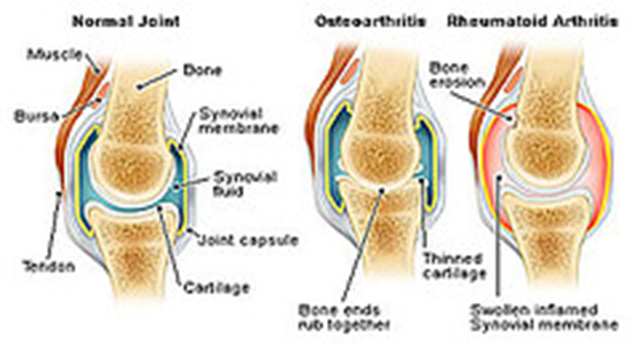
Before learning the causes of knee arthritis, let us first review the structure of knee joints. The knee is the strongest and the most complex joint in the body. It is responsible for bearing body weight and movement. It is made of bones, meniscus, muscles, ligaments and tendons. The bones that can get affected in knee arthritis include lower end of thigh bone (femur), upper end of a bone in leg called tibia and knee cap called patella in front of knee. Between thigh bone and tibia, two meniscuses are present. Meniscus is C-shaped tough, rubbery cartilages that work as a shock absorber and stabilize the joint and prevent direct rubbing of bones against each other. The knee joint is surrounded by a synovial membrane that releases fluid to keep the joint lubricated and reduces friction on movement.  Small fluid-filled sacs called bursa are present in the knee joint that function to decrease friction between knee tissues during movement. Any of these components of the knee can be affected in case of knee arthritis.

Knee arthritis can happen due to several reasons but the majority of the causes are osteoarthritis, rheumatoid arthritis, gouty arthritis and injury (post traumatic arthritis).

1. Osteoarthritis

One of the most common causes of knee arthritis is osteoarthritis of the knee joint. From among over 100 different types of arthritic conditions, osteoarthritis is the most common form of arthritis. This is most common in old and middle age. Osteoarthritis generally affects the weight-bearing joints such as the knee, but it may harm any other joint too.

What is the Cause and how does it affect the knee joint?

The real cause of osteoarthritis is not very clear. Medical researchers believe that it is due to a combination of factors that include injury to the joint or stress, aging, being overweight and genetic factors.

Osteoarthritis affects the knee joint by destroying the cartilage in the knee joint which slowly degenerates. Cartilage is made up of a protein substance that acts as a cushion between the bones of the joints. In advanced cases of osteoarthritis, the cartilage may disappear and the bones start rubbing against each other causing more pain. When bones start rubbing against each other, bony growth may occur around the joints.

Symptoms of Knee Osteoarthritis

In the initial stages of knee osteoarthritis, one may simply feel severe pain in the knee joint. As the problem advances, common symptoms include the pain that aggravates after an exercise session or weight bearing, swelling in the joint, limited movement of the knee joint, stiffness during periods of inactivity such as sleeping or sitting; cracking or grating sounds in the knee joint. As the damage to the knee joint worsens, the joint may become less movable and pain may occur even when the joint is at rest. The symptoms may keep the patient awake throughout the night.

Stages of Knee Osteoarthritis

Stage 1: Early and mild stage, there is very minimum wear and tear of the cartilage and no significant narrowing of the joint spaces.

Stage 2: Moderate Arthritis, symptoms occur more frequently and the cartilage begins to breakdown causing narrowing of the joint spaces. Osteophytes are seen at this stage.

Stage 3: Severe Arthritis, persistent pain and stiffness is there with severe cartilage loss leading to loss of joint spaces and bones rubbing together. Large osteophytes are also seen.

Stage 4: End stage with severe degeneration of joint and adjoining structures, one struggles to walk and there is total loss of cartilage. Joint deformities such as “bow legs” and “knock knees” are commonly seen at this stage.

2. Rheumatoid Arthritis (RA)

 It is an autoimmune disorder that results in stiffness, joint pain, swelling and reduced movement of the joint. An autoimmune disorder means the immune cells start damaging the healthy tissue of the body due to a misdirected response. In most cases, RA starts from small joints but later affects large joints as well, including the knee. It tends to affect the same joint bilaterally (on both sides) at a given time.

Why and how does it occur?

The exact reason for it is not clear. However, it seems to begin from an interaction between genetic susceptibility (persons having HLA – DR1 and HLA – DR4 genes are at high risk of it) and environmental factors (some infection with virus, bacteria and smoking). In RA, inflammation occurs in the synovial lining of the synovial membrane and with progression causes destruction of the cartilage and the bone of the joint.

Signs and symptoms of rheumatoid arthritis affecting knee

1. Swelling and knee pain

2. Knee stiffness gets aggravated in the morning, lasting for an hour, and as one gets active relief starts setting in

3. Heat and tenderness in knee joint

3. Gout (Hyperuricemia)

What is gout and why does it occur?

Gout means inflammation of the joint due to high uric acid levels. This type of arthritis arises when uric acid crystals (monosodium urate crystals) collect in the joint. These are needle-like crystals that set off inflammation and swelling in the joint. Though, mostly it affects the big toe joint, it can also occur in other joints, including the knee

Symptoms when gout attacks the knee

1. Knee pain

2. Knee swelling

3. Redness, warmth and tenderness on knee

4. Injuries (Post-Traumatic Arthritis)

Injury to the knee joint can also trigger arthritis referred to as post-traumatic arthritis, that can result in osteoarthritis. It may begin after an injury to ligament, meniscus tear or broken bone. The wear and tear makes the knee joint unstable and puts extra pressure on the joint that may develop into arthritis subsequently.

Diagnosis of Knee Arthritis

The diagnosis of knee arthritis involves clinical evaluation, medical history and few imaging and blood tests.

1. X-ray of the affected knee — This is the first test administered to diagnose a case of knee arthritis. This test helps to find bone spurs, narrowing of joint space and other bone changes.

2. Blood tests — ESR (erythrocyte sedimentation rate) and CRP (C-reactive protein) are advised to get an idea of the severity of the inflammation.

3. Rheumatoid factor qualitative and Anti CCp (anti – citrullinated protein antibody) — In cases suspected of rheumatoid arthritis.

4. Uric acid levels if symptoms point towards gout.

5. In advanced cases, MRI or CT scan could be needed to get more details of bones and to look into changes in the soft tissue of the joint.

Management and Lifestyle Changes in cases of Knee Arthritis

1. Role of exercise: Regular exercise helps strengthening the muscles around knees and improving joint mobility. Low-impact activities such as cycling, swimming, and walking are best recommended as they put less strain on the knees. Focus should be on strengthening the quadriceps and calf muscles that mainly supports the knee.

2. Weight Management: Obesity and being overweight makes an individual more prone towards developing arthritic conditions of the knee joint. Managing ones weight can help reduce pressure on the knee joint and reduce the inflammation thus leading to gradual relief in symptoms.

3. Dietary Recommendations: Eating a balanced diet rich in anti-inflammatory foods such as omega-3 fatty acids, green vegetables, fresh fruits, and whole grains. Avoid high protein foods in cases of gout or raised uric acid levels. Control your calories to manage weight.

4. Heat and Cold Therapy: Applying heat to the affected joints (using warm belts or heating pads) can relax the stiff muscles and improve blood flow. Applying cold pack or ice compression on the affected joint helps reduce inflammation and provides relief from pain.

Frequently Asked Questions

1. Why do I feel stiffness in my knees, especially in the morning or after rest?

Stiffness occurs because the joint becomes less lubricated when not in use. Once you start moving, circulation improves and the stiffness gradually reduces.

2. Is knee osteoarthritis only seen among the elderly?

No. Although it is more common with increasing age, knee osteoarthritis can also affect younger individuals due to obesity, excessive strain, earlier injury, or bad posture.

3. Will knee osteoarthritis keep getting worse?

The progression varies from person to person. With proper treatment, weight control, lifestyle changes, and exercises, symptoms can be controlled and progress can be gradual.

4. How long does it take to improve with homoeopath treatment?

Relief may set in within a few weeks, but long-term improvement usually requires regular treatment and follow-ups, as osteoarthritis is a chronic condition.

5. Do I need surgery if I have knee osteoarthritis?

Most patients do not require surgery. Many cases can be effectively managed with medicines, exercises, physiotherapy, and lifestyle changes. Surgery is considered only in advanced cases.

6. Should I completely stop exercising or walking?

No. Complete rest can aggravate stiffness. Gentle exercises and short walks are better, while exertion, squatting, and climbing stairs excessively should be avoided.

7 . Can knee osteoarthritis be cured completely?

Osteoarthritis cannot be reversed, but symptoms can be managed and quality of life can be made better with proper care.

8. Why does my knee pain increase while climbing stairs or getting up from a chair?

These activities put extra load on the knee joint. When the cartilage is worn out, movements like climbing stairs or standing up cause more friction and pain.

9. Why do I hear cracking or grinding sounds from my knees?

Cracking or grinding (crepitus) occurs due to irregular joint surfaces and reduced joint lubrication. It is common among patients suffering from knee osteoarthritis and not always a sign of aggravation of disease.

10. Is swelling normal in knee osteoarthritis?

Yes. Mild to moderate swelling can occur due to joint inflammation or excess fluid formation, especially due to overuse.

11. Does cold or damp weather affect knee pain?

Many patients notice increased stiffness and pain in cold or damp weather because such conditions affect circulation and joint flexibility.

12. Can knee osteoarthritis affect both knees at the same time?

Yes. Knee osteoarthritis mostly affects both knees, though one side could be more painful than the other.

13. Is walking with support (stick or knee cap) helpful?

Yes. Using a knee cap, walking stick, or brace reduces pressure on the knee joint and provides stability, especially among the elderly.

14. Are painkillers the only solution for knee pain?

No. Painkillers give temporary relief. Long-term management includes exercises, weight control, medicines, and lifestyle modifications that are helpful in managing knee arthritis to assure long term relief.

15. Can stress or emotional factors worsen knee pain?

Yes. Stress can enhance muscle tension and pain perception, aggravating knee symptoms.

Call Dr. Sharma's Clinic - From United States and Canada call 703-659-0873. Patients From rest of the world and India call +91-6283487321

Top 9 Best Homeopathic Medicines for Psoriasis

homeopathic medicines for psoriasis

Psoriasis is known as an autoimmune skin disease characterized by well-defined red patches on the skin covered with silvery-white scales. In this disease, skin cells spread at a speed more than normal. Skin cells normally grow and are shed every 28 to 30 days. However, in psoriasis, the skin cells grow more rapidly – every 3 to 5 days. The skin is not able to shed the excessive cells as fast as they appear on the surface. This build-up of cells on the skin is referred to as plaque.

Homeopathy: A Safe, Natural, and Non-Suppressive Approach to Psoriasis

Homeopathy offers the best natural treatment for autoimmune skin conditions including psoriasis. It has certain clear advantages including the absence of any side-effects and non-suppression of psoriasis. In psoriasis, a patient is in need of a treatment that can control the indiscriminate skin cell proliferation. Homeopathy can successfully cure it by optimizing the over-active immune system, hence curing it from its point of origin.

In the traditional approach, corticosteroids are used topically and orally that might give an early result by suppressing active lesions but have side effects. Their use makes the condition more complex since after one has left these medicines, symptoms re-emerge with much worse conditions. Therefore, homeopathy can be a safe line of treatment for psoriasis as it uses non- suppressive remedies.

Gradual and Holistic Relief in Psoriasis with Homeopathy

Homeopathic remedies not only reduces the frequency and severe of the symptoms like flaking, itching, cracks and aids healing of eruptions, it also prevents further spread of eruptions. It can also manage joint pains that may occur in cases of psoriasis. To get desired results, one has to understand that homeopathy works quite gradually and one has to show patience before one is fully treated from a disease that is not just chronic and autoimmune but also obstinate in nature.

Homeopathy Optimises Rather Than Suppresses the Immune System

Psoriasis is an autoimmune skin disease in which the body’s immune system becomes overactive and inadvertently attacks healthy skin cells, leading to inflammation, redness, scaling, and thickened plaques. The objective of homeopathic treatment is to regulate and balance this heightened immune response rather than suppress it. By working at the root level, homeopathic remedy helps slow down the progression of chronic symptoms, reduce inflammation, and support the body’s natural healing process. It is important to understand that homeopathic medicines do not suppress the immune system, instead, they help restore immune balance in a mild and holistic manner.

Top 9 Homeopathic Medicines for Psoriasis

The top homeopathic remedy for psoriasis are Arsenic Album, Graphite Naturalis, Arsenic Iodatum, Sulphur, Petroleum Oleum, Sepia Succus,Natrum muriaticum, Psorinum and Antimonium Crudum.

1. Arsenic Album – For Dry Eruptions with Silver Scales

The main symptom to administer Arsenic Album is the presence of rough, dry, red papular eruptions with scales on it. The scales are silver coloured. The eruptions cover most parts of the body, except hands and face.

The eruptions are accompanied by itching and spread quite rapidly. Cold aggravates the itching in most cases, while warmth provides relief. Pain on the affected skin arises after scratching the eruptions. Bleeding spots also appear on the skin following scratching. Restlessness is another accompanying symptom that may be present. Yet another symptom is noticeable anxiety along with itchy eruptions. Arsenic Album also works well in cases of guttate Psoriasis. In guttate Psoriasis, small rose coloured spots with scales are observed.

When to use Arsenic Album?

This medicine is mostly administered to manage dry, rough eruptions covered with silver scales.

How to use Arsenic Album?

This remedy can be administered once a day in 30 C potency.

2. Graphites Naturalis – For Psoriasis With Dry, Cracked Skin

Patients for whom Graphites Naturalis works wonders tend to have patches of dry, sore, rough scaly skin. A tendency to develop cracks on the surface may also be observed. If one scratches, stickiness on the skin may appear. Graphites Naturalis is also administered for patients who report scalp Psoriasis. In such cases, eruptions with scales are seen on the scalp. The scalp may be sore to touch, and there is extreme itching. One may also feel a burning sensation on the top of the head.  Eruptions on the scalp can also spread behind the ears. In cases of nail Psoriasis, the main symptoms are thick rough, and deformed nails.

When to use Graphites Naturalis?

This medicine is a wonderful choice for patients who have dryness, roughness on skin along with cracks.

How to use Graphites Naturalis?

One tablet of Graphites Naturalis 3X two times daily is its most recommended dose.

3. Arsenic Iodatum – For Shedding of Large Scales

Arsenic Iodatum is administered mainly if there is shedding of large scales from the skin. The skin is covered with inflamed patches with scales on them. There is persistent itching in the patches and the shedding of the scales leaves raw skin exposed.

When to use Arsenic Iodatum?

Arsenic Iodatum is administered for psoriasis with shedding of large scales.

How to use Arsenic Iodatum?

It is advised to take Arsenic Iodatum 30 C once daily.

4. Sulphur – For Psoriasis With Intense/Severe Burning And Itching

Sulphur helps patients who report severe burning and itching in the psoriatic skin lesions. A violent itching is an accompanying factor, and the patient goes on scratching the skin until it bleeds. A burning sensation follows. The itching wanders, and shifts places frequently. The skin is scaly, rough, and gets painful after rubbing as if denuded. The symptoms tend to aggravate in the evening and at night, while in bed. Sleep is disturbed because of the burning and itching sensation. Other accompanying factors are biting, pricking, and sticking sensation in the eruptions. Sulphur is also recommended for patients with skin ailments who have a history of excessive use of ointments.

When to use Sulphur?

This medicine can be administered if a patient reports burning and itching sensation due to psoriasis.

How to use Sulphur?

Sulphur 30C should be administered in infrequent doses once or twice a week.

5. Petroleum Oleum – For Slow Healing Psoriasis

Petroleum Oleum is a great remedy for Psoriasis where deep cracks are seen on the skin. There is burning sensation and intolerable itching on the affected portion of the skin. Bleeding may also be present in the cracks. The skin gets severely painful, sore hard, fissured and healing process is very slow. A crawling sensation on the skin may also accompany over and above the symptoms. Petroleum is also top of the line medicine for treating psoriasis that aggravates during the winters.

When to use Petroleum Oleum?

It is administered to manage deep cracks on the skin among the patients suffering from psoriasis.

How to use Petroleum Oleum?

One may ingest this medicine in 30C power once or twice a day.

6. Sepia Succus – For Large Oval Lesions

Sepia Succus is a great remedy for Psoriasis characterised by the presence of big oval lesions on the skin. The lesions are reddish papules and are isolated. There are shiny, whitish and adhesive scales present on the papules. There is constant itching felts on the eruptions. On scratching, a burning sensation on the skin is felt. The eruptions happen over the chest, face, arms, back, and legs. In the case of limbs, the extensor surfaces are mostly involved.

When to use Sepia Succus?

Use this medicine when there are large oval spots with shiny white scales that are seen on the skin for patients suffering from psoriasis.

How to use Sepia Succus?

This medicine can be administered in 30C power once daily.

7. Natrum Muriaticum – for Psoriasis with Redness along the Hair Margins

Natrum Muriaticum is a medicine that is administered for psoriasis and works wonders in such cases. It is especially useful when the skin is greasy and oily, particularly over hairy parts of the body. Crusty eruptions are quite common on the bends of the limbs, along the margins of the scalp, and behind the ears. Redness is accompanied along the hairline margins, giving a well-defined appearance to the patches. The psoriatic eruptions are usually accompanied by severe burning and itching.

When to use Natrum Muriaticum?

Natrum Muriaticum is to be administered when psoriatic eruptions are present along the hairline with noticeable redness along the hair margins.

How to use Natrum Muriaticum?

It can be initiated with 6X potency, one to two times daily.

It can also be administered in 30C, 200C potency but only after seeking advice of a qualified homoeopath.

8. Psorinum – For Chronic Psoriasis Worsened By Warmth

Psorinum is a wonderful medicine in cases of psoriasis, especially when the skin presents a dirty look and there is intolerable itching. It often worsens due to the warmth of the bed. Psoriatic eruptions are usually crusty, scaly, commonly affecting the scalp, behind the ears, and the bends in the joints, and tend to be slow to heal. The skin could be oily due to excessive sebaceous secretion.

When to Use Psorinum?

It is administered for chronic Psoriasis with severe itching that aggravates due to exposure to warmth.

How to use Psorinum?

One can begin with a lower potency dose of 30C once a day. Higher potency such as 200C, 1M can be administered only on a weekly, or fortnightly basis after consulting a qualified homoeopath.

9. Antimonium Crudum – For Psoriasis Affecting Nails

Antimonium Crudum is a wonderful medicine where the key symptoms are distorted and out of shape nails. There is also discoloration, pitting or ridges on the nails. The nails are brittle and tend to break often. The skin underneath the nails is painful and very sensitive to touch.

When to use Antimonium Crudum?

Antimonium Crudum is administered if due to nail psoriasis there is discoloration and ridges on the nails.

How to use Antimonium Crudum?

Antimonium Crudum can be administered two times daily.

What causes Psoriasis?

In psoriasis, the body’s immune cells target the skin, majorly T cells, that cause skin inflammation and trigger rapid skin cell growth.

A family history of a family being psoriasis positive puts a person at greater risk of developing this condition.

A few of the well-known triggers for psoriasis are obesity, stress, alcohol, smoking, skin trauma, caffeine, and infection including strep throat. These factors tend to aggravate the symptoms of existing psoriasis.

Symptoms of Psoriasis

The key symptom of Psoriasis is when red, inflamed papular eruptions appear on the surface of the skin with adhesive silvery-white scales covering them. The spots have well-defined borders.

In some cases, cracks that bleed often appear on the skin.

A burning or itching sensation accompanies the eruptions, the intensity of which varies on a case-to-case basis. Psoriasis often runs a relapsing and remitting course.

In case of nail psoriasis, the nails get deformed, discolored, crippled, brittle, and may start falling off.

In a few cases of psoriasis, the joints may get inflamed and become painful.

How to Diagnose Psoriasis?

The diagnosis of psoriasis is primarily carried out through a detailed clinical examination of the scalp, skin, and nails. The main symptoms are reddish plaques covered with silvery-white scales that are mostly seen over the scalp, elbows, knees, and lower back. The accompanying symptoms such as scaling, itching, cracking, thickening, nail pitting, or discoloration further support the diagnosis.

A thorough medical history of the family helps identify genetic predisposition and possible triggers.

In atypical or doubtful cases, a skin biopsy is advised to confirm the diagnosis and to differentiate psoriasis from other skin conditions.

Complications

These are the several complications of this disease if it is not addressed properly:

1. Psoriatic arthritis that leads to joint pain, swelling, stiffness, and possible permanent joint damage is one such complication.

2. Increased risk of cardiovascular diseases such as stroke and heart disease.

3. Development of metabolic disorders including diabetes, obesity, metabolic syndrome and hypertension.

4. Nail changes such as thickening, pitting, discoloration, and deformity.

5. Psychological complications include anxiety, stress, low self-esteem and depression.

Management

Lifestyle management plays a big role in controlling and healing this disease. Maintaining a healthy body weight is crucial, as excess weight increases inflammation and can worsen the severity and frequency of flare-ups. A balanced diet, rich in vegetables, whole grains, fruits, and adequate protein helps support skin repair and immune balance; protein intake should be moderate and based on individual needs, neither deficient nor excessive. Regular exercise reduces stress, improves metabolism, and helps in weight control, all of which has positive influence on the disease. Emotional stress is a well-known trigger, therefore stress-management practices such as adequate sleep, meditation, yoga, and relaxation are essential. Avoid triggers like alcohol, smoking, irregular sleep patterns, and highly processed or inflammatory foods that further helps prevent flare-ups. Good skin care, hydration, and disciplined lifestyle plays an important role in long term management of Psoriasis.

Types of Poriasis

Psoriasis has several types. These are –guttate psoriasis, plaque psoriasis, inverse psoriasis, nail psoriasis, scalp psoriasis, and pustular psoriasis.

1. Guttate psoriasis is characterized by the appearance of small, water droplet-like skin lesions covered in fine scales. Guttate psoriasis is often activated after a bacterial infection, mainly strep throat infection.

2. In plaque psoriasis, the skin gets covered with dry spots with a large number of silvery white scales. Plaque psoriasis is mostly noticed on the scalp, knees back, and elbows.

3. In Inverse Psoriasis, lesions are mainly seen on the legs, trunk and arms. Psoriasis lesions that appear in folds of skin – under the breasts, armpits, in the groin area are referred to as inverse Psoriasis. The skin lesions in inverse psoriasis are in the form of smooth, red inflamed patches.

4. In nail psoriasis, psoriatic lesions appear on the nails of the fingers or toes. The nail may get discoloured; thickening of the skin under the nail may be observed, pitting on nails may be present and in severe cases, the nail may crumble and fall off the body.

5. In scalp psoriasis, inflamed, red, itchy lesions covered in thick white scales appear on the scalp.

6. In pustular psoriasis, pus-filled eruptions are seen on the skin that is surrounded by tenderness and redness.

Frequently Asked Questions

1. Is psoriasis contagious and can it spread by touch or other means?

No, psoriasis is not a contagious disease and does not spread by touch.

2. I have chronic psoriasis and my joints have started to hurt. Why is it so?

If you were suffering from psoriasis for a long time and now your joints are paining, there is a good chance you have developed psoriatic arthritis. In approximately 30 per cent of the psoriasis patients, joints may get inflamed and painful. In psoriatic arthritis, the immune cells start to damage and inflame the joints due to a misdirected immune response besides the usual quick cell growth symptoms of the disease. Environmental and genetic factors play a huge role in causing psoriatic arthritis.

3. I was suffering from psoriasis for a long time and now, my joints are inflamed and in pain. Please suggest a medicine.

Homeopathy can definitely treat this condition. In my clinical practice, Rhus Tox has shown great results in cases of psoriatic arthritis. Highly inflamed, swollen, painful and stiff joints in psoriasis are the main symptoms for the administration of this remedy.

4. Is there a connection between psoriasis and vitamin D?

Yes, there is a link between psoriasis and vitamin D. Improved vitamin D levels in psoriasis seem to decrease the severity of psoriasis. Vitamin D plays an important role in decreasing excessive cell production and therefore helps treat psoriasis.

5. Will exposure to sunlight be of help to psoriasis patients?

Yes, evidence suggests that sun exposure helps heal psoriasis, though to a moderate degree.

6. How do Psoriasis patches differ from Eczema patches?

Psoriasis patches are thickened, raised, red areas of skin covered with silvery-white, dry scales. The borders are well-defined and clearly separated from normal skin. Eczema patches are red or pink, inflamed areas are mostly uneven or irregular. They may appear moist, crusted, oozing, or very dry, and their borders are usually poorly defined. Despite visible differences, a proper clinical examination and consultation with a qualified physician is essential for an accurate diagnosis.

7. Is homeopathy safe for long-term use in psoriasis?

Yes, if administered by a qualified homeopath, homeopathic remedies are generally safe and suitable for long-term use.

8. Does homeopathic treatment differ from person to person in psoriasis?

Yes. Homeopathy treats psoriasis on a case-to-case basis. Two patients with similar skin lesions may receive different medicines depending on their overall symptom profile.

9. Does homeopathy suppress skin eruptions in psoriasis?

No, homeopathic medicines do not suppress skin eruptions. They address the root cause, and gradually helps relieve the symptoms that encourage natural healing from within the body.


Call Dr. Sharma's Clinic - From United States and Canada call 703-659-0873. Patients From rest of the world and India call +91-6283487321

Top 10 Homeopathic Remedies for Carpal Tunnel Syndrome

Carpal Tunnel Syndrome (CTS) is a very common medical condition affecting the hands. It is caused by the compression of the median nerve as it passes through the carpal tunnel in the wrist. It is also called median nerve compression or median nerve entrapment. It results in symptoms like numbness, tingling, pain, weakness in the thumb and fingers including the index finger, middle finger and half of the ring finger on the side close to the thumb and the palms of hands. CTS is one of the most common entrapment neuropathies characterized by the compression of one of the peripheral nerves of the body.

Homoeopathy offers a very effective treatment option in treating cases of carpal tunnel syndrome. Homeopathic medicines help in providing long-term relief in symptoms of CTS magnificently as they target the root cause behind it. The CTS symptoms mentioned above get relieved very effectively. Unlike conventional treatments which recommend NSAIDs (non-steroidal anti–inflammatory drugs) or corticosteroids for CTS treatment, homeopathy is safe, non-habit forming and ensures long-term relief.

An effective homeopathic treatment for Carpal Tunnel Syndrome (CTS) can save a person from the surgeon’s knife. However, the results will depend on the severity and stage of the CTS. In mild to moderate cases, where the wasting (thinning from severe and prolonged nerve compression) of the nervous muscles has not taken place, the chances of recovery are higher.

Homeopathic medicines for CTS are prescribed individually in every case as per the symptom presentation. A detailed case history is taken followed by an assessment of symptoms to provide the best suitable homeopathic medicine. Homeopathy works wonders when the medicine is prescribed following this individualized approach.

Homeopathic remedies for CTS are sourced from naturally occurring substances and hence are very safe to use without any side effects. These medicines boost the body’s self-healing mechanism to overcome CTS naturally.

Top 10 Homeopathic Remedies for Carpal Tunnel Syndrome

The main medicines for treating Carpal Tunnel Syndrome are Causticum, Ruta Graveolens, Hypericum Perforatum, Arnica Montana, Rhus Toxicodendron, Bellis Perennis, Kali Carbonicum, Phosphorus, Zincum Metallicum and Calcarea Fluorica.

1. Causticum – Top Grade Medicine for Carpal Tunnel Syndrome

Causticum is ranked the best medicine to treat cases of CTS. I have treated many cases (successfully) with Causticum. The key indications to use this medicine are weakness in the hands, and numbness and pain in the fingers. It is especially recommended when the Carpal Tunnel Syndrome has reached a level where there is excessive weakness in the hands and the muscles of the hand have atrophied (means thinning out). Causticum should be administered in cases of CTS if the palmar side of the hand has a flat appearance (reduction in the musculature of the hand).

When to use Causticum?

Causticum is the best treatment to manage numbness, weakness and pain in fingers in cases of CTS. Its is also suggested for cases where the muscles of the hand have started wasting out, means thinning from severe and prolonged nerve compression.

How to use Causticum?

One may take Causticum 30C once or twice in a day at the beginning of treatment.

2. Ruta Graveolens – For CTS from Strain in Wrist, Tendonitis or Wrist Fracture

Ruta Graveolens, sourced from plant Rue-Bitterwort, is one of the best medicines to treat Carpal Tunnel Syndrome. It is mostly recommended where symptoms occur due to overuse of the wrist, tendonitis or after a sudden strain or fracture of the wrist. There is marked pain and stiffness in the wrist and hand, along with great restlessness.

When to use Ruta Graveolens?

Ruta is the best medicine to manage CTS arising from the overuse of the wrist and also from inflamed tendons or a sudden strain on the wrist.

How to use Ruta Graveolens?

Initially one may take it in 30C potency once or twice a day, though it is recommended in high potencies also which must be taken after consulting a homeopathic doctor.

3. Hypericum Perforatum – For CTS triggered by an Injury (Damaging Median Nerve)

Hypericum Perforatum is highly effective in cases when there is a nerve injury which leads to the onset of Carpal Tunnel Syndrome. The injury damages the median nerve leading to symptoms such as numbness, tingling and burning pain in fingers and hands that can be treated wonderfully by using this medicine.

When to use Hypericum Perforatum?

This medicine should be highly preferred in CTS cases to manage numbness, tingling, burning in fingers post nerve injury.

How to use Hypericum Perforatum?

Hypericum 30C can be used three to four times a day as per the severity of the symptoms.

4. Arnica Montana – For CTS from Injury or Overuse of Wrist

This remedy is very useful in treating cases of CTS due to injury or the overuse of the wrist. It is administered when there is pain in the hands. Besides, there is tingling sensation in arms and the hands. This medicine helps heal the injury and removes effects of the worst kind of overuse of wrist, with resultant symptom relief. One of the indicating factors for the use of Arnica is soreness of the wrist after overexertion.

When to use Arnica Montana?

This medicine should be administered as the first line of treatment in cases of CTS arising from an injury or overuse of the wrist.

How to use Arnica Montana?

It is safe to administer it in 30C potency at the very outset, one to as many as three times a day. However, for higher potencies like 200 C or more, consult a qualified homeopath.

5. Rhus Toxicodendron – When Wrist Inflammation or Overuse Triggers CTS

Rhus Toxicodendron is a very effective medicine in cases of CTS that follows the overuse of the wrist and hands causing strain or wrist joint inflammation (arthritis). The overuse of hands or wrists may occur from excessive typing on computer, car driving, and sewing to name a few. Those who need Rhus Tox have pain and tenderness in the wrist. Any pressure exerted on the wrist is unbearable. There is numbness in the fingers, especially in the middle finger and the index finger in the morning hours.

When to use Rhus Toxicodendron?

Rhus Tox is administered to manage tenderness and pain in the wrist in those cases of CTS related to inflamed wrist joint or the overuse of wrist.

How to use Rhus Toxicodendron?

From its various available potencies, it is advisable to begin with 30C potency two to three times daily for best possible results. Potency can be raised to 200C or 1M but only after consulting a homoeopathic physician.

6. Bellis Perennis – For CTS Related to Repetitive Strain Injury

Apart from the above-mentioned medicines for CTS linked to repetitive strain injury, Bellis Perennis can be administered as well. The characteristic symptoms indicating its use is a contracted feeling in the wrist. There is a feeling as if an elastic band has been tied around the wrist and squeezing it.

When to use Bellis Perennis?

This medicine is prescribed in those cases of CTS if there is repetitive strain injury to the wrist alongside symptoms of contracted sensation in the wrist.

How to use Bellis Perennis?

Bellis Perennis can be taken in 30C potency two to three times daily for best possible results.

7. Kali Carbonicum – For Stitching, Lancinating Pains In Hands and Wrists

Kali Carbonicum is one of Schussler’s tissue salts, helping in treating cases of CTS. It is administered when there are sharp, stitching, or shooting pains in the hands and wrists, often extending to the fingers. The hands feel tired, weak, and heavy, with a tendency to drop objects unintentionally due to reduced grip strength. Numbness and tingling may be present, especially after prolonged use of the hands. Symptoms typically aggravate in the early morning hours (around 3–5 am) and from exposure to cold, while gentle warmth may bring relief. The patient complain of stiffness when one moves about. However, there is gradual ease after continued motion.

When to use Kali Carbonicum?

Kali Carbonicum is administered when symptoms reflect deep-seated nerve involvement with marked weakness and sharp, stitching pains.

How to use Kali Carbonicum?

It is recommended in 6X potency to begin with, and the potency can be raised to 30C & 200C but only after consulting a qualified homoeopath.

 8. Phosphorus – For Burning, Tingling and Numbness in Hands and Fingers

Phosphorus is a very useful remedy when there is prickling, burning and crawling sensation in the wrists and fingers, often accompanied by weakness and number felt in the grip. The patient may complain that the hands feel dead or asleep, especially at night or on waking in the morning. Symptoms mostly worsen due to heat, pressure, and at night, and may be aggravated by overuse of the hands. There is often a sensation of internal heat or burning felt along the nerve course, reflecting phosphorus’ deep action on the nervous system.

When to use Phosphorus?

When symptoms point towards noticeable nerve sensitivity with tingling, burning, and numbness of the fingers and hands, use of Phosphorus is considered to be the best.

How to use Phosphorus?

The use of this medicine should be limited to one or two times daily in 30C potency.

9. Zincum Metallicum – For Nerve Exhaustion from Prolonged Strain

Zincum Metallicum is administered when there is tingling, numbness, and crawling sensation felt in the fingers and the hands, often accompanied by a feeling of weakness and exhaustion of the nerves. The patient may complain that the hands feel restless, with an inability to keep them still, especially during periods of physical and mental fatigue. Pain and numbness typically aggravate from overuse, prolonged work, and nervous strain, and may be felt more at night. Grip strength is weakened, and fine motor activities become difficult due to nerve fatigue rather than inflammation.

When to use Zincum Metallicum?

Zincum Metallicum is administered when symptoms occur due to nerve exhaustion, prolonged strain, or suppressed discharges, leading to motor and sensory disturbances in the hands.

How to use Zincum Metallicum?

It can be used in different potencies according to the intensity of the symptoms from 30CH, 200CH and 1M. However, do consult a qualified homoeopath before raising the potency.

10. Calcarea Fluorica – For Chronic Wrist Stiffness and Weakness

It is administered in cases of CTS if there is stiffness, hardness and weakness of the wrist joint, where prolonged repetitive strain has led to thickening or loss of elasticity of ligaments and fibrous tissues. Patients complain of numbness, dull aching pain and stiffness, especially after use of hands for long hours. The wrists feel weak and give a sensation of instability. Symptoms generally aggravate in cold, damp weather and from rest, and improve slowly with gentle movement and warmth. Calcarea Fluorica suits cases where recovery is slow and the condition tends to relapse repeatedly.

When to use Calcarea Fluorica?

Calcarea Fluorica is administered in carpal tunnel syndrome if the condition is long-standing, chronic and structural in nature, involving tendons, ligaments, and connective tissue rather than acute swelling.

How to use Calcarea Fluorica?

It is administered in 6X potency, and should be taken two to three times daily for best possible results after consulting a qualified homeopath.

Causes and Risk Factors of CTS

Carpal Tunnel Syndrome occurs when the median nerve gets compressed or irritated in the wrist when it passes through the carpal tunnel. Carpal tunnel is a narrow tunnel (passageway) in the palmar side of the wrist through which the median nerve and tendons (total nine in number) pass. Tendons are bands of tissue that connect muscles to bones.

Risk factors

A variety of factors are linked to Carpal Tunnel Syndrome development as follows:

1. Repeated trauma (overuse injury) to the tissue inside the carpal tunnel:It is common to find Carpal Tunnel Syndrome in people who perform repetitive movements of hands and the wrist frequently. Carpal tunnel is very common in people who work on computers. Typing is one of the most common causes that lead to Carpal Tunnel Syndrome. Certain mechanical jobs that repeatedly strain the wrist may lead to the development of CTS, for example driving vehicles, sewing, using hand tools (especially the ones that vibrate – carpenters are at high risk of developing CTS), writing, knitting, playing piano and other musical instruments.

2. Arthritis (joint inflammation) in wrist joint: Medical ailments like rheumatoid arthritis and gout can also lead to CTS. The swelling and inflammation related to these conditions can reduce the carpal tunnel space and compress the median nerve.

3. Wrist injury/fracture/dislocation

4. Having a small carpal tunnel

5. Tendonitis: Inflammation of any among the nine tendons of carpal tunnel can occur and compress the median nerve.

6. CTS is common in females as compared to males. Women are three times more at risk of CTS as compared to men. The reason could be a smaller carpal tunnel in women as compared to men.

7. Certain medical conditions also predispose a person towards the development of Carpal Tunnel Syndrome. These are diabetes (it increases chances of nerve damage), hypothyroidism and high blood pressure.

8. Obesity, alcoholism, smoking, excessive salt intake also increases risk of CTS

9. Having a family history of CTS

10. Pregnancy and menopause: Here retention of fluid contributes to CTS by raising pressure in the carpal tunnel and causing irritation in the median nerve.

11. Use of certain medicines, like anastrozole, which is used for treating breast cancer

12.  A tumor in the carpal tunnel

Stages of Carpal Tunnel Syndrome

Stage 1- Symptoms are often intermittent and mild, like numbness, tingling and pin needle sensation in fingers especially the thumb, index and middle fingers.

Stage 2- At this stage, symptoms become more persistent and frequent, it becomes painful with pain radiating to the forearm and elbow. The grip of hand starts getting affected at this stage.

Stage 3- Symptoms are constant and working with hands becomes significantly impaired at this stage. Muscle wasting sets in and hands become weak which makes it difficult to carry out daily activities.

Stage 4- Permanent nerve damage may occur if CTS is left untreated. This stage is irreversible and may require help of conventional methods. There is loss of sensation, marked wasting of muscles and sometimes, permanent disability.

Stage 1 and stage 2 CTS cases have the highest chances of recovery. If the person is in stage 3 or and 4, homeopathic medicines cannot reverse the damage already done to the muscle, but can work to halt further progression of muscle damage and provide symptomatic relief. Only in the severest of cases that do not respond to conservative treatment, surgery can be opted.

Investigations and Diagnosis of CTS

1. Nerve conduction study test: This is the main test to diagnose CTS. In this test, electrodes are placed on the hands and the wrist and a little shock is passed through the median nerve that measures the conduction speed of nerve impulses. A slower than normal nerve impulse in the carpal tunnel suggests the presence of CTS.

2. Electromyography: In this test, a thin needle is inserted into the muscle to check the electrical activity of muscles. It helps reveal the damage to the muscles that are controlled by the median nerve.

3. X-ray and ultrasound of wrist: An X-ray helps to rule out related conditions like arthritis or fracture though it cannot diagnose CTS. An ultrasound will help to examine bones and nerves of the wrist and check for nerve compression.

Frequently Asked Questions

1. I have numbness in fingers and hands, am I suffering from CTS?

No doubt that CTS is one of the most common reasons behind numbness in fingers and hands. But it can arise from several other causes too, for example, cervical neuropathy, brachial plexus injury, and Raynaud’s phenomenon. So I advise you to consult a doctor to find out the exact cause behind your complaint.

Thenar muscle

Thenar muscle

2. Does pain in fingers indicate CTS?

Pain in fingers is one of the symptoms of CTS but merely pain does not confirm CTS. In cases of CTS, numbness, tingling in fingers is usually present along with pain. If there is only pain in fingers, it could be due to other reasons as well, like arthritis, trigger finger, Dupuytren’s contracture, tendonitis, and ganglion cyst. So finger pain without numbness or tingling in fingers is usually not CTS.

3. How to know the difference between CTS and arthritis?

In case of CTS, there is numbness, tingling, pain and weakness in fingers and hands. In cases of arthritis, stiffness, swelling and pain is felt in the joints.

4. I am suffering from CTS; will the use of wrist splint help?

Wrist splint

wrist splint

Though wrist splints cannot cure CTS as it requires proper treatment, a wrist splint can definitely help to relieve night-time symptoms of numbness and tingling in fingers and hands. Use of wrist splint is recommended at night as a person can unconsciously bend the wrist during sleep. Here the wrist splint will hold the wrist still and straight and relieve disturbing night-time symptoms.

5. I have Carpal Tunnel Syndrome, can I do typing?

Typing involves the constant use of wrist and hands and it can worsen CTS. If possible, avoid typing. But if your office work requires a lot of typing, make sure to press computer keys softly, use a comfortable computer mouse, place keyboard at elbow height, and take proper breaks at regular intervals in between typing to reduce strain on the wrist.

6. Will heat application on the wrist help CTS pain?

Yes, heat application can help in managing CTS pain. Heat enhances blood flow and relaxes the tense muscles and relieves wrist pain. Avoid it if your wrist is swollen or red.

7. What if CTS is left untreated?

CTS should be treated because it can lead to permanent nerve damage and muscle damage, if the problem is not addressed. This leads to loss of sensation and weakness in the fingers.

8. Why is my pain worse at night or early morning?

Symptoms often worsen at night because wrist positions during sleep increase pressure on the nerve.

9. Can carpal tunnel syndrome affect both hands?

Yes, it can affect one or both the hands, though generally one hand is affected more than the other.

10. What daily activities and lifestyle changes should I do or modify to manage CTS?

Avoid repetitive wrist strain, prolonged mobile use, maintain proper keyboard posture, and avoid heavy gripping activities. Proper ergonomics, wrist exercises, adequate rest, stress management, and maintaining overall health support recovery.

11. Is carpal tunnel syndrome related to neck problems?

Sometimes symptoms can overlap. Proper evaluation helps differentiate between wrist nerve compression and cervical issues.

12. Will rest alone cure carpal tunnel syndrome?

Rest helps in early cases, but long-standing symptoms usually need medical treatment along with lifestyle correction.

13. Why do my fingers feel numb while holding my phone or driving?

Bending the wrist for a long period increases pressure on the nerve, leading to numbness and tingling.

14. When does medical advice become necessary in CTS?

If symptoms persist, worsen, or interfere with daily activities like writing, cooking, or sleeping, medical consultation is advised.


Call Dr. Sharma's Clinic - From United States and Canada call 703-659-0873. Patients From rest of the world and India call +91-6283487321

Top 9 Homeopathic Medicines for Sciatica

Sciatica is a term that describes pain that starts in the lower back area and goes down the lower limbs reaching the roots of the sciatic nerve. It is caused by irritation and compression of the sciatic nerve, the largest nerve in the human body. It originates in the lower back and runs down the hips, and then the back of legs, and down to the feet. There is one sciatic nerve on either side of the body and any one of them could be affected when one experiences pain.

Safe & Natural Homoeopathic Treatment for Sciatica

Homeopathy is a well-renowned mode of treatment to heal and works wonders in bringing about cure to various kinds of nerve pains including sciatica. Homeopathic medicines, that are natural and safe, work on the root cause of sciatica for complete, effective healing and treatment. These can effectively manage sciatica pain and its other accompanying symptoms such as tingling, numbness and burning sensation.

Individualized Selection of Homoeopathic Medicines for Sciatica

Homeopathic remedies are administered on a case-to-case basis for every case of sciatica to provide relief. Various factors are kept in mind while prescribing a homeopathic remedy in such cases like which side of the body the pain is, the nature of pain, factors that aggravate the pain or reduces it, time when it is more intense or less, any associated symptoms like tingling, numbness and the underlying cause.

Relief in Acute/Chronic Sciatica

Homeopathic medicines help treat acute as well as chronic sciatica cases. In acute cases, homeopathic remedies offer instant relief in symptoms. In chronic cases, it relieves the symptoms and helps to reduce the severity and frequency of recurrent episodes of pain and other associated symptoms if the prescribed course of homeopathic treatment is followed for the recommended time. Since such treatment is free of side effects, homeopathy has an advantage over the conventional method of treatment that uses painkillers, muscle relaxants, and corticosteroids in sciatica cases that carry the risk of side effects due to its consumption over a long duration. With the use of homeopathic medicines, the dependence on conventional medicines is brought down significantly.

Homoeopathic Approach to Sciatica

Homeopathy works on treating the root cause of sciatica like disc bulge, disc degeneration, bony spurs, an injury, and muscle spasm to reduce the irritation or pressure on the sciatica nerve. This leads to excellent recoveries. However, the results may vary on a case-to-case basis depending on the intensity and chronicity of the complaints and the presence of complications if any.

In several cases of sciatica, surgery may be recommended. However, homeopathic advice, if taken on time, could prevent surgical intervention in many cases of sciatica of that are mild to moderate.

homeopathic medicines for sciatica

Top 9 Homeopathic Medicines For Sciatica

Some well-known homeopathic remedies for sciatica are Colocynthis, Magnesium Phosphorica, Gnaphalium Polycephalum, Rhus Toxicodendron, Bryonia Alba, Lycopodium Clavatum, Causticum, Kali Carbonica and Hypericum.

1. Colocynthis – For Left-Sided Sciatica

Colocynthis is known to hugely benefit left-sided sciatica. It is administered when a patient complains of pain along the course of the left sciatic nerve. The pain begins in the lower back and extends down the leg to the toes. In some cases, the pain is located in the left hip, or pain in the hip goes down to the knee. The pain may be tearing/drawing or shooting type. In some cases, it may be lightning, shock-like, or cramping. Pressure application may provide some relief. Lying on the left side also offers relief in some cases. Some patients who require Colocynthis may also get relief from warm applications.

When to use Colocynthis?

Its use is advised in patients with left-sided sciatica pain, especially, if the pain is reduced by pressing the affected area and applying warmth.

How to use Colocynthis?

Colocynthis works best in 30C power. This potency requires frequent repetition, two to three times in a day. It also works well in higher powers like 200C and 1M but it is advisable to consult your homeopathic physician before using higher potencies.

2. Magnesia Phosphorica – For Right Sided Sciatica Pains

Magnesia Phosphorica is a medicine that manages right-sided sciatica. The sciatica pain is shooting/ cutting/ stabbing or stitching type. Pain begins in the lower back and radiates down the right hip, thigh, the hollow of knee and leg. Applying pressure or warmth may offer relief. In some cases, uncovering the lower limb aggravates the pain.

When to use Magnesia Phosphorica?

Magnesia Phosphorica is administered for sciatica pain on the right side. The pain aggravates while uncovering the lower limb and gets better when pressure is applied or warmth is applied.

How to use Magnesia Phosphorica?

In homeopathy it is known as a pain reliever. It is mostly used in biochemical form in ‘6X potency’, and is taken in tablet form 3-4 times daily.

3. Gnaphalium Polycephalum – For Sciatica With Pain And Numbness

Gnaphalium Polycephalum is the best medicine for sciatica pain accompanied by numbness. It is also administered where sciatica pain alternates with numbness. Folding thighs towards the abdomen provides some relief. Gnaphalium Polycephalum is also prescribed in sciatica cases if the pain is confined to the feet and the calves.

When to use Gnaphalium Polycephalum?

This medicine offers best possible treatment for sciatica if numbness accompanies pain.

How to use Gnaphalium Polycephalum?

In the beginning, it is administered in 30C potency and can be repeated two times daily. Its higher potencies are also available but normally, higher potencies should not be repeated often.

4. Bryonia Alba – For Sciatica That Worsens While Walking

Bryonia Alba is the best homeopathic medicine for sciatica that worsens while walking. The slightest motion may aggravate sciatica. Lying down may provide some relief. Bryonia Alba is also prescribed when the person feels relief by lying down on the affected side. The hip and leg of the affected side may feel heavy.

The pain is tearing in nature from the hip through the back of the thigh and into the calf.

When to use Bryonia Alba?

The main feature of using this remedy is sciatica pain that aggravates with the slightest movement but gets better by rest.

How to use Bryonia Alba?

Its lower potency 30C can be used up to three to four times daily.

5. Rhus Toxicodendron – For Sciatica That Becomes Painful With Rest

For sciatica pain that aggravates at rest or while sitting, Rhus Tox is the ideal medicine. Lying on the painful side could worsen the pain in such cases. Walking or movement of the affected limb offers relief. Along with intense pain, a burning sensation may be felt in the lower limbs. Rhus Tox also works wonderfully well in treating sciatica that arises from lifting any heavy weight. There is a cramp-like pain in the leg. The patient cannot sit in one position for a long time.

When to use Rhus Toxicodendron?

This medicine is administered based on the hallmark feature that sciatica pain aggravates at rest and gets better with motion. Also, it is administered for sciatica resulting from lifting any heavy weight.

How to use Rhus Toxicodendron?

Its 30C power can be repeated up to 3-4 times daily.

It is quite effective in 200C and 1M power but symptoms should be monitored closely before using these potencies.

6. Lycopodium Clavatum – For Sciatica Pains Which Get Worse On Lying On The Painful Side

It is administered for Right-sided sciatica, where pain goes down from the lumbar region to the hip and down the thigh. Pain is tearing, or drawing type along with numbness. Pain gets worse on lying on the painful side, and it gets better if one moves. Other accompanying symptoms are twitching and jerking of the limbs, burning sensation between the scapula and pain in the lower back.

When to use Lycopodium Clavatum?

It is a well indicated medicine for right-sided sciatica.

How to use Lycopodium Clavatum?

Lycopodium can be initiated with lower potency 30C, one to times a day.

Higher potency such as 200C, 1M can be taken only after seeking a qualified homoeopath’s advice.

7. Causticum – For Left Sided Sciatica With Progressive Muscular Weakness

This medicine is administered for Left-sided sciatica. Dull, tearing type of pain radiates from lower back to thigh with marked numbness. Weakness and heaviness of the limbs is also present. Pain is often worsens from rest, cold, and dry weather, and it gets better from warmth and continued movement. The limbs may feel sore, heavy, and sensitive to pressure, with accompanying muscular weakness and trembling.

When to use Causticum?

It is administered for sciatica with Numbness on the left side.

How to use Causticum?

It can begin with 30C potency, one or two times daily.

Higher potency such as 200C, 1M can be administered only after consulting a qualified homoeopath.

8. Kali Carbonicum – For Sciatica along with lumbago

This is one of the best medicines for sciatica cases. There is tearing pain in the limbs accompanied by swelling. Sciatica presents with sharp, sudden pain extending to the thighs. Stiffness, heaviness, and a paralytic feeling is felt in the back. The limbs are very sensitive to pressure. Other symptoms include weakness of the back; the pain gets better if one moves, during the daytime, and in warm weather.

When to use Kali Carbonicum?

It is administered for Sciatica along with lumbago.

How to use Kali Carbonicum?

It is safe to begin with 30C power, once daily.

9. Hypericum – To manage sciatica occurring due to an injury

Hypericum is a top medicine when it comes to managing sciatica that results from an injury. Those who need this medicine often complain of sharp cutting pain in the lower back that goes down the legs. A pricking sensation as if needles are being pricked can be felt in the feet. In some cases, numbness in the leg on the left side is present.

When to use Hypericum?

This medicine should be the first choice in cases of sciatica that results from an injury.

How to use Hypericum?

Among its different potencies one may initiate with its 30C potency two to three times daily to begin with.

Causes Of Sciatica

There could be several causes of sciatica, the main among these are as follows:

1. A disc bulge or a herniated disc: Disc bulge of lower spine can cause pinching, compression or irritation of the sciatic nerve. This is the most common cause of sciatica.

2. Degeneration of the spinal disc: It is the natural wearing down of disc between the vertebrae of spine. This results in shortening the height of vertebrae and resulting in narrowing of nerve passageways (spinal stenosis).

3. Stenosis (narrowing) of the spinal canal: This leads to reduction in the space available for the spinal cord and nerves.

4. Osteoarthritis: Bone spurs (pointed edges of bone) can form in spines due to old age and can compress nerves in the lower back.

5. Spondylolisthesis: It is the slipping of a vertebra which makes it is out of sync with the one above it, as a result there is narrowing of the opening through which the nerve exits. The extended spinal bone can pinch the sciatic nerve.

6. Piriformis syndrome: Piriformis muscle is a small muscle that lies deep in the buttocks. Tightening or spasm of this muscle is called Piriformis syndrome that can put pressure and can irritate the sciatic nerve.

7. Tumour in the spine: It causes the compression of sciatic nerve.

Symtoms of Sciatica

1. Pain: Sciatica is characterised by pain that goes down from the lower (lumbar) spine to the buttock and down the back of your leg. The buttock, lower back, and the back of your thigh and calf are likely to experience pain.

2. Numbness: There is numbness felt in the feet, legs, buttocks. Even the lower back may feel weak or numb.

3. Loss of Movement: There is less movement and pain that aggravates if the patient makes an effort to move.

4. Pin Needle Sensation: One can experience a feeling of pricking by pins and needles in or legs, feet or toes.

5. Burning Sensation: Episodic or constant burning sensation down the leg is felt.

Risk factors that lead to Sciatica

Injury: The chance of developing sciatica increases if you suffer a lower back or spine injury.

Age: The bone tissue and discs in the spine deteriorate as one grows old. With normal ageing, changes and shifts in bone, discs, and ligaments can put the spinal nerves at greater risk of being pinched or hurt.

Obesity: Excess body weight can stress the spine unnecessarily. This results in changes in the spine and that may trigger sciatica.

Prolonged Sitting: The chances of developing sciatica is more common among those people who sit for long hours or have sedentary lifestyle.

Diabetes: Your chance of developing nerve damage is increased by this disorder. This alters how your body uses blood sugar.

Smoking: The nicotine in tobacco can weaken bones, causing injury to the spine, and hasten the degeneration of vertebral discs.

Lack Of Proper Posture: Even if you are physically active and healthy, sciatica can occur if you lift weights improperly or perform other vigorous strength training exercises.

How to diagnose cases of Sciatica?

– A doctor is able to diagnose sciatica based on the symptom picture and also physical examination. He may examine for pain that occurs while walking, squatting or rising.

– The doctor may also perform a very common test carried out to diagnose sciatica clinically i.e. SLR test (straight leg raise test). In this test, a doctor asks the sufferer to lie on the table on your back with straight legs. The doctor then slowly raises one leg at a time and asks you to at what point does the patient feel pain. This test is considered positive if pain is felt between 30 and 70 degrees when the leg is raised.

– In cases with intense pain, the doctor may recommend X-ray or MRI to find the underlying causes such as disc herniation and nerve pinching.

How to manage Sciatica

Management of sciatica focuses on relieving pain, reducing nerve inflammation, and preventing recurrence through lifestyle measures. A balanced anti-inflammatory diet rich in fresh fruits, green vegetables, whole grains, adequate protein, and omega-3 fatty acids helps support nerve health, while excess sugar, refined foods, and junk food should be avoided. Regular gentle physical activity such as stretching, yoga and walking improves blood circulation and reduces nerve compression.

Physiotherapy plays a vital role in the management of sciatica by reducing pain, improving mobility, and preventing recurrence. Stretching exercises for the piriformis, hamstrings and lower back help relieve nerve tension and muscle spasm. Strengthening exercises for the core, gluteal, and lumbar muscles provide spinal support and reduce pressure on the sciatic nerve.

Frequently Asked Questions

1. Can sciatica be cured without surgery?

Sciatica can be managed and improved without surgery with the help of physiotherapy, lifestyle modification, exercise, and appropriate medical or homoeopathic treatment.

2. What activities should be avoided in sciatica?

Prolonged sitting, heavy lifting, sudden bending, improper posture, and high-impact activities should be avoided during acute pain.

3. Is sciatica a disease or a symptom?

Sciatica is not a disease but a symptom indicating irritation or compression of the sciatic nerve.

4. When should one seek immediate medical attention?

Immediate care is needed if there is too much weakness, progressive numbness, foot drop, or bowel and bladder disturbance.

5. Can homoeopathic medicines be continued for a long period of time in sciatica?

Yes, homoeopathic medicines are safe for long-term use if administered by a qualified homeopath.

6. How does homoeopathy help in sciatica?

Homoeopathy works by administering individualised remedies based on the patient’s specific symptoms, reducing inflammation, relaxing muscle spasms, and improving nerve function to relieve pain in a natural way.

7. What are the complications of sciatica?

If left untreated, sciatica can lead to chronic pain, reduced mobility and muscle weakness. In severe cases, it may cause muscle wasting, loss of reflexes, foot drop, and rarely, bowel or bladder dysfunction which would require requiring urgent treatment.

8. Can sciatica occur on both sides?

It normally affects one side, but in rare cases, both legs may be involved.

9. Can stress or fatigue worsen sciatica?

Yes, mental stress or physical stress can increase muscle tension and aggravate nerve pain.

10. Is sciatica the same as lower back pain?

Not exactly, sciatica specifically involves radiating leg pain due to sciatic nerve irritation, while lower back pain may be localised.


Call Dr. Sharma's Clinic - From United States and Canada call 703-659-0873. Patients From rest of the world and India call +91-6283487321

Top 12 Homeopathic Medicines for Disc Bulge can Save you from Sugery

homeopathy disc prolapse

Disc bulge is a medical condition in which the intervertebral disc bulges out from its natural position. The backbone consists of vertebrae; the bones that provide structure to the spine and between these vertebrae are the intervertebral discs that are present which are the cushion like structures acting as shock absorbers and provide flexibility to the spine.   As we grow old, there is constant wear and tear or injury, due to which the discs begin to degenerate with signs of breakage and dryness.

The disc degeneration leads to the disc bulging out and compressing the nerves coming out of the spinal cord that leads to a gamut of symptoms.

Homeopathy offers a very effective remedy option for such cases. Homeopathic medicines help manage the symptoms of disc bulge effectively. Symptoms such as back/neck pain, sciatica, numbness, tingling that is felt in limbs get relieved with good results. While homoeopathic medicines cannot reverse an already prolapsed disc, they surely can help in halting further degeneration of the disc. The conventional medicine offers treatments through anti-inflammatory medicines and steroid injections in such cases which provide temporary relief, and may also lead to some side-effects as well due to its prolonged use. On the other hand, homeopathy offers long term relief without any side-effects.

In many cases of disc bulge, surgery is recommended especially when symptoms are intense. But timely use of homeopathic medicines for the time period as suggested by a homeopath can help prevent surgery, particularly in mild to moderate cases. The efficacy of homoeopathic medicines may vary based on several factors, like how chronic the complaint is, how severe the symptoms are and patient’s response to medicines. However, in advanced and severe cases with serious symptoms or complications like cauda equina, conventional treatment is the need of the hour since homeopathy has its own limitations in such cases.

Homeopathic approach for the treatment of disc bulge is individualized and prescription is entirely based on the uniqueness of the symptoms described by each patient. A homeopathic physician thoroughly evaluates an individual’s symptoms and prescribes the remedy that matches with the symptoms of the patient.  Factors such as duration of the disease, age of patient and severity are also taken into account before administering the dosage, potency and repetition of the medicine. Homeopathic medicines are prepared from natural elements and they work very gently and boost the self-healing mechanism of the body to overcome any health issues.

Top 12 Homeopathic Medicines for Disc Bulge or Disc Prolapse

The top 12 homeopathic remedies that treat disc bulge or disc prolapse are Rhus Toxicodendron, Colocynthis, Magnesium Phosphoricum, Gnaphalium Polycephalum, Bryonia Alba, Hypericum Perforatum, Guaiacum Officinale, Paris Quadrifolia, Kalmia Latifolia, Kali Carbonicum, Arnica Montana and Causticum.

1. Rhus Toxicodendron – Top Medicine for Lumbar Disc Bulge

Rhus Toxicodendron is the best and the most frequently recommended natural medicine to treat disc bulge in the lumbar region. It is a very useful medicine for lumbar disc bulge causing pain in the lower back. Those who need it complain of pain in the lower back which aggravates while sitting for long hours or while at rest. Such individuals get relief from motion or by walking. Rhus Tox is also a great medicine that helps relieve stiffness in the spine. The pain in the lower back that worsens by lifting heavy weight or from straining the back is also treated effectively with this medicine.

When to use Rhus Toxicodendron?

This medicine is mainly administered to manage lumbar disc bulge with stiffness and pain in the lower back that aggravates from rest and there is relief from any movement.

How to use Rhus Toxicodendron?

Rhus Tox 30C can be used three to four times daily. Once relief sets in, the dose can be reduced.

2. Colocynthis – For Lumbar Disc Bulge Causing Left Sided Sciatica

To get relief from sciatica pain, Colocynthis is the best medicine. Colocynthis is mainly prescribed for sciatica on the left side. It is administered in cases of disc bulge with intense pain in the lower back that radiates down the lower left limb. The pain mostly gets better by applying pressure or heat application. The nature of the pain can be tearing, cramping, shooting or drawing in nature.

When to use Colocynthis?

It is the most useful remedy to manage left sided sciatica in disc bulge cases and one gets relief by applying pressure and warm applications over painful areas.

How to use Colocynthis?

Among its various potencies ranging from low to high, it is best to initiate with 30C potency two to three times a day, the potency can be raised to 200C or 1M after consulting a qualified homoeopath.

3. Magnesium Phosphoricum – For Lumbar Disc Bulge Causing Right-Sided Sciatica

Magnesium Phosphoricum is a wonderful homeopathic medicine to relieve sciatica of the right side. A characteristic feature to use this remedy is sciatica pains of varying nature like shooting, stitching, or cutting especially of the right side. It is beneficial when there is relief from sciatica pain by applying pressure or warmth. When general muscular weakness is felt it is an indication to use this medicine.

When to use Magnesium Phosphoricum?

This remedy is best suited for cases of disc bulge with right-sided sciatica pains shooting and cutting in nature and one gets relief by applying pressure and warm application on affected parts.

How to use Magnesium Phosphoricum?

This medicine is administered in biochemic form (6X potency) that can be ingested three to four times daily. To get best results, 4-6 tablets should be administered by dissolving in one fourth cup of hot water.

4. Gnaphalium Polycephalum – For Disc Prolapse and Sciatica with Marked Numbness

Gnaphalium is the top natural remedy to treat sciatica pain accompanied by noticeable numbness. It is prescribed when the dominant complaint is of intense sciatica pains along with a feeling of numbness. Folding thighs towards the abdomen offers relief. It is a remedy that is very beneficial for degenerative disc disease presenting itself with sciatic nerve impingement, leading to pain and numbness.

When to use Gnaphalium Polycephalum?

Gnaphalium should be thought of in cases of disc prolapse and sciatica pains accompanied by severe numbness.

How to use Gnaphalium Polycephalum?

Gnaphalium should be used in 30C power one or two times a day for best possible results.

5. Bryonia Alba – For Lower Backache That Gets Better By Resting

In cases of lower backache that gets better by taking rest Bryonia Alba should an instant choice. It is a natural medicine prepared from a plant ‘Wild Hops’. Patients who need this medicine experience aggravated pain in the back from a slight movement or walking. Rigidity and stiffness also accompany pain in the back. The pain forces the patient to sit or walk in a bent posture. Such patients have difficulty to stand in an upright position.

When to use Bryonia Alba?

The most remarkable symptom for the use of this medicine is lower back pain that aggravates from slight movement and it gets better if one is at rest.

How to use Bryonia Alba?

This medicine should be used in 30C potency two to three times in a day for best results.

6. Hypericum Perforatum – To Manage Numbness and Tingling In Legs

Hypericum Perforatum helps manage numbness and tingling sensation in the legs. Along with this, sharp pain is felt in the legs. Pain may be felt in the lower back as well. The back may be very tender to touch. For disc bulges related to injury to the spine, Hypericum is the best medicine.

When to use Hypericum Perforatum?

This medicine is effective in cases of disc bulge with numbness and tingling sensation in the legs along with lower back pain. It is also a first line of treatment when disc bulge occurs from a spinal injury.

How to use Hypericum Perforatum?

It works wonderful in both low and high potencies. To begin with, one can take this medicine in 30C potency two to three times a day.

7. Guaiacum Officinale – For Cervical Disc Bulge with Neck Pain

Guaiacum Officinale is a really effective in cases of cervical disc bulge presenting with pain and stiffness in the neck. The shoulders may also be painful and sore. In some cases, the stiffness extends from the neck to the entire back on one side. There is a constant feeling of heat in the affected limbs and the patient is very sensitive to local heat.

When to use Guaiacum Officinale?

This remedy is most commonly prescribed to manage stiffness and pain in the neck in cases of cervical disc bulge. The stiffness may radiate to the entire back on one side along with a heat sensation in the affected region.

How to use Guaiacum Officinale?

Among the various available potencies of Guaiacum Officinale, initiate with 30C potency that can be administered one to two times daily as per the severity.

8. Paris Quadrifolia – For Neck Pain with Numbness in Upper Extremities

Paris Quadrifolia is a wonderful remedy to manage pain in the neck accompanied by numbness in arms, fingers or hands. The pain from the neck radiates down to the fingers. This pain may aggravate from exertion. A sensation of carrying a heavy weight around the neck and shoulders may be another accompanying factor.

When to use Paris Quadrifolia?

The key symptoms to use this medicine in cervical disc bulge is pain in the neck accompanied by numbness in arms, fingers or hands.

How to use Paris Quadrifolia?

Begin with two to three doses each day in 30C power, which can be raised depending upon the intensity of the symptoms.

9. Kalmia Latifolia – For Neck Pain, Tingling and Pricking In Hands

Kalmia Latifolia offers huge relief when pain from the neck radiates down the arms. It is accompanied by numbness, or tingling, pricking sensation in the hands. Sometimes weakness is felt in the upper limbs.

When to use Kalmia Latifolia?

This medicine can be considered for managing pain in the neck that extends down the arms along with numbness or tingling or prickling sensations in the hands.

How to use Kalmia Latifolia?

It is best administered in 30C potency once or twice a day for best results.

10. Kali Carbonicum – For Disc prolapse with marked Weakness of Back

Kali Carbonicum is a remedy that acts deep, strongly indicated in cases of disc prolapse with marked back weakness, stitching pains, and right-sided tendency. Intense pain of stitching and sharp nature in the lower back is felt as though it would break. Patients feel as if they can’t stand or walk without support due to extreme weakness of the back. Pain may extend from back to hips and legs. Leaning against something or someone gives relief in patients. It is also administered in backache during pregnancy and post-delivery cases.

When to use Kali Carbonicum?

Kali Carbonicum should be administered in cases of lumbar disc prolapse with marked back weakness, stitching pains, and right-sided tendency, especially in chronic cases.

How to use Kali Carbonicum?

It can be administered in 30C potency or in biochemic form (3X or 6X) twice or thrice a day for best possible results. Potency can be raised to 200 or 1M after seeking advice from a homoeopath.

11. Arnica Montana – For Disc prolapse after Trauma or Mechanical Injury

Arnica Montana is a natural homoeopathic remedy prepared from plant “Leopard’s Bane”. It is especially administered in cases of disc prolapse following mechanical injury or trauma, where the tissues are bruised, sore, and strained. Pains are bruised and sore in character along with tenderness of the spine and may extend from lower back to buttocks or thighs. Muscular soreness is prominently felt rather than sharp neuralgic pain in patients needing Arnica Montana.

When to use Arnica Montana?

Arnica Montana is a very effective remedy in cases of disc prolapse following trauma or mechanical injury, with sore, bruised pains and extreme tenderness of the spine.

How to use Arnica Montana?

Initially, it can be administered in 30C potency once a day. Once relief sets in, gradually reduce the dose to twice a week followed by once a week.

12. Causticum – For Disc Bulge with Progressive Muscular Weakness and Paralysis

Causticum is a useful remedy in cases of disc prolapse where nerve involvement, weakness, and paralysis-like symptoms are felt. There is marked weakness of muscles due to nerve pressure. Paralysis or paresis may occur especially if the complaints are chronic. Numbness, or tingling sensation and burning along the course of affected nerves is a leading indication to use this remedy. There is pain but more than that there is loss of power and strength in patients who need this medicine.

When to use Causticum?

Causticum is very effective for disc prolapse cases where nerve involvement leads to paralysis like symptoms and severe muscular weakness.

How to use Causticum?

Begin it in 30C potency once a day. Potency can be raised to 200C after consulting a qualified homoeopath.

Most Commonly Involved Sites For Disc Bulge / Prolapse

Although disc bulge can take place in any part of the spine, cervical (refers to neck) and lumbar (refers to lower back disc) regions are most frequently involved. In the case of the cervical disc bulge, the common location is C5-C6 and C6-C7. In the case of lumbar disc bulge, 95% of the bulge occurs at L4-L5 or L5-S1 levels.

Symptoms Of Disc Bulge / Herniation / Prolapse

A. Symptoms of  lumbar (lower back) disc bulge

1. Lower back pain and sciatica: This is the the most common symptom, with pain from the lower back radiating down the thighs, hips and legs. If the pain reaches till the feet, it is referred to as sciatica. Pain may get worse from walking, sitting, coughing, sneezing, standing, etc.

2. Tingling or burning sensation, numbness and weakness in the affected area. Weakness may affect the gait of the person who may stumble.

3. In severe cases, loss of bladder or bowel control may occur that requires immediate medical help.

B. Symptoms of Cervical (Neck) Disc Bulge

1. Pain in the neck: The pain may extend from the neck to shoulders, arms and sometimes hands and fingers. Pain may get worse from movement of the neck.

2. One may feel numbness, tingling sensation or weakness in the neck and arms.

3. There is difficulty in holding objects due to weakness in arms resulting in frequent falling of things from the hands.

Causes Behind Disc Bulge / Herniation

The main reason behind disc bulge and herniation is wear and tear of discs that occur with age. The discs dry out and their flexibility gets reduced.  Due to this, the disc is at a risk of tear and rupture even from the slightest strain.

An intervertebral disc has a tough outer layer called Annulus Fibrosus, and a soft gel-like center called the nucleus. In case of disc bulge, the inner gel-like center remains intact inside the outer portion but the disc bulges out of its place. In case the outer layer of the disc gets torn that causes the center to herniate, then it is termed as herniated disc (also called slip disc or ruptured disc). In herniated disc, there is a partial crack in the outer layer of the disc. If a total crack in the disc’s outer layer causes the leakage of the inner gel-like material through that crack, it is termed prolapsed disc.

Major Risk Factors for Disc Prolapse

There are certain factors that put a person at risk of disc bulge or disc prolapse. They are:

1. Aging

2. Sudden twisting or straining of the back

3. Occupation involving lifting weights, pulling or pushing objects regularly

4. Obesity and excessive body weight

5. Lifting heavy objects with bent waist

6. Driving for long hours regularly put pressure on back and raises the risk

7. Back injury / trauma, fall or a blow on back may cause disc bulge in rare cases

8. Other reasons may include smoking (reduce oxygen supply to discs causing disc degeneration), a family history of disc bulge, and everyday sitting for prolonged hours with little or no physical activity.

Complications of Disc Prolapse

1. Saddle Anesthesia: Compression of nerves by disc bulge may lead to loss of sensation in inner thighs, back of legs and around the rectum.

2. Cauda Equina Syndrome: The spinal cord ends above the waist. At the end of the spinal cord, a bundle of nerves is present which are called cauda equina (resembling the tail of a horse). If the disc bulge compresses this nerve set, it is called cauda equina syndrome. This condition is a medical emergency which calls for immediate help. If not treated well in time, it may cause loss of bladder or bowel control, paralysis of legs or permanent debility.

Diagnosis of Disc Bulge

Diagnosing disc bulge involves a series of steps including clinical examination and imaging tests. Few tests that are recommended for diagnosing disc bulge are:

1. MRI (magnetic resonance imaging): It is the most commonly used investigation to diagnose cases of disc bulge / herniation. It will confirm disc bulge and its location in suspected cases.

2. X-ray: Though X- ray cannot detect disc prolapse, it may be recommended to rule out other causes of backache (fracture, tumor for example)

3. CT scan (computed tomography): It takes X-rays from different directions of the spine and structures around it.

4. Myelogram: The CT scan is done after injecting a dye in the spinal fluid. This will detect pressure on the nerves due to disc prolapse.

Frequently Asked Questions

1. Can disc prolapse occur even if there is no injury?

Yes, disc prolapse can occur even without any specific injury. It often develops gradually due to age-related degeneration of spinal discs, obesity, repeated minor strain on the spine, poor posture and prolonged sitting.  Many patients do not recall any sudden trauma before the onset of symptoms.

2. Is disc prolapse the same as sciatica?

No, disc prolapse and sciatica are not the same. Disc prolapse is a structural problem where the disc bulges or herniates, whereas sciatica is a symptom. Sciatica refers to pain radiating along the sciatic nerve, usually caused by nerve compression due to a prolapsed disc.

3. How does homeopathy help in disc prolapse?

Homeopathy helps by reducing pain and inflammation, improving nerve function, strengthening spinal tissues, and supporting the body’s natural healing mechanisms. Treatment is individualized based on the patient’s symptoms, cause of disc prolapse, physical constitution, and overall health. Instead of suppressing the symptoms, it treats the root cause.

4. How long does it take to recover from disc prolapse?

Recovery time varies from person to person. It depends on the severity of the disc prolapse, age, duration of the condition, adherence to treatment and posture correction, and lifestyle. Mild cases may improve within a few weeks, while chronic or severe cases may take several months for significant improvement.

5. Can exercise worsen disc prolapse?

Incorrect or excessive exercises can worsen disc prolapse symptoms. However, gentle, guided exercises and physiotherapy performed under professional supervision are beneficial. They help strengthen core muscles, support spinal recovery and improve flexibility.

6. What activities should be avoided in disc prolapse?

Patients with disc prolapse should avoid lifting heavy weights, sudden bending or twisting movements, prolonged sitting without breaks, and sleep in the correct posture. These activities increase pressure on the spine and may aggravate symptoms.

7. Is bed rest recommended for disc prolapse?

Prolonged bed rest is not recommended, short-term rest may be helpful during acute pain episodes. Walking, gentle movement, and gradual activity helps improve blood circulation, reduces stiffness and promotes faster recovery.

8. Can disc prolapse recur?

Yes, disc prolapse can recur if posture correction is ignored, core muscles remain weak or lifestyle changes are not followed. Proper treatment, regular exercises, ergonomic corrections (designed to improve working conditions), and preventive care significantly reduce the risk of recurrence.

9. When is surgery needed for disc prolapse?

Surgery is considered only in severe cases where there is significant nerve compression, progressive weakness, paralysis, loss of bladder or bowel control, or when conservative treatment fails to provide relief. Most patients improve without surgery.

10. Is disc prolapse permanent?

No, disc prolapse is not always permanent. Many patients recover fully or experience significant improvement with holistic and lifestyle-based management.

11. Is disc prolapse common in young adults?

Yes, disc prolapse has been increasingly seen in young adults due to excessive use of mobile phones and laptops, prolonged sitting, poor posture, lack of exercise, and stress on the spine.

12. Does stress worsen disc prolapse pain?

Yes, stress can increase muscle tension and pain perception, which may worsen symptoms. A holistic treatment addressing, both physical and emotional factors, is beneficial.

13. I walk for 30 minutes daily, is it helpful in disc prolapse?

Yes, gentle walking is usually beneficial as it reduces stiffness and improves circulation.

14. When should I consult a doctor for disc prolapse?

One should consult a doctor if back pain worsens or persists, radiates to limbs, causes numbness or weakness of limbs or interferes with daily activities. Early treatment prevents complications.

Call Dr. Sharma's Clinic - From United States and Canada call 703-659-0873. Patients From rest of the world and India call +91-6283487321

Homeopathic Remedies for IBD, Inflammatory Bowel Disease

Homeopathic remedies for Ulcerative Colitis and Inflamatory Bowel DiseaseA frequent urge to pass stool in the form of diarrhoea,  often accompanied by blood and mucus, and cramping abdominal pain are signs of a digestive disorder. So, Inflammatory Bowel Disease (IBD) is the chronic inflammation of the digestive tract that includes two conditions.

The first is Ulcerative Colitis which is a chronic inflammatory bowel disease of the colon and rectum, characterized by chronic inflammation of mucosal lining. The symptoms are:

1. Bloody diarrhoea

2. Mucus in stool

3. Abdominal pain and cramps

4. Urgent need to pass stool.

5.Weakness and weight loss

The second is Crohn’s Disease which is a chronic inflammatory bowel disease which may affect any part of the gastrointestinal tract from the mouth to the anus. However, it mostly affects the small intestine characterized by patchy and fully thick inflammation. The symptoms of Crohn’s Disease are:

1. Abdominal cramps and pain

2. Chronic diarrhoea

3. Sour mouth

4. Fatigue, weakness

5. Pain in the joints and weight loss

6. Loss of appetite

Why homeopathy in IBD?

Homoeopathic medicines are beneficial in providing symptomatic relief in IBD. Besides working on the symptoms, they also address the root cause of the disease. They help reduce the frequency and intensity of symptoms, control flare-ups, manage stress and improve the quality of life.

Homoeopathy is a natural system of treatment

Prepared from natural substances, homoeopathic medicines have no known side effects when used appropriately. They do not cause dependency. However, these remedies should always be taken under the guidance of a qualified homoeopathic physician.

Top Homeopathic Remedies for IBD — Ulcerative Colitis

Best Homeopathic medicines for Ulcerative Colitis are Mercurius Corrosivus, Colchicum Autumnale, Arsenic Album, Phosphorus and Nux vomica.

1. Mercurius Corrosivus — For Mucus And Blood In Stool In Ulcerative Colitis

Mercurius Corrosivus is the best natural medicine to treat patients suffering from Ulcerative Colitis. It works best in patients when blood and shreds of mucus membranes are passed along with the stool. The patient feels a constant urge to pass stool but only scanty, hot stool of offensive odour is passed. Due to unsatisfactory stool, the urge reappears. Cutting pains in the rectum may be felt while passing stool.

When to use Mercurius Corrosivus?

It is recommended when blood and shred of mucus membrane pass along with stool.

How to use Mercurius Corrosivus

It can be started with 30C, once in a day.

2. Colchicum Autumnale — For Ulcerative Colitis with Jelly-like Mucus in Stool

Colchicum Autumnale is a natural remedy for treating patients who complain of excessive jelly-like mucus in stool. One feels extreme nausea and may even faint due to the odour of food being cooked, especially non vegetarian food.

When to use Colchicum Autumnale?

It works wonders when excessive jelly-like mucus comes in the stool.

How to use Colchicum Autumnale?

Start with 30C once or twice a day. Higher potencies such as 200C, 1 M must be used only under a homoeopathic physician’s supervision.

3. Arsenicum Album — For Ulcerative Colitis With Offensive Odour, Blood In Stool

Arsenicum Album is a natural medicine which is of immense help in treating Ulcerative Colitis. The main symptom guiding its use is dark-coloured blood in stool with an offensive odour.  The complaint becomes severe at night and the patient feels very weak. This medicine can be especially helpful for those when cold drinks, watery fruit or alcohol worsen the person’s condition. There is constant burning pain in the abdomen and rectum. Drinking anything warm generally bring relief.

When to use Arsenicum Album?

It is well indicated when stool is foul and there is burning sensation in abdomen.

How to use Arsenicum Album?

It can be used in 30C potency, twice or thrice a week.

4. Phosphorus – For Ulcerative Colitis With Stool Containing Greenish Mucus, Blood

Phosphorus is a very beneficial remedy for Ulcerative Colitis patients where stool contains greenish mucus and blood and is extremely offensive-smelling. The condition aggravates in the morning. The patients craves for juicy cold drinks, ice cream and anything cold.

When to use Phosphorus?

It works wonderfully when one complains of excessive blood in stool.

How to use Phosphorus?

It can be use in 30C, 200C and 1M.

5. Nux Vomica – For Ulcerative Colitis With Rectal Bleeding And Constipation

It is recommended with severe constipation and rectal bleeding in Ulcerative Colitis. The stomach is extremely sensitive to pressure. The stool is scanty, often mixed with blood and mucus. One feels peculiarly unsatisfied with passage of stool. Other accompanying symptoms include vomiting, nausea, abdominal cramps and retching.

When to use Nux Vomica?

It works well when one complains of constipation, along with rectal bleeding

How to use Nux Vomica?

Start with in 30C potency, once or twice a day.

Top Homeopathic Remedies for IBD – Crohn’s Disease

Top homeopathic medicines for Crohn’s Disease are Aloe Socotrina, Podophyllum Peltatum, Cinchona Officinalis, Argentum Nitricum and Nitricum Acidum.

1. Aloe Socotrina – For Crohn’s Disease with Loose Stool

Aloe Socotrina is among the top natural medicines for Crohn’s Disease. Those who have to be administered this medicine complain of loose stool that at once gets worse after a meal or after drinking anything. The patient feels a sudden urge to pass the stool. Aloe Socotrina also brings relief from the cutting pains in lower abdomen that gets worse before one passes stool and throughout the time of such activity and gets better soon after. Faintness usually follows stool. This medicine also helps control diarrhea that gets worse due to the intake of beer.

When to use Aloe Socotrina?

It is administered for Crohn’s disease accompanied by loose stool that gets worse after a meal or drinking.

How to use Aloe Socotrina?

It works well when ingested in lower power such as 30C, two to three times daily depending upon on the symptoms.

2. Podophyllum Peltatum – For Crohn’s Disease with Diarrhea

Podophyllum Peltatum is an extremely beneficial medicine for Crohn’s Disease with diarrhea, especially, when the stool is greenish, watery and very offensive. The diarrhea aggravates in the morning, however, in the evening, the stool is normal. The patient may also complain of prolapse of rectum before or during the passing of the stool. The patient feels thirsty and wants to gulp large amount of cold water.

When to use Podophyllum?

It is best administered for Crohn’s Disease with copious, greenish and watery stool.

How to use Podophyllum?

It can be initiated with lower potency—30C one or two times a day.

3. Cinchona Officinalis – For Crohn’s Disease with Diarrhea That Aggravates at Night

Cinchona Officinalis is a natural remedy that treats Crohn’s Disease especially when the diarrhea gets worse at night. The patient complains of excessive flatulence in the abdomen along with diarrhea. This remedy also works best for the patients who complain of worsening diarrhea if they drink milk or eat fruits.

When to use Cinchona Officinalis?

It is administered if diarrhoea is painless and aggravates at night.

How to use Cinchona Officinalis?

It can be initiated with lower potency—30C, one to two times daily.

4. Argentum Nitricum – For Crohn’s Disease with Greenish Watery Stool and Flatulence

Argentum Nitricum is the best natural medicine for Crohn’s Disease with greenish and watery stool accompanied by discharge of loud and noisy flatus. The diarrhoea mostly aggravates due to over-eating sweets or owing to sudden excitement or intense emotions. An unusual craving for sweets may be observed among those who needs to be administered this medicine.

When to use Argentum Nitricum?

It works best for Crohn’s Disease with greenish-chopped spinach like stool with noisy flatulence.

How to use Argentum Nitricum

It can be initiated with 30C potency, one to two times a day.

5. Nitricum Acidum – For Crohn’s disease With Vomiting and Nausea

It is administered for symptoms of Crohn’s Disease with nausea and indigestion. Sour and bitter vomit is noticed, along with eructations. There is tearing, sharp, cutting pain in the abdomen. The pain is very sharp after one passes stool and may last for hours. Stool is very offensive and slimy. Other indicators are colicky pain relieved by tight clothing, and profuse and bright bleeding from the bowel.

When to use Nitricum Acidum?

It works best for Crohn’s disease when there is noticeable tenesmus in the abdomen along with vomiting.

How to use Nitricum Acidum?

It can be used in lower potency (30C) one or two times a day. Higher potencies such as 200C or 1M may also be administered but only under the guidance of a practicing homoeopath.

Other Homeopathic Medicines for associated symptoms of IBD

1. If there is bleeding from the rectum

To control bleeding from the rectum in Inflammatory Bowel Disease, natural medicines such as Nitricum Acidum, Mercurius Solubilis, Nux Vomica and Hamamelis Virginica are the best medicines. Mercurius Solubilis is prescribed for patients who bleed from the rectum and there is loose stool and feeling of extreme chill. Also, one feels unusually thirsty. Nitricum Acidum is the medicine which is really helpful for patients complaining of bleeding of excessive bright red blood from the rectum with severe cutting or tearing pain in rectum. Hamamelis Virginica is the ideal medicine when the blood from rectum is dark in colour and the patient experiences to much weakness. Nux Vomica is a medicine that is very beneficial when the bleeding from the rectum is activated by the intake of spicy food, coffee or alcohol.

2. For IBD with Diarrhea

Gambogia is a good remedial measure that benefits when there is diarrhea due to IBD. The stool is profuse, watery and is ejected with suddenness and force. Diarrhea mainly aggravates in hot weather among the patients who need this medicine. Sulphur, on the other hand, is the best remedy when the diarrhea gets worse in the morning. Such patients have to rush out of bed early and relieve at once. Patients usually feel hot in the soles of their feet, as also on the palms and head. Podophyllum Peltatum is another great remedy that treats diarrhea if one has Inflammatory Bowel Disease. If the symptoms are the following: Greenish, profuse and watery stool, and jelly-like mucus is an accompanying factor then one should use this medicine.

3. For IBD for Controlling Mucus

Aloe Socotrina and Colchicum Autumnale are the top medicines for the presence of excessive jelly-like mucus in the stool with pain in the rectum of those suffering from Inflammatory Bowel Disease patients.

Pulsatilla Pratensis is also of great help if the mucus in stool is greenish for patients with IBD. The patients who need this medicine are never thirsty and fatty food always aggravates the condition.

4. For Managing Cramps

Colocynthis works well for those who have cramping pain in the abdomen. The pain is relieved by applying pressure or bending double.

Dioscorea Villosa is the best possible remedy for patients in whom the abdominal cramps aggravate from bending double and gets better by bending backwards or by walking. Magnesium Phoshphoricum gives excellent results if the cramps in abdomen get better by applying pressure or warm applications.

5. For Treating Tenesmus

Nux Vomica is the best possible remedy for treating tenesmus in IBD. The main indicator for the use of this medicine is a constant urge to pass stool. The stool is very scanty and the patient is not satisfied and tries to pass stool at shorter intervals. There is pain in the abdomen relieved for a little while after passing of the stool. But soon after it resurfaces. Mercurius Solubilis is another remedy beneficial for tenesmus in IBD where the stool is slimy, bloody and is accompanied by excessive chilliness.

Capsicum Annum, meanwhile, is a natural medicine that brings wonderful results while dealing with the tenesmus of Inflammatory Bowel Disease if stinging and burning pain is felt in the rectum. Also, one is not able to satisfactorily excrete. After passing the stool, thirst for water is ever present.

6. For IBD with Weight Loss

Ferrum Phosphoricum, Natrum Muriaticum, Cinchona Officinalis and Lycopodium Clavatum are very suitable remedies treating weakness or anaemia in patients suffering from Inflammatory Bowel Disease. Ferrum Phosphoricum helps raise haemoglobin levels of the patients who has become anaemic due to excessive blood loss with stool. The patient looks pale and weak.

Natrum Muriaticum is another medicine to relieve one off the weakness in a patient of Inflammatory Bowel Disease. The patient who needs this medicine shows an unusual craving for salty food and cannot bear excessive sunlight. Cinchona Officinalis, on the other hand, is the natural medicine for treating the weakness in Inflammatory Bowel Disease due to excessive loss of fluid as a result of diarrhea.  Excessive  flatulence is observed among patients who have to be administered Cinchona Officinalis.

Lycopodium Clavatum helps reduce weakness that accompanies Inflammatory Bowel Disease and the symptoms guiding its use are a desire for warm drinks and sweets. The patient looks pale and emaciated with a yellowish face and bluish circles around the eyes.

7. For IBD with Joint Pains

The joint pains among patients who suffer from Inflammatory Bowel Disease can be treated with natural medicines like Bryonia Alba, Rhus Toxicodendron and Kali Bichromicum. If joints are excessively inflamed and the pain aggravates after any movement, Bryonia Alba provides a lot of relief. Such joint pains get better when one gets rest.

Rhus Toxicodendron provides a lot of relief to IBD patients suffering from joint pains, especially, if they experience excessive pain and stiffness in joints that get worse on resting and better by moving.

Kali Bichromicum is a wonderful remedy if the joint pains are of a wandering nature that move from one joint to another at every short interval.

Frequently Asked Questions

1. What is the difference between IBS and IBD?

Irritable Bowel Syndrome (IBS) is a functional gastrointestinal disorder characterised by abdominal pain with change in bowel movement. However, there is no inflammatory changes in the intestine.

While Inflammatory Bowel Disease (IBD) is a group of chronic inflammatory condition of gastrointestinal tract, characterised by persistent swelling that can cause diarrhea, abdominal pain, rectal bleeding, weight loss and fatigue.

2. How is IBD diagnosed?

IBD can be diagnosed by proper physical examination and investigations. Investigation like USG (Ultrasonography whole abdomen), Endoscopy, CT scan, Colonoscopy with biopsy, Stool examination and CBC are required to examine the extent of the disease.

3. Does IBD increase any risk of cancer?

Yes, chronic IBD can increase the risk of cancer, especially, colorectal cancer. Regular screening is a must for detection.

4. What are the long term complications of IBD?

Long term complications of IBD are—Anaemia, malnutrition, vitamin deficiency, perforation on intestinal layer and increase the risk of colorectal cancer.

5. Does stress cause IBD?

No, stress does not cause IBD. However, it may be one of the activating factors that can flare up its symptoms.

6. Is IBD is hereditary?

Yes, it can be hereditary, but not always. People with a family history of IBD have a greater risk of developing the symptoms.

7. Does homoeopathy work in cases of IBD?

Yes, Homoeopathic remedies not only work wonderfully on the symptoms of IBD, ut also brings about permanent cure (it removes the root cause).

8. Is it safe to use homoeopathic medicines for long term?

Yes, if administered by a qualified homeopath it has no side-effects.

9. Can homoeopathy be administered with conventional medicines in IBD?

Yes, homoeopathic medicines can be administered with conventional medicines. A minimum gap of 10-15 minutes should be maintained if one intends to take both the medicines.

10. Can lifestyle changes reduces the symptoms of IBD?

Yes, lifestyle changes reduce the symptom of IBD. Good habits such as eating a balanced diet, de-stressing oneself, drinking enough water and daily light exercises helps reduce any flare ups. Avoiding alcohol and smoking and any other trigger that may set off the symptoms of IBD are a must.


Call Dr. Sharma's Clinic - From United States and Canada call 703-659-0873. Patients From rest of the world and India call +91-6283487321

Top 8 Homeopathic Remedies For Chronic Fatigue Syndrome

When one feels a constant feeling of being tired physically and mentally, it is referred to as Chronic Fatigue Syndrome (CFS). Also known as Myalgic Encephalomyelitis, it feels as if the body’s vital systems are switched off or are working on a low battery. A new term has been introduced to describe this syndrome – Systemic Exertional Intolerance Disease (SEID). It is diagnosed when one feels extreme tiredness for at least six months. The person is unable to do daily routine activities, with no explanation for the underlying medical condition.

Chronic Fatigue Syndrome can treated effectively with natural homeopathic medicines. They help in managing this disorder by increasing the stamina and the threshold for bearing fatigue against a particular level of exertion. These remedies also re-energise the body’s immunity and pull out the person from extreme physical or mental weakness. They provide long term relief in CFS cases by addressing the root cause if taken regularly under the supervision of a homoeopathic doctor. Homepathic treatment helps significantly in reducing dependency on conventional medicines to a great extent.

Why consider Homoeopathy?

1. Boosts self-healing mechanism of the body

There is a self-healing mechanism in the body to fight and overpower any medical exigency. Homeopathy helps in boosting this mechanism to deal with CFS effectively and overcome it naturally. In this way, one witnesses relief in the symptoms of the disease followed by gradual decrease in the intensity and frequency of recurrent episodic symptoms till the time it goes away completely.

2. Individualized treatment

While prescribing homeopathic medicines for any disease like CFS, homeopathy follows the principle of individualization. After assessing the person’s symptoms, homeopathy selects the most appropriate remedy,   rather than prescribing the same medicine for all persons suffering from CFS. This individualized approach of treatment leads to great recoveries in CFS cases.

3. Safe and Natural treatment

Homeopathy is a natural healing system that treats CFS without any harmful after effects. As homeopathic medicines are sourced from natural substances, they are gentle and highly effective in treating CFS. These remedies help in restoring the body’s overall healing mechanism, bringing natural recovery.

Top 8 Homeopathic Remedies For Chronic Fatigue Syndrome

The top eight medicines for chronic fatigue syndrome are Kali Phosphoricum, Arsenic Album, Coffea Cruda, Gelsemium, Rhus Toxicodendron, Belladonna, Magnesium Phosphoricum and Ferrum Phosphoricum.

1. Kali Phos – Top Remedy For CFS

Kali Phos is one of the most recommended medicines for treating CFS. It helps to manage multiple concerns in people affected by this syndrome. It is an excellent medicine to manage fatigue, especially when even the slightest mental or physical exertion leads to extreme fatigue. Even a small work seems huge. The person has no energy at all. Kali Phos also helps to manage sleep disturbances. Its use is indicated to manage weak or impaired memory. Forgetfulness is noticeable while speaking or writing. Lastly, it can be used for persons dealing with any kind of  stress , worry, sadness or depression.

When to use Kali Phos?

Kali Phos should be considered in CFS cases to manage extreme fatigue (physical/mental), depressive feelings and problems with and memory.

How to use Kali Phos?

6X potency in tablet form gives the best results, can be taken three to four times a day. Four tablets at a time makes one dose of this medicine for adults.

2. Arsenic Album – For Extreme Tiredness In CFS  

Arsenic Album is very effective in managing extreme tiredness. It is especially recommended for those who feel like lying down all the time. Even a little exertion shows lack of strength and weakness. Standing or  walking causes fatigue. The sufferer hesitates to do anything out of fear. Apart from a disabling fatigue, this medicine is also very helpful in treating anxiety.

When to use Arsenic Album?

Arsenic Album is an ideal choice to manage extreme tiredness caused by the slightest exertion, and a desire to lie down all the time.

How to use Arsenic Album?

It is available in different potencies varying from low (like 30C) to high (like 200C, 1M). One can begin with 30C potency once or twice a day. It is advisable to consult a homeopathic doctor for higher potencies.

3. Coffea Cruda – For Sleep Disturbances 

Coffea Cruda is a natural medicine which helps manage sleep issues related to CFS. It is a top remedy to treat sleeplessness. The sufferer keeps awake all night with many thoughts and ideas crowding his mind. The medicine is also recommended for restless sleep and frequent waking up from sleep. The person sleeps peacefully till 3:00 am after which one is not able to sleep.

When to use Coffea Cruda?

Coffea Cruda can be used in CFS cases where one is not able to sleep at night or has a disturbed sleep.

How to use Coffea Cruda?

This medicine works wonders in 30C potency. Coffea Cruda 30C can be taken two times a day.

4. Gelsemium – For Diziness, Weakness And Poor Concentration 

Prepared from the yellow jasmine plant, Gelsemium is used to treat weakness and dizziness. The person feels weak and sleepy throughout the day. His head feels heavy,along with dizziness and vertigo. The condition  deteriorates if the person has to walk or makes any head movement. There is trembling and weakness in limbs. Gelsemium is also helpful when there is dullness of mind and poor concentration.

When to use Gelsemium?

This medicine is effective if one suffers from dizziness, weakness, muscle pain and concentration issues.

How to use Gelsemium?

Usually recommended in 30C power that can be taken twice a day.

5. Rhus Tox – For Manage Joint Or Muscle Pain

Rhus Tox is the most widely recognised homeopathic medicine for joint or muscle pains. This medicine can be administered if pain aggravates after taking rest and movement brings relief. The person is also relieved by massage or warm applications.

When to use Rhus Tox?

Rhus Tox can be administered for joint or muscle pain anywhere in the body that aggravates at rest and gets better from movement.

How to use Rhus Tox?

This medicine can be used in different potencies like 30C, 200C, 1M. In the beginning, Rhus Tox 30C can be used twice to thrice daily. When pain reduces, its dosage can also be brought down. Do not self-medicate with its high potencies like 200C, 1M.

6. Belladonna – For Managing Headaches

To treat headaches there are several remedies in homeopathy, but Belladonna tops the list. It is most commonly used medicine for headaches, and is administered if the headache is throbbing, and pulsating. It may worsen from noise and exposure to light. Binding the head tightly brings about relief.

When to use Belladonna?

Belladonna is administered in CFS cases to treat headache, especially, when it gets worse due to exposure to light or noise.

How to use Belladonna?

It is usually administered in 30C potency. This medicine can be taken in 30C power twice or thrice daily depending upon the intensity of the complaint.

7. Magnesium Phosphoricum – For Nerve Fatigue With Neuralgic Pains 

Mag Phos is one of the Schuessler’s Tissue Remedies. It is administered for fatigue that accompanies neuralgic pains. Neuralgic pains are shooting, sharp, darting, cramping. There is extreme weariness and prostration of the nerves. Fatigue from prolonged stress and over work are relieved by using warm applications or heat. It is also a great antispasmodic.

When to use Magnesium Phosphoricum?

It is well indicated in cases of CFS when there is fatigue along with neuralgic pains which occur after slight exertion and prolonged stress and weakness occur on slight exertion.

How to use Magnesium Phosphoricum?

It can be used in potencies 6X and 30 C depending upon the severity of the symptoms. It can be used in 6X potency twice a day for good results.

8. Ferrum Phosphoricum – For Post-Viral Fatigue 

Ferrum phos well indicated in general debility, weakness, and sluggishness. Fatigue associated with mild anemia or poor oxygenation.Tiredness is worse from exertion, especially climbing stairs or walking fast. Palpitations and breathlessness are there on slight effort. It is well suited in cases with early stages of inflammatory (post viral) or febrile states with fatigue. Fatigue which worsen from motion or rising and better with gentle rest.

When to use Ferrum Phosphoricum?

It is well indicated in complaints which occur after the effect of viral infections or fever and fatigue. It also helps in managing complaints that occur due to deficiencies.

How to use Ferrum Phosphoricum?

Its use is recommended in 6X potency, and it can be used twice or thrice a day for efficient results.

What Are The Symptoms Of Chronic Fatigue Syndrome?

CFS is a complex and multi-systemic syndrome affecting multiple systems of the body. Some of the common symptoms of CFS are:

1. Fatigue: The main symptom is fatigue, so visible that it hinders daily routine and rest does not bring much relief. It gets worse due to activity, either mental or physical.

2. Sleep issues: Sleeplessness or unrefreshing sleep can accompany tiredness.

3. Cognitive Issues: It includes difficulty in thinking, indecisiveness, poor memory, confusion or poor concentration.

4. Pain: There may be in joints or muscles. Headache may also accompany.

5.  Sore throat: Recurrent sore throat is noticeable.

6. Depression and mood swings

7. Vertigo or dizziness

8. Enlarged lymph nodes in armpits

What Are the Contributing Factors that Cause CFS ?

The exact cause of Chronic Fatigue Syndrome is not clear. However, various factors have been connected to it though there is no confirmation. These contributory factors include:

1. Viral infection (Covid-19, Epstein Barr virus,herpes simplex virus1 and 2 , human herpes virus 6, measles virus, cytomegalovirus)

2. Dysfunctional immune system

3. Genetic predisposition towards Chronic Fatigue Syndrome

4. Hormonal imbalance: Imbalance of hormones produced by pituitary glands, adrenal glands is suspected.

5. Stress: It may include either mental stress or physical stress is caused by some injury or surgery.

What is Pre Exertional Malaise?

Pre exertional malaise (PEM) refers to the worsening of the symptoms of slight exertion, physical or mental. It is commonly seen in patients suffering from chronic fatigue syndrome. It is characterized by a tremendous increase in fatigue and pain following activities that are otherwise manageable for most individuals. This results in a “post-activity crash” which can last for hours or even a few days. It is a characteristic feature of CFS that can cause severe debilitating flare-up, affecting an individual’s ability to carry out daily activities.

Frequently Asked Questions

1. How is CFS diagnosed?

There is no single diagnostic test for CFS. Diagnosis is clinical and based on factors such as:

— Persistent unexplained fatigue ≥6 months

— Presence of core symptoms like PEM, sleep disturbance, and cognitive issues

— Exclusion of other medical conditions (anemia, thyroid disorders, autoimmune diseases, depression, etc.)

2. Who is most commonly affected by CFS?

CFS can affect any age, but is most common in: Adults aged 20–50 years, Women (2–4 times more than men)

Individuals with a history of viral infections or prolonged stress

3. Can CFS be cured?

Many patients improve due to lifestyle modification, and treatment of associated conditions. Some are able to achieve remission, however, others experience relapse.

4. What are the treatment options for CFS?

Treatment focuses on symptom management, including:

— Pacing and energy management to avoid PEM

— Sleep hygiene

— Treatment of pain, orthostatic intolerance and headaches

— Nutritional support

— Psychotherapy for coping strategies (not because CFS is psychological)

— In some cases, medications for pain, sleep, and autonomic issues are a must

5. What lifestyle modifications can help in managing CFS?

— Balanced rest-activity cycles

— Avoid overexerting (pacing)

— Maintaining a regular sleep routine

— Gentle stretching or slow and graded movement that is tolerable

— Nutritious diet and hydration

— Stress management techniques like yoga and meditation

6. Can children or adolescents develop CFS?

Yes. Adolescents can develop CFS, though prognosis is usually better in younger individuals, with higher chances of recovery.

7. Does stress cause CFS?

Stress alone does not cause CFS. However, prolonged or intense stress may trigger or aggravate symptoms, especially in genetically or biologically predisposed individuals.

8. When should someone with persistent fatigue seek a doctor’s advice?

Seek help if fatigue:

— Lasts more than six months

— Interferes with daily routine

— If there is no relief after rest

— If it is accompanied by PEM, sleep disturbance or cognitive problems

— Early evaluation helps rule out other conditions and improves management outcomes.

9. Is homeopathy helpful for CFS?

Yes, homeopathic treatment provides symptomatic relief in complaints such as sleep issues, fatigue, or emotional stress. Homeopathy aims for treatment on a case-to-case basis. It can be used alongside conventional medicine under a qualified homeopaths advice.

10. Is CFS the same as depression?

No, while some symptoms may be overlapping, CFS is a genetic medical condition, and not a psychiatric disorder. However, long-term illness may contribute to anxiety or secondary depression.

profile pic

Call Dr. Sharma's Clinic - From United States and Canada call 703-659-0873. Patients From rest of the world and India call +91-6283487321

10 Best Homeopathic Medicines for Fibromyalgia

Fibromyalgia is a chronic condition marked by persistent fatigue and widespread body pain. People with this disorder may also experience depression, sleep disturbances and difficulty in concentrating (often called brain fog). People affected by this disease have tender points, highly sensitive spots on the body, where application of even mild pressure can trigger pain. When such unexplained pain continues for over three months, it may be diagnosed as fibromyalgia. Homeopathic medicines offer a natural way of easing symptoms of fibromyalgia such as tiredness, sleep difficulties, pain and cognitive issues. Conventional modes generally treat this disease by recommending nonsteroidal anti-inflammatory drugs (NSAIDs), pain relievers, antidepressants and anti-seizure medications. These treatments mask the symptoms and may carry potential side effects with long-term use. In contrast, homeopathic remedies aim to work on the root cause without causing any side effects.

Symptom-based approach

Homeopathic management of fibromyalgia is tailored to the affected person’s specific symptoms. A detailed case history, covering both physical and emotional discrepancies, is taken to assess the intensity of the problem as per homeopathic principles. Based on this evaluation, a personalized remedy is selected. When chosen appropriately, the remedy addresses the problem areas of the sufferer.

Homeopathy treats the root cause

Homeopathic treatment tries to address the deeper cause that is manifesting itself in the form of symptoms, rather than focusing only on relief superficially. After taking homeopathic medicines under the supervision of a homeopathic doctor, one can feel that the intensity of the symptom lessens, and with consistent treatment, the symptoms resolve completely and cure sets in.

A natural, gentle option

Homeopathic remedies are mild and are used by many seeking a natural, low-risk approach to manage fibromyalgia symptoms. The medicines are prepared in highly diluted forms and are taken well by the body, offering a safe and mild complementary care.                                                                                                                         homeopathic medicines for fibromyalgia

Top 10 Homeopathic Medicines for Fibromyalgia

Rhus Toxicodendron, Arnica Montana, Kali Phosphoricum, Bryonia Alba, Magnesia Phosphorica, Arsenicum Album, Coffea Cruda, Ignatia Amara, Phosphoric Acid and Gelsemium Sempervirens are considered among the most commonly used homeopathic remedies for fibromyalgia.

1. Rhus Tox – Top Medicine For Managing Pain In Fibromyalgia

Rhus Tox is the best remedy for fibromyalgia, especially when pain is widespread across muscles, tendons and ligaments. The pain may be shooting, stitching or tearing type. The pain is more when the body is at rest, while there is improvement when there is movement of the body. There is marked stiffness and pain in the back, which is relieved by movement. Prickling sensation or numbness may be felt in the limbs.

When to use Rhus Tox?

Ideal when fibromyalgia pain and stiffness worsen while in rest position, but the condition improves with continued movement.

How to use Rhus Tox?

Effective in all potencies, the starting dose is 30C, taken two to three times daily. Higher potencies should be taken under the guidance of a homeopathic practitioner.

2. Arnica Montana – When Pain Aggravates by Touch

Arnica is recommended when the body feels sore, bruised and highly sensitive to touch. The condition becomes so bad that the person fears contact. The body may feel lame and sore as if beaten, accompanied by numbness or tingling. A past injury is often revealed in cases where Arnica is useful.

When to use Arnica?

Best suited for fibromyalgia with sore, bruised pain with the sufferer sensitive even to a gentle touch.

How to use Arnica?

Arnica 30C may be taken once or twice daily.

3. Kali Phosphoricum – For Fatigue And sleep Issues 

Kali Phos is a wonderful remedy to treat marked tiredness, fatigue and sleep issues in cases of fibromyalgia. There is severe weakness and the whole system feels drained out. The affected person gets easily fatigued and has body aches. Exertion worsens the condition. Sleeplessness is another major issue that is treated well with this medicine. A prickling sensation in the hands and feet and fibromyalgia linked with stress are also indicative of this remedy.

When to use Kali Phos?

Kali Phosphoricum is a wonderful remedy to treat marked fatigue and sleep issues in cases of fibromyalgia. The body feels weak and drained out. The affected person gets fatigued easily and feels body aches persistently. As a result, any kind of exertion worsens the condition. Sleeplessness is another major issue that is treated well with this medicine. A prickling sensation in the hands and feet are also indicative of this remedy.

How to use Kali Phos?

Its biochemic form is preferred in 6X potency that can be used two to three times a day.

4. Bryonia Alba – When movement Induces Pain 

Bryonia Alba is a very effective medicine for fibromyalgia when pain gets trigerred by any kind of movement. Complete rest by lying down brings relief. Pain may be sharp, sore, bursting or stitching type in nature. Any kind of pressing causes pain on tender points. Some people may feel stiffness in the body.

When to use Bryonia Alba?

It is recommended in cases of fibromyalgia with pains that increase from movement and get better by taking rest.

How to use Bryonia?

It is best to begin with 30C potency twice or thrice a day.

5. Magnesia Phos – When Warmth Brings Relief 

Magnesia Phosphorica is an important medicine to treat fibromyalgia where warmth relieves pain. The pains in the body shift from one place to the other frequently. The character of the pain is mostly sharp and shooting. Slight touch tends to worsen the pain. One feels pain in the neck, lower back, and lower limbs. The pains also tend to radiate from the point of origin. The person feels restless and very weak, and cold tends to worsen the pains.

When to use Magnesia Phos?

This medicine should be taken to manage pain that gets better from warm applications in cases of fibromyalgia.

How to use Magnesia Phos?

This medicine gives the best results in 6X potency and can be taken two to three times a day.

6. Arsenic Album – For Acute Tiredness, Weakness

Arsenic Album is a very useful medicine for fibromyalgia with noticeable weakness, tiredness, and fatigue. This medicine can be used if there is sudden weakness, excessive tiredness, exhaustion from slight exertion, burning pain in the body in the limbs and back. This medicine can alsobe administered in cases of fibromyalgia when intense anxiety (particularly about health) and restlessness are present. All the complaints observably aggravate during the night.

When to use Arsenic Album?

This medicine is administered for cases of fibromyalgia with weakness, tiredness, along with anxiety and restlessness.

How to use Arsenic Album?

This medicine can be administered once a day in 30C potency.

7. Coffea Cruda – For Disturbed Sleep 

Coffea Cruda is a medicine administered to treat sleep issues in fibromyalgia. Those who need it have severe insomnia (sleeplessness). It is indicated in cases of restlessness and disturbed sleep. Hypersensitivity towards pain is another common feature.

When to use Coffea Cruda?

This medicine is recommended to manage sleeplessness in cases of fibromyalgia.

How to use Coffea Cruda?

It is advised to use Coffea Cruda 30C one to two times a day.

8. IgnatiaAmara – For Depression along with Fibromyalgia 

Ignatia Amara is a herbal medicine for both for fibromyalgia with depression. A history of some emotional shock like loss of a loved one, or any major grief or disappointment may be present among those who need this medication. Symptoms of depression like weeping, sadness, desire to be alone are quite noticeable along with physical and mental exhaustion.

When to use Ignatia Amara?

This medicine is wonderful for cases of fibromyalgia accompanied by depression with visible sadness and weeping spells.

How to use Ignatia  Amara?

It is effective in 30C potency that can be administered one to two times daily.

9. Phosphoric Acid – For Brain Fog Aling with Fibromyalgia 

Phosphoric Acid is administered for fibromyalgia where a patient suffers from extreme brain fog. The person who need this remedy finds it difficult to gather his thoughts, faces difficulty to concentrate on a task and comprehend things. In most cases, a history of some grief or sorrow may be present. Issues of extreme weakness and sleeplessness may also be present along with the above symptoms.

When to use Phosphoric Acid?

This medicine suits well those who have fibromyalgia and have noticeable brain fog with difficulty in concentration and there is severe weakness.

How to use Phosphoric Acid?

Phosphoric Acid 30C can be administered once a day.

10. Gelsemium Sempervirens – For Dizziness, Drowsiness, Dullness And Trembling  

It is also one of the top medicines for fibromyalgia with red-line symptoms such as dizziness, drowsiness, dullness and trembling. There is complete relaxation and prostration of the muscles, along with lack of muscular coordination. Cramps may in the forearm muscles are noticeable, and even the slightest exercise makes the person tired.

When to use Gelsemium?

Works well when there is visibly seen exhaustion and muscular weakness

How to use Gelsemium?

This medicine can be administered with 30C power, one or two times daily. Higher potencies such as 200C, 1M can be use but after seeking advice from a qualified homoeopath.

Causes That Lead To Fibromyalgia

The exact cause of fibromyalgia is still not fully clear. The most widely accepted belief is that people with fibromyalgia have abnormalities in how their body processes pain signals, leading to increased pain sensitivity. Their pain threshold is lower, meaning thereby that they feel pain more intensely than others.

 This heightened sensitivity is believed to be linked to imbalances in certain chemicals and nerves. People with fibromyalgia tend to have low levels of serotonin, a neurotransmitter that helps block pain signals, and high levels of Substance P and nerve growth factor, both of which amplify pain messages. Together, these changes lead to central sensitization, a condition where the brain becomes over reactive to pain stimuli. As a result, individuals with fibromyalgia feel more pain from the same injury than someone without the condition.

Central sensitization also explains why patients may feel pain from gentle touch or things that typically wouldn’t hurt. The brain is in a constant state of high reactivity. Stress—whether emotional or physical—such as depression, trauma, anxiety, injury, or lack of sleep, can aggravate this sensitisation. Many factors may trigger its progress, including past physical trauma or surgery, insomnia, emotional stress, and genetic predisposition.factors.

Triggering Factors

Underlying Diseases – Conditions such as lupus, rheumatoid arthritis, ankylosing spondylitis and osteoarthritis raise the risk of fibromyalgia.

Certain Infections – Epstein-Barr virus, influenza virus, hepatitis B and C, and Lyme disease (cause by bacteria Borrelia)—may activate or aggravate fibromyalgia.

Sleep Disorders – Issues like sleep apnea and restless legs syndrome can contribute to it.

Trauma – Both emotional (such as death or divorce) and physical trauma (especially cervical spine injuries) can trigger it.

Family History – Having a relative suffering rm fibromyalgia increases its likelihood .

Gender – Women are more prone to fibromyalgia. According to NIAMS, 80–90 per cent of diagnosed cases occur in women, possibly influenced by the presence of estrogen.

Age – Most diagnoses occur between ages of 20 years and 50 years.

Symptoms of Fibromyalgia

1. Pain:  Pain is the most prominent symptom. It is usually widespread and described as a constant deep ache, though it may sometimes feel throbbing, sharp, shooting or burning. Pain affects muscles, tendons, ligaments and areas around the joints. Physical activity often increases the pain. Other related symptoms include numbness, tingling and stiffness after staying in one position too long.

People with fibromyalgia also have specific tender points—nine pairs of spots in the body that cause severe pain when pressed. According to the American College of Rheumatology, fibromyalgia can be diagnosed when at least 11 of these 18 tender points are painful under applied pressure. The tender points are located around the back of the neck, front of the neck, hips, elbows, lower back, upper back knees, chest, and shoulders.

 2.Fatigue (tiredness) : Fatigue is another major complaint. Even after long hours of sleep, patients feel exhausted and drained. This tiredness is often compared to the Fatigue experienced during a flu episode. Simple daily tasks may feel overwhelming.

3. Problem in sleeping: Most people with fibromyalgia can’t sleep easily. They have difficulty falling asleep, staying asleep or may experience light, non-refreshing sleep. Pain frequently wakes them at night. Sleep disturbance may also be connected with other sleep disorders such as sleep apnea or restless legs syndrome that many people with fibromyalgia tend to have. Morning tiredness, laziness and weakness are also commonly seen.

4. Fibro-fog : Fibromyalgia can cause cognitive difficulties, often referred to as “fibro-fog.” This includes trouble concentrating, focusing, remembering information or learning new things. Many also find it hard to follow conversations or stay attentive.

Other Symptoms 

Additional issues may include anxiety, headaches, tingling, numbness, burning sensations in limbs, depression, painful menstrual periods, abdominal pain, and irritable bowel syndrome (IBS).

Diagnosing Fibromyalgia

Diagnosing fibromyalgia is challenging, as there is no specific test for it and many symptoms resemble other conditions. Typically, a diagnosis is carried out when a person experiences widespread pain in tender areas for at least three months without an identifiable cause.

Clinical Diagnosis of Fibromyalgia

There is no laboratory test that directly confirms fibromyalgia. However, doctors may advise tests to rule out other conditions with similar symptoms. These may include:

— Rheumatoid factor

— Anti-CCP (anti–cyclic citrullinated peptide)

— ESR (erythrocyte sedimentation rate)

— CBC (complete blood count)

— Thyroid function tests

Significance of healthy lifestyle changes in Fibromyalgia

 Lifestyle modification plays a major role in managing fibromyalgia, by calming the over sensitive nervous system. Daily gentle, and light exercises help in relaxing muscles. Introducing meditation, yoga, mindfulness, and exercises and deep breathing helps manage stress and preventing overstimulation of mind. Maintaining a good, consistent sleep schedule helps in reducing day-to-day fatigue.

Along with this healthy, light diet further helps manage the symptoms.

Frequently Asked Questions

1. Is Fibromyalgia a psychological disorder?

No, Fibromyalgia is not a psychological disorder.

2. Is fibromyalgia and chronic fatigue syndrome the same?

No, the two conditions aren’t the same. In chronic fatigue syndrome, there is unexplained, extreme fatigue and tiredness that does not go away with rest. On the other hand, fibromyalgia presents with widespread musculoskeletal pain along with tiredness, tender points on the body, and irritable sleep.

3. What are the frequent triggers of fibromyalgia?

Triggering factors can be any stress, mental or physical exertion, mechanical trauma, weather changes, hormonal changes and poor sleep patterns.

4. Does lifestyle modification alone cure fibromyalgia without taking any medication?

Lifestyle modification alone cannot cure fibromyalgia. It can only help manage the symptoms or reduces flare-ups. But medication is needed.

5. Does homoeopathy act like a painkiller in fibromyalgia, and does it help with other symptoms as well?

Homeopathy does not act as a painkiller like other conventional medicines. Homeopathic medicines not only works on symptoms of pain but also on the rest of the non-connected symptoms of a patient.

6. Is homoeopathy effective in giving long-term relief in fibromyalgia?

Yes, it is safe to use homeopathic treatment on long term basis, but only under the guidance of a qualified homeopath.

7. How long does homoeopathy take in bringing relief?

Treatment duration varies on a case-to-case basis depending on its intensity, frequency and chronicity of complaints. It usually takes 10-15 days to get relief from the symptoms. A minimum duration of 4-6 months is generally required for proper improvement.

8. Do homoeopathic medicines act as a sleep-inducing drug?

No, Homoeopathic medicines are not sleep-inducing pills, when correctly administered under the guidance of a homeopath physician.

9. Is it safe to administer homoeopathic medicines to children?

Yes, it is completely safe to give homeopathic medicines to children, but only when are prescribed by a qualified homeopath.


Pin It on Pinterest